Loading...
This comparison has not been analyzed yet.
One-time AI generation (~1 minute). Scores and timeline are already available below.
Krishna III of Rashtrakuta vs Mengli I Giray
Krishna III of Rashtrakuta leads by 9.0 pts · 2 figures compared
…
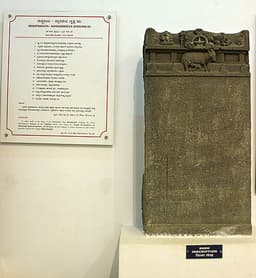
Krishna III of Rashtrakuta
Emperor · Medieval
64.0Total

Mengli I Giray
Emperor · Medieval
55.0Total
Basic Information
Born
939
1445
Died
967
1515
Era
Medieval
Medieval
Nationality
India
Crimean Khanate
Occupation
Emperor
Emperor
Civilization
Indian
Eastern
Score Comparison
Military (10%)
78.0
45.0
Political (20%)
72.0
68.0
Influence (20%)
60.0
53.3
Legacy (20%)
54.0
44.2
Leadership (15%)
72.0
72.0
Strategy (15%)
61.2
51.7
TOTAL
64.0
55.0
Krishna III of Rashtrakuta — Complete Timeline
949 AD
Conquered the Chola capital at ThanjavurWar◆ Major
Krishna III led a successful invasion of the Chola kingdom, capturing the capital Thanjavur. He defeated the Chola king Parantaka I, temporarily ending Chola dominance in the south and extending Rashtrakuta influence into Tamil country.
Chola-Rashtrakuta WarSouth India
Impact: regional
Battle of TakkolamWar◆ Major
Krishna III's forces defeated the Chola army at Takkolam (present-day Tamil Nadu). The battle resulted in the death of the Chola crown prince Rajaditya and marked a decisive Rashtrakuta victory in the conflict.
BattleChola-Rashtrakuta War
Impact: regionaltragic
960 AD
Erected the Kannada inscription at TiruvannamalaiCultural
Krishna III commissioned a Kannada-language inscription at the Arunachaleswara Temple in Tiruvannamalai, recording his military victories and donations. This inscription is a key source for Rashtrakuta history in the Tamil region.
InscriptionKannada Literature
constructive
965 AD
Lost control of the northern Deccan to the ParamarasWar◆ Major
Krishna III's later reign saw the Paramara king Siyaka II raid the Rashtrakuta capital Manyakheta. This defeat weakened Rashtrakuta authority and marked the beginning of the dynasty's decline after Krishna III's death.
Paramara RaidDecline
Impact: regionaldestructive
Mengli I Giray — Complete Timeline
1474 AD
Alliance with Muscovy against the Great HordePolitical Action
Mengli I Giray formed a strategic alliance with Ivan III of Moscow against the Great Horde, the remnant of the Golden Horde. This alliance was formalized through treaties and mutual military support, reshaping the power balance in Eastern Europe.
DiplomacyAllianceMuscovyGreat Horde
Impact: regionalconstructive
1502 AD
Destruction of the Great Horde's Capital SaraiWar◆ Major
Mengli I Giray's Crimean forces, with Muscovite support, attacked and destroyed Sarai, the capital of the Great Horde. This effectively ended the Great Horde as a major power and eliminated a common enemy for the Crimean Khanate and Muscovy.
WarGreat HordeSaraiDestruction
Impact: regionaldestructive
1506 AD
Raid on Lithuania and PolandWar
Mengli I Giray led a large-scale raid into the Grand Duchy of Lithuania and the Kingdom of Poland. The Crimean forces plundered the region, capturing many slaves. This raid was part of the ongoing conflict with Lithuania and demonstrated Crimean military power.
RaidLithuaniaPolandSlave Raiding
Impact: regionaldestructive
This comparison has not been analyzed yet.
One-time AI generation (~1 minute). Scores and timeline are already available below.
Rankings
🥇
Krishna III of RashtrakutaLeader
Mil: 78.0Pol: 72.0Inf: 60.0
64.0
🥈
Mengli I Giray
Mil: 45.0Pol: 68.0Inf: 53.3
55.0
+9.0 behind
How This Comparison Works
Algorithm
Each figure is scored on 6 dimensions (0—100 scale) based on structured historical data: Military (10%), Political (20%), Influence (20%), Legacy (20%), Leadership (15%), Strategy (15%). The weighted total produces the final ranking.
Data Sources
Scores are computed from structured sub-indicators in the database. Scale factors adjust for era (Ancient ×0.85, Modern ×1.0) and civilization size (Eastern ×1.05, Other ×0.80) to account for differences in population and military scale.
Maximum 3 Figures
Comparisons are limited to 2—3 figures to ensure readability and statistical meaningfulness.
Error Margins
±5 points per dimension — Sub-scores are derived from historical records with inherent uncertainty. Two figures within 5 points on a dimension should be considered roughly equivalent in that area.
Total Score Accuracy
±3 points overall — The weighted combination of 6 dimensions produces a total score with approximately ±3 points of uncertainty. Differences of less than 3 points are not statistically significant— the figures are effectively tied.
Known Limitations
- Historical records are incomplete and uneven across civilizations
- Figures from oral-tradition societies may be underrepresented
- Occupation labels can misclassify multi-role figures
- Scores measure capability and impact, not moral character
- Quantitative scoring is a comparison tool, not absolute truth
Capability Radar
Military (10%) — Battles & Warfare
Battles
75
55
Win Rate
80
50
Expansion
80
55
Political (20%) — Governance & Reform
Reform
65
35
Diplomacy
70
65
Economy
70
40
Influence (20%) — Cultural & Global Reach
Cultural
60
30
Global
40
30
Legacy (20%) — Historical Impact
Historical
65
40
Longevity
50
35
Leadership (15%) — Power & Stability
Tenure
75
60
Stability
65
50
Strategy (15%) — Tactics & Innovation
Strategy
75
50
Tactics
70
45
Reform
60
30
Similar Comparisons
Comments & Discussion
No comments yet. Be the first to share your thoughts!