Loading...
This comparison has not been analyzed yet.
One-time AI generation (~1 minute). Scores and timeline are already available below.
Kofi Karikari vs Tongzhi Emperor
Tongzhi Emperor leads by 1.6 pts · 2 figures compared
…

Kofi Karikari
Emperor · Modern
45.9Total
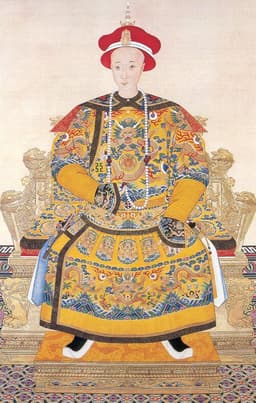
Tongzhi Emperor
Emperor · Modern
47.5Total
Basic Information
Born
1837
1856
Died
1884
1875
Era
Modern
Modern
Nationality
Ashanti Empire
China
Occupation
Emperor
Emperor
Civilization
Other
Eastern
Score Comparison
Military (10%)
50.0
12.1
Political (20%)
32.2
68.0
Influence (20%)
51.8
60.0
Legacy (20%)
41.7
40.8
Leadership (15%)
58.8
33.6
Strategy (15%)
38.6
59.0
TOTAL
45.9
47.5
Kofi Karikari — Complete Timeline
1873 AD
Sagrenti War (Third Anglo-Ashanti War)War◆ Major
Kofi Karikari led the Ashanti in the Sagrenti War against the British. The war began with an Ashanti invasion of the British Gold Coast protectorate but ended with the British capture and burning of Kumasi in 1874.
Sagrenti WarBritish InvasionKumasi
Impact: regionaldestructive
1874 AD
Burning of KumasiWar◆ Major
British forces under Sir Garnet Wolseley captured and burned the Ashanti capital Kumasi. The destruction of the city, including the royal palace, was a major blow to the Ashanti Empire and forced Kofi Karikari to sign a peace treaty.
KumasiBritishDestruction
Impact: nationaltragic
Treaty of FomenaPolitical Action◆ Major
Kofi Karikari signed the Treaty of Fomena with the British, ending the Sagrenti War. The treaty required Ashanti to pay an indemnity, renounce claims to certain territories, and allow British trade. It weakened Ashanti sovereignty.
TreatyPeaceBritish
Impact: regionaldestructive
Deposition by the Ashanti councilPolitical Action◆ Major
Following the defeat in the Sagrenti War, the Ashanti council of chiefs deposed Kofi Karikari for incompetence and failure to protect the empire. He was forced to abdicate, and his brother Mensa Bonsu succeeded him.
DepositionAbdicationAshanti
Impact: nationaldestructive
Tongzhi Emperor — Complete Timeline
1861 AD
Accession to the Qing thronePolitical Action◆ Major
Tongzhi became Emperor of China at age 5 after the death of his father, Xianfeng. A regency was established under Empress Dowagers Cixi and Ci'an.
SuccessionQing Dynasty
Impact: national
1862 AD
Tongzhi RestorationReform◆ Major
A period of conservative reform began, aiming to modernize China's military and economy while preserving Confucian values. The Self-Strengthening Movement was initiated, but progress was limited.
ReformSelf-Strengthening
Impact: nationalconstructive
1864 AD
End of the Taiping RebellionWar
Qing forces, led by generals like Zeng Guofan, captured Nanjing and crushed the Taiping Rebellion. The victory restored Qing control but left the empire devastated.
Civil WarTaiping Rebellion
Impact: globalconstructive
1875 AD
Death from smallpoxOther◆ Major
Tongzhi died at age 18 from smallpox. His death without an heir led to a succession crisis, with his cousin Guangxu being chosen as the next emperor.
DeathSmallpox
Impact: nationaltragic
This comparison has not been analyzed yet.
One-time AI generation (~1 minute). Scores and timeline are already available below.
Rankings
🥇
Tongzhi EmperorLeader
Mil: 12.1Pol: 68.0Inf: 60.0
47.5
🥈
Kofi Karikari
Mil: 50.0Pol: 32.2Inf: 51.8
45.9
+1.6 behind
How This Comparison Works
Algorithm
Each figure is scored on 6 dimensions (0—100 scale) based on structured historical data: Military (10%), Political (20%), Influence (20%), Legacy (20%), Leadership (15%), Strategy (15%). The weighted total produces the final ranking.
Data Sources
Scores are computed from structured sub-indicators in the database. Scale factors adjust for era (Ancient ×0.85, Modern ×1.0) and civilization size (Eastern ×1.05, Other ×0.80) to account for differences in population and military scale.
Maximum 3 Figures
Comparisons are limited to 2—3 figures to ensure readability and statistical meaningfulness.
Error Margins
±5 points per dimension — Sub-scores are derived from historical records with inherent uncertainty. Two figures within 5 points on a dimension should be considered roughly equivalent in that area.
Total Score Accuracy
±3 points overall — The weighted combination of 6 dimensions produces a total score with approximately ±3 points of uncertainty. Differences of less than 3 points are not statistically significant— the figures are effectively tied.
Known Limitations
- Historical records are incomplete and uneven across civilizations
- Figures from oral-tradition societies may be underrepresented
- Occupation labels can misclassify multi-role figures
- Scores measure capability and impact, not moral character
- Quantitative scoring is a comparison tool, not absolute truth
Capability Radar
Military (10%) — Battles & Warfare
Battles
30
40
Win Rate
20
41
Expansion
10
49
Political (20%) — Governance & Reform
Reform
20
0
Diplomacy
25
0
Economy
20
0
Influence (20%) — Cultural & Global Reach
Cultural
30
0
Global
20
0
Legacy (20%) — Historical Impact
Historical
35
5
Longevity
25
0
Leadership (15%) — Power & Stability
Tenure
40
5
Stability
15
5
Strategy (15%) — Tactics & Innovation
Strategy
20
51
Tactics
25
52
Reform
15
55
Similar Comparisons
Comments & Discussion
No comments yet. Be the first to share your thoughts!