Loading...
Kodandera M. Cariappa vs Maeda Toshiie
Maeda Toshiie leads by 3.1 pts · 2 figures compared
…
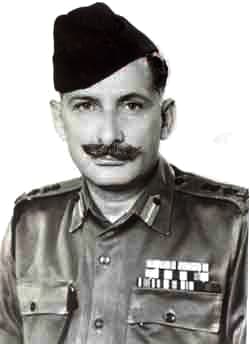
Kodandera M. Cariappa
General · Modern
57.0Total
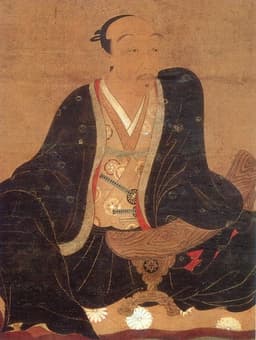
Maeda Toshiie
General · Modern
60.1Total
Basic Information
Born
1899
1538
Died
1993
1599
Era
Modern
Modern
Nationality
India
Japan
Occupation
General
General
Civilization
Indian
Eastern
Score Comparison
Military (10%)
50.0
70.0
Political (20%)
62.7
68.0
Influence (20%)
55.0
56.4
Legacy (20%)
54.0
49.2
Leadership (15%)
62.0
72.0
Strategy (15%)
60.0
57.5
TOTAL
57.0
60.1
Kodandera M. Cariappa — Complete Timeline
1919 AD
Commissioned into Indian ArmyPolitical Action◆ Major
Kodandera M. Cariappa was commissioned as a temporary second lieutenant in the British Indian Army. He served in the 2nd Battalion, 88th Carnatic Infantry, beginning a long military career.
Indian ArmyCommissionMilitary career
Impact: national
1939 AD
Service in World War IIWar◆ Major
Cariappa served in the Middle East and Burma during World War II. He commanded the 7th Indian Infantry Brigade in the Burma Campaign, earning a reputation for leadership and tactical skill.
World War IIBurmaMilitary service
Impact: regional
1947 AD
Command in Indo-Pakistani War of 1947-48War◆ Major
Cariappa commanded Indian forces in the Kashmir operations during the Indo-Pakistani War of 1947-48. He led the successful defense of Srinagar and the capture of key positions in Jammu and Kashmir.
Kashmir1947 warMilitary operations
Impact: regionalconstructive
1949 AD
Appointment as first Indian Commander-in-ChiefPolitical Action
Cariappa was appointed as the first Indian Commander-in-Chief of the Indian Army in January 1949, succeeding General Sir Roy Bucher. He oversaw the Indianization of the army's officer corps.
Indian ArmyCommander-in-ChiefIndianization
Impact: nationalconstructive
1953 AD
Retirement and diplomatic servicePolitical Action
Cariappa retired from the Indian Army in 1953. He later served as High Commissioner to Australia and New Zealand from 1953 to 1956, representing India diplomatically.
RetirementDiplomacyHigh Commissioner
Impact: national
Maeda Toshiie — Complete Timeline
1583 AD
Battle of ShizugatakeWar◆ Major
Maeda Toshiie fought for Toyotomi Hideyoshi against Shibata Katsuie at the Battle of Shizugatake. His performance contributed to Hideyoshi's victory, which solidified Hideyoshi's control over Japan after the death of Oda Nobunaga.
Sengoku periodBattle
Impact: national
1590 AD
Siege of OdawaraWar
Maeda Toshiie participated in Toyotomi Hideyoshi's campaign against the Hojo clan at Odawara Castle. The siege ended with the Hojo surrender, leading to the unification of Japan under Hideyoshi.
Unification of JapanCampaign
Impact: national
1598 AD
Appointed as one of the Five EldersPolitical Action◆ Major
Toyotomi Hideyoshi appointed Maeda Toshiie as one of the Five Elders to govern Japan during the minority of his son Hideyori. This placed Toshiie among the highest-ranking officials in the Toyotomi administration, responsible for collective rule.
Toyotomi administrationRegency
Impact: national
1599 AD
Conflict with Tokugawa IeyasuPolitical Action◆ Major
After Hideyoshi's death, Maeda Toshiie opposed Tokugawa Ieyasu's growing influence. Tensions escalated, but Toshiie died before open conflict erupted. His death removed a key obstacle to Ieyasu's rise.
Power struggleTokugawa
Impact: national
Expert Analysis
Kodandera M. Cariappa vs Maeda Toshiie
Kodandera M. Cariappa vs Maeda Toshiie: Historical Comparison
Separated by four centuries and vastly different cultural contexts, Field Marshal Kodandera M. Cariappa of India and Maeda Toshiie of feudal Japan represent two archetypes of the military leader in transition — men who navigated the treacherous space between battlefield command and political power. Cariappa, the first Indian Commander-in-Chief of the Indian Army, and Toshiie, one of Toyotomi Hideyoshi's Five Elders, both faced the question of what a soldier does when the war is over. The scoring system gives Toshiie a narrow edge (60 to 57), but the dimension-by-dimension breakdown tells a more nuanced story.
Origins: The Colonial Officer and the Sengoku Samurai
Kodandera Madappa Cariappa was born in 1899 in Coorg, a region known for producing soldiers, into a family with a tradition of service in the British Indian Army. He was commissioned in 1919, one of the first generation of Indian officers granted the King's Commission — a milestone in the slow Indianization of the colonial military. His career was shaped by the peculiar institution of the British Indian Army: professionally rigorous, politically subordinate, and deliberately insulated from nationalist politics. He served with distinction in World War II, commanding the 7th Indian Infantry Brigade in Burma, and in the 1947-48 Kashmir War, where he led the defense of Srinagar against Pakistani-backed tribal invaders.
Maeda Toshiie was born in 1538 into the chaos of Sengoku-era Japan, where a samurai's worth was measured in battlefield success and strategic marriages. He served first under Oda Nobunaga, then under Toyotomi Hideyoshi, participating in the pivotal Battle of Shizugatake (1583) and the Siege of Odawara (1590) — campaigns that unified Japan after more than a century of civil war. Toshiie's trajectory from battlefield commander to feudal administrator culminated in his 1598 appointment as one of the Five Elders, the council Hideyoshi created to govern Japan during the minority of his son Hideyori.
The eras could hardly be more different: Cariappa helped build the army of a newly independent democratic republic; Toshiie helped consolidate a feudal military dictatorship. Yet both faced the same fundamental challenge — adapting military instincts to political realities.
Military Dimension: Samurai Steel vs Modern Command
The Military dimension is where Toshiie's advantage is most pronounced: 70 to Cariappa's 50. This 20-point gap reflects a fundamental difference in the nature of their military careers. Toshiie was a frontline combat commander who fought in some of the most significant battles of Japanese history. At Shizugatake, he was one of Hideyoshi's "Seven Spears" — warriors whose personal combat prowess was legendary. At Odawara, he participated in the siege that broke the last major resistance to Hideyoshi's unification.
Cariappa, by contrast, was a staff officer and institutional builder rather than a battlefield genius. His contributions to the 1947-48 Kashmir War were organizational and strategic — ensuring that Indian forces held key positions — rather than tactically brilliant in the manner of a Napoleon or a Rommel. His real military achievement was the Indianization of the officer corps after 1949, transforming a colonial force into a national army. This was institution-building of the highest order, but the scoring system's Military dimension weights combat achievement more heavily than organizational transformation.
Leadership and Political Acumen
Cariappa's Leadership score of 62 and Political score of 63 are both solid, reflecting his skillful navigation of the transition from colonial to independent military command. As Commander-in-Chief from 1949 to 1953, he established the principle of civilian control over the military — a norm that has held in India for seven decades, a remarkable achievement in a region where military coups are common. His later service as High Commissioner to Australia and New Zealand demonstrated the versatility expected of post-independence military leaders.
Toshiie's Leadership (72) and Political (68) scores are notably higher. As one of Hideyoshi's most trusted vassals, he managed the delicate balance between loyalty to the Toyotomi clan and the pragmatic recognition that Tokugawa Ieyasu was the rising power. The scoring system sees this political dexterity as a positive — Toshiie kept his domains intact and his family prosperous through the transition from Toyotomi to Tokugawa rule. His death in 1599, just before the decisive Sekigahara campaign, meant he never had to choose sides definitively — a convenient exit from history's stage that preserved his reputation.
Legacy: Institutions vs Influence
Cariappa's Legacy score of 54 versus Toshiie's 49 represents perhaps the most interesting judgment in this comparison. Cariappa's institutional legacy — the professional, apolitical Indian Army — has endured and shaped the world's largest democracy. Toshiie's Maeda clan survived the transition to Tokugawa rule and ruled Kaga Domain (modern Ishikawa Prefecture) for centuries, but his personal imprint on Japanese history is less distinct than that of contemporaries like Tokugawa Ieyasu or Oda Nobunaga.
The Influence dimension is nearly equal (Cariappa 55, Toshiie 56), reflecting that both men were important secondary figures rather than primary architects of their eras. Neither changed the course of world history, but both shaped the institutions and power structures they served.
Conclusion
The 60-57 edge for Maeda Toshiie is narrow enough to be within the scoring system's margin of error, but the dimension-by-dimension analysis supports it. Toshiie operated in a more lethal environment — the Sengoku period — where military prowess was the primary currency of survival, and his higher Military and Leadership scores reflect that. Cariappa's achievement was more subtle: building a professional military tradition in a democratic framework. Both men deserve to be remembered as soldiers who understood that winning the peace matters as much as winning the war.
Rankings
🥇
Maeda ToshiieLeader
Mil: 70.0Pol: 68.0Inf: 56.4
60.1
🥈
Kodandera M. Cariappa
Mil: 50.0Pol: 62.7Inf: 55.0
57.0
+3.1 behind
How This Comparison Works
Algorithm
Each figure is scored on 6 dimensions (0—100 scale) based on structured historical data: Military (10%), Political (20%), Influence (20%), Legacy (20%), Leadership (15%), Strategy (15%). The weighted total produces the final ranking.
Data Sources
Scores are computed from structured sub-indicators in the database. Scale factors adjust for era (Ancient ×0.85, Modern ×1.0) and civilization size (Eastern ×1.05, Other ×0.80) to account for differences in population and military scale.
Maximum 3 Figures
Comparisons are limited to 2—3 figures to ensure readability and statistical meaningfulness.
Error Margins
±5 points per dimension — Sub-scores are derived from historical records with inherent uncertainty. Two figures within 5 points on a dimension should be considered roughly equivalent in that area.
Total Score Accuracy
±3 points overall — The weighted combination of 6 dimensions produces a total score with approximately ±3 points of uncertainty. Differences of less than 3 points are not statistically significant— the figures are effectively tied.
Known Limitations
- Historical records are incomplete and uneven across civilizations
- Figures from oral-tradition societies may be underrepresented
- Occupation labels can misclassify multi-role figures
- Scores measure capability and impact, not moral character
- Quantitative scoring is a comparison tool, not absolute truth
Capability Radar
Military (10%) — Battles & Warfare
Battles
15
65
Win Rate
10
60
Expansion
10
50
Political (20%) — Governance & Reform
Reform
60
30
Diplomacy
65
50
Economy
30
40
Influence (20%) — Cultural & Global Reach
Cultural
40
40
Global
45
30
Legacy (20%) — Historical Impact
Historical
55
45
Longevity
50
40
Leadership (15%) — Power & Stability
Tenure
55
55
Stability
70
45
Strategy (15%) — Tactics & Innovation
Strategy
25
60
Tactics
20
55
Reform
70
30
Similar Comparisons
Comments & Discussion
SamuraiScholar7/7/2026
Comparing a 20th century field marshal to a Sengoku daimyo is absurd on its face, but the scoring actually gets it right. Toshiie fought at Shizugatake and commanded tens of thousands in the unification wars. Cariappa was a fine officer but never commanded in a major conventional war. The Military gap of 70-50 is justified.
DelhiDefense7/7/2026
Cariappa being scored lower because he didn't fight enough battles misses the point entirely. He built the INSTITUTION that has kept India secure for 75 years. Toshiie's clan survived, sure, but Cariappa's legacy is alive in every Indian soldier who salutes the tricolor. Institutional legacy should count for more.
日本史爱好者7/7/2026
前田利家の72点のリーダーシップは過小評価だ。五大老の一員として、秀吉の死後の日本を安定させる重要な役割を果たした。しかし家康という怪物が相手では、利家の早すぎる死は歴史の必然だったのかもしれない。
CoorgPride7/7/2026
As a Coorg myself, I'm biased, but Cariappa's Political score should be higher. He established civilian supremacy over the military in India — the single most important institutional achievement in South Asian civil-military relations. Pakistan, by contrast, has had four military coups. That's Cariappa's legacy.