Loading...
This comparison has not been analyzed yet.
One-time AI generation (~1 minute). Scores and timeline are already available below.
Kjell Magne Bondevik vs Rafic Hariri
Rafic Hariri leads by 5.2 pts · 2 figures compared
…

Kjell Magne Bondevik
Politician · Modern
50.4Total
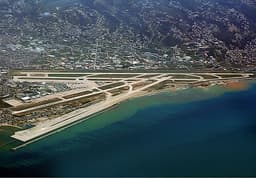
Rafic Hariri
Politician · Modern
55.6Total
Basic Information
Born
1947
1944
Died
—
—
Era
Modern
Modern
Nationality
Norway
Lebanon
Occupation
Politician
Politician
Civilization
Western
Middle Eastern
Score Comparison
Military (10%)
47.8
26.9
Political (20%)
53.8
78.0
Influence (20%)
49.4
55.0
Legacy (20%)
40.8
52.0
Leadership (15%)
72.0
68.0
Strategy (15%)
41.9
42.1
TOTAL
50.4
55.6
Kjell Magne Bondevik — Complete Timeline
1997 AD
First Term as Prime Minister of NorwayPolitical Action◆ Major
Bondevik became Prime Minister in October 1997, leading a centrist coalition government of the Christian Democratic, Centre, and Liberal parties. His first term lasted until 2000.
Norwegian PoliticsCoalition Government
Impact: national
1998 AD
Took Sick Leave for DepressionPolitical Action◆ Major
Bondevik took a three-week sick leave in August 1998 for depression, becoming the first Norwegian PM to publicly disclose mental health issues. He returned to work after treatment.
Mental HealthNorwegian Politics
Impact: national
2001 AD
Second Term as Prime MinisterPolitical Action◆ Major
Bondevik returned as Prime Minister in October 2001, leading a coalition government until 2005. His government focused on immigration policy and international development.
Norwegian PoliticsGovernment
Impact: national
Rafic Hariri — Complete Timeline
1992 AD
Appointed Prime Minister of LebanonPolitical Action◆ Major
Rafic Hariri was appointed Prime Minister of Lebanon on October 31, 1992, after the end of the civil war. He was tasked with rebuilding the country's economy and infrastructure, leveraging his personal wealth and international connections.
Prime MinisterReconstructionPost-war
Impact: nationalconstructive
1994 AD
Launched the reconstruction of Beirut Central DistrictOther◆ Major
Hariri's government initiated the reconstruction of Beirut's central district through the Solidere company. The project rebuilt the war-torn city center with modern infrastructure, but faced criticism for displacing residents and favoring wealthy investors.
ReconstructionBeirutUrban Development
Impact: nationalconstructive
1998 AD
Resigned as Prime Minister amid political crisisPolitical Action
Hariri resigned as Prime Minister in December 1998 after a dispute with President Emile Lahoud over economic policy and corruption. He returned to power in 2000 after winning parliamentary elections.
ResignationPolitical CrisisElections
Impact: national
2005 AD
Assassinated in Beirut bombingPolitical Action
Rafic Hariri was assassinated on February 14, 2005, when a massive truck bomb exploded near his motorcade in Beirut. His death sparked the Cedar Revolution, leading to the withdrawal of Syrian troops from Lebanon and international investigations.
AssassinationCedar RevolutionSyria
Impact: regionaltragic
This comparison has not been analyzed yet.
One-time AI generation (~1 minute). Scores and timeline are already available below.
Rankings
🥇
Rafic HaririLeader
Mil: 26.9Pol: 78.0Inf: 55.0
55.6
🥈
Kjell Magne Bondevik
Mil: 47.8Pol: 53.8Inf: 49.4
50.4
+5.2 behind
How This Comparison Works
Algorithm
Each figure is scored on 6 dimensions (0—100 scale) based on structured historical data: Military (10%), Political (20%), Influence (20%), Legacy (20%), Leadership (15%), Strategy (15%). The weighted total produces the final ranking.
Data Sources
Scores are computed from structured sub-indicators in the database. Scale factors adjust for era (Ancient ×0.85, Modern ×1.0) and civilization size (Eastern ×1.05, Other ×0.80) to account for differences in population and military scale.
Maximum 3 Figures
Comparisons are limited to 2—3 figures to ensure readability and statistical meaningfulness.
Error Margins
±5 points per dimension — Sub-scores are derived from historical records with inherent uncertainty. Two figures within 5 points on a dimension should be considered roughly equivalent in that area.
Total Score Accuracy
±3 points overall — The weighted combination of 6 dimensions produces a total score with approximately ±3 points of uncertainty. Differences of less than 3 points are not statistically significant— the figures are effectively tied.
Known Limitations
- Historical records are incomplete and uneven across civilizations
- Figures from oral-tradition societies may be underrepresented
- Occupation labels can misclassify multi-role figures
- Scores measure capability and impact, not moral character
- Quantitative scoring is a comparison tool, not absolute truth
Capability Radar
Military (10%) — Battles & Warfare
Battles
28
19
Win Rate
34
22
Expansion
37
29
Political (20%) — Governance & Reform
Reform
55
70
Diplomacy
65
75
Economy
55
85
Influence (20%) — Cultural & Global Reach
Cultural
20
55
Global
15
60
Legacy (20%) — Historical Impact
Historical
25
60
Longevity
20
50
Leadership (15%) — Power & Stability
Tenure
60
65
Stability
60
40
Strategy (15%) — Tactics & Innovation
Strategy
35
31
Tactics
44
35
Reform
42
35
Similar Comparisons
Comments & Discussion
No comments yet. Be the first to share your thoughts!