Loading...
This comparison has not been analyzed yet.
One-time AI generation (~1 minute). Scores and timeline are already available below.
Kinzang Dorji vs P. A. Sangma
Kinzang Dorji leads by 0.0 pts · 2 figures compared
…

Kinzang Dorji
Politician · Modern
49.5Total
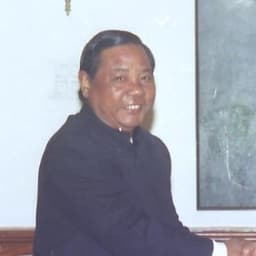
P. A. Sangma
Politician · Modern
49.5Total
Basic Information
Born
1951
1947
Died
—
—
Era
Modern
Modern
Nationality
Bhutan
India
Occupation
Politician
Politician
Civilization
Indian
Indian
Score Comparison
Military (10%)
21.2
53.5
Political (20%)
68.0
48.0
Influence (20%)
49.4
50.2
Legacy (20%)
40.0
41.7
Leadership (15%)
72.0
53.2
Strategy (15%)
39.9
60.0
TOTAL
49.5
49.5
Kinzang Dorji — Complete Timeline
1998 AD
Appointed as Minister of Works and Human SettlementPolitical Action
Kinzang Dorji was appointed Minister of Works and Human Settlement in Bhutan in 1998. He oversaw infrastructure projects, including road construction and urban planning, to support economic development.
InfrastructureUrban Planning
Impact: nationalconstructive
2002 AD
First Term as Prime Minister of BhutanPolitical Action◆ Major
Kinzang Dorji served as Prime Minister of Bhutan from 2002 to 2003. His term focused on infrastructure development and improving connectivity in rural areas.
Prime MinisterInfrastructure
Impact: nationalconstructive
2003 AD
Oversaw Construction of Major HighwaysOther
As Minister of Works, Dorji oversaw the construction of the East-West Highway and other major roads, improving connectivity between Bhutan's regions. These projects facilitated trade and access to services.
InfrastructureTransport
Impact: nationalconstructive
2007 AD
Second Term as Prime Minister of BhutanPolitical Action◆ Major
Dorji served a second term as Prime Minister from 2007 to 2008, overseeing the final transition to democracy. He managed the 10th Five-Year Plan and ensured a smooth handover to the elected government.
Prime MinisterTransition
Impact: nationalconstructive
P. A. Sangma — Complete Timeline
1996 AD
Elected as Lok Sabha SpeakerPolitical Action◆ Major
P. A. Sangma was elected as the Speaker of the Lok Sabha, the lower house of India's Parliament. He served in this role until 1998, becoming the first Speaker from the northeastern region.
Lok Sabha SpeakerIndiaNortheast
Impact: nationalconstructive
1999 AD
Co-founded Nationalist Congress PartyPolitical Action
Sangma, along with Sharad Pawar and Tariq Anwar, founded the Nationalist Congress Party (NCP) after being expelled from the Indian National Congress for challenging Sonia Gandhi's leadership.
NCPPolitical PartyIndia
Impact: nationalconstructive
2012 AD
Contested Presidential electionPolitical Action◆ Major
Sangma contested the Indian presidential election as a candidate backed by the NCP and some opposition parties. He lost to Pranab Mukherjee, securing about 32% of the vote.
Presidential ElectionIndiaNCP
Impact: national
2016 AD
Passed away due to cardiac arrestOther◆ Major
Sangma died of a cardiac arrest in New Delhi. His death was widely mourned, and he was remembered for his contributions to Indian politics and representation of the Northeast.
DeathCardiac ArrestIndia
Impact: nationaltragic
This comparison has not been analyzed yet.
One-time AI generation (~1 minute). Scores and timeline are already available below.
Rankings
🥇
Kinzang DorjiLeader
Mil: 21.2Pol: 68.0Inf: 49.4
49.5
🥈
P. A. Sangma
Mil: 53.5Pol: 48.0Inf: 50.2
49.5
How This Comparison Works
Algorithm
Each figure is scored on 6 dimensions (0—100 scale) based on structured historical data: Military (10%), Political (20%), Influence (20%), Legacy (20%), Leadership (15%), Strategy (15%). The weighted total produces the final ranking.
Data Sources
Scores are computed from structured sub-indicators in the database. Scale factors adjust for era (Ancient ×0.85, Modern ×1.0) and civilization size (Eastern ×1.05, Other ×0.80) to account for differences in population and military scale.
Maximum 3 Figures
Comparisons are limited to 2—3 figures to ensure readability and statistical meaningfulness.
Error Margins
±5 points per dimension — Sub-scores are derived from historical records with inherent uncertainty. Two figures within 5 points on a dimension should be considered roughly equivalent in that area.
Total Score Accuracy
±3 points overall — The weighted combination of 6 dimensions produces a total score with approximately ±3 points of uncertainty. Differences of less than 3 points are not statistically significant— the figures are effectively tied.
Known Limitations
- Historical records are incomplete and uneven across civilizations
- Figures from oral-tradition societies may be underrepresented
- Occupation labels can misclassify multi-role figures
- Scores measure capability and impact, not moral character
- Quantitative scoring is a comparison tool, not absolute truth
Capability Radar
Military (10%) — Battles & Warfare
Battles
24
42
Win Rate
25
47
Expansion
31
47
Political (20%) — Governance & Reform
Reform
55
40
Diplomacy
55
50
Economy
50
30
Influence (20%) — Cultural & Global Reach
Cultural
20
20
Global
15
20
Legacy (20%) — Historical Impact
Historical
20
30
Longevity
20
20
Leadership (15%) — Power & Stability
Tenure
60
60
Stability
60
40
Strategy (15%) — Tactics & Innovation
Strategy
35
55
Tactics
36
55
Reform
40
58
Similar Comparisons
Comments & Discussion
No comments yet. Be the first to share your thoughts!