Loading...
Ali Khamenei vs P. A. Sangma
Ali Khamenei leads by 5.1 pts · 2 figures compared
…

Ali Khamenei
Politician · Modern
54.6Total
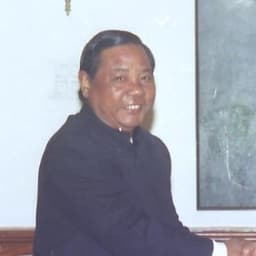
P. A. Sangma
Politician · Modern
49.5Total
Basic Information
Born
1939
1947
Died
—
—
Era
Modern
Modern
Nationality
Iran
India
Occupation
Politician
Politician
Civilization
Middle Eastern
Indian
Score Comparison
Military (10%)
20.6
53.5
Political (20%)
68.0
48.0
Influence (20%)
56.7
50.2
Legacy (20%)
52.0
41.7
Leadership (15%)
78.0
53.2
Strategy (15%)
35.0
60.0
TOTAL
54.6
49.5
Ali Khamenei — Complete Timeline
1988 AD
Iran-Iraq War leadershipWar◆ Major
As President during the Iran-Iraq War (1980-1988), Khamenei supported the war effort and the use of child soldiers. He played a key role in Iran's acceptance of UN Security Council Resolution 598, ending the war after massive casualties.
WarIran-IraqCasualties
Impact: regionaldestructive
1989 AD
Appointed Supreme Leader of IranPolitical Action
After the death of Ayatollah Khomeini, Khamenei was elected Supreme Leader by the Assembly of Experts. He succeeded Khomeini as the highest authority in Iran, with control over the military, judiciary, and media.
SuccessionIranTheocracy
Impact: national
2002 AD
Nuclear program expansionPolitical Action◆ Major
Under Khamenei's leadership, Iran expanded its nuclear program, including uranium enrichment. This led to international sanctions and tensions, but Khamenei also issued a fatwa against nuclear weapons, creating a complex stance.
NuclearSanctionsDiplomacy
Impact: global
2009 AD
Crackdown on the Green MovementPolitical Action◆ Major
Following the disputed 2009 presidential election, Khamenei endorsed the victory of Mahmoud Ahmadinejad and ordered a crackdown on the Green Movement protests. Hundreds were killed, thousands arrested, and the movement was suppressed.
ProtestSuppressionHuman Rights
Impact: nationaldestructive
P. A. Sangma — Complete Timeline
1996 AD
Elected as Lok Sabha SpeakerPolitical Action◆ Major
P. A. Sangma was elected as the Speaker of the Lok Sabha, the lower house of India's Parliament. He served in this role until 1998, becoming the first Speaker from the northeastern region.
Lok Sabha SpeakerIndiaNortheast
Impact: nationalconstructive
1999 AD
Co-founded Nationalist Congress PartyPolitical Action
Sangma, along with Sharad Pawar and Tariq Anwar, founded the Nationalist Congress Party (NCP) after being expelled from the Indian National Congress for challenging Sonia Gandhi's leadership.
NCPPolitical PartyIndia
Impact: nationalconstructive
2012 AD
Contested Presidential electionPolitical Action◆ Major
Sangma contested the Indian presidential election as a candidate backed by the NCP and some opposition parties. He lost to Pranab Mukherjee, securing about 32% of the vote.
Presidential ElectionIndiaNCP
Impact: national
2016 AD
Passed away due to cardiac arrestOther◆ Major
Sangma died of a cardiac arrest in New Delhi. His death was widely mourned, and he was remembered for his contributions to Indian politics and representation of the Northeast.
DeathCardiac ArrestIndia
Impact: nationaltragic
Expert Analysis
Origins
**Ali Khamenei** was born on July 17, 1939, in Mashhad, Iran, into a religious family. His father was a cleric, and Khamenei studied Islamic theology in Qom and Mashhad. He became a follower of Ayatollah Khomeini and was involved in anti-Shah activities, leading to multiple imprisonments.
**P. A. Sangma** was born on September 1, 1947, in Meghalaya, India, into a tribal Christian family. He studied at St. Anthony's College, Shillong, and later earned a law degree from Delhi University. He entered politics as a member of the Indian National Congress and was elected to the Lok Sabha in 1977.
Rise to Power
Khamenei rose rapidly after the 1979 Iranian Revolution. He served as Minister of Defense (1980-1981) and then as President (1981-1989) during the Iran-Iraq War. His loyalty to Khomeini and his role in the war bolstered his position. Upon Khomeini's death in 1989, the Assembly of Experts appointed him Supreme Leader, a position he has held ever since. This appointment was a turning point, giving him control over the military, judiciary, and media.
Sangma's rise was within India's democratic framework. He served as a member of the Lok Sabha from 1977 onward, holding various ministerial portfolios. In 1996, he was elected Speaker of the Lok Sabha, becoming the first tribal leader to hold that office. His tenure as Speaker (1996-1998) was marked by efforts to reform parliamentary procedures. After being expelled from the Congress party in 1999 for questioning Sonia Gandhi's foreign birth, he co-founded the Nationalist Congress Party (NCP).
Leadership & Governance
Khamenei's leadership is absolute. As Supreme Leader, he has the final say on all state matters, including foreign policy and nuclear program. He supported the expansion of Iran's nuclear program, leading to international sanctions. Domestically, he endorsed the crackdown on the Green Movement in 2009, which suppressed dissent. His governance style is authoritarian and theocratic, prioritizing regime stability and anti-Western ideology. His political score of 68.0 reflects his control, but his military score of 20.6 indicates limited direct military involvement.
Sangma's leadership was democratic and collaborative. As Speaker, he worked to ensure parliamentary decorum. In the NCP, he focused on representing tribal and regional interests. He contested the 2012 presidential election as an opposition candidate but lost to Pranab Mukherjee. His leadership score of 53.2 is moderate, reflecting his role within a coalition rather than as a dominant figure. His strategy score of 60.0 indicates tactical acumen in forming the NCP.
Triumph & Tragedy
Khamenei's greatest triumph is his longevity and consolidation of power. He has maintained the Islamic Republic's structure and expanded Iran's regional influence through proxies. However, his greatest failure is the economic hardship under sanctions, and the suppression of protests has tarnished Iran's image. The nuclear program remains a contentious legacy.
Sangma's triumph was becoming the first tribal Lok Sabha Speaker and co-founding a national party that continues to play a role in Indian politics. His tragedy was losing the presidency and the decline of the NCP after his death. He died of a cardiac arrest in 2016, leaving a mixed legacy of regional representation but limited national impact.
Character & Destiny
Khamenei is characterized by ideological rigidity and political pragmatism. He has outmaneuvered rivals and maintained power despite crises. His character shaped Iran's isolationist and confrontational foreign policy. His legacy score of 52.0 suggests a lasting but controversial impact.
Sangma was known for his oratory and charisma, especially among tribal communities. He was a bridge between regional and national politics. However, his destiny was limited by the constraints of Indian federalism and party politics. His influence score of 50.2 reflects his moderate reach.
Legacy
Khamenei's legacy is the continuation of the Islamic Revolution and Iran's nuclear program. He has shaped Iranian politics for over three decades, influencing the Middle East. His legacy is deeply polarizing: revered by supporters, reviled by opponents.
Sangma's legacy is as a pioneering tribal leader in Indian politics. He inspired greater representation for Northeast India. However, his party's influence waned, and his national impact was modest. His legacy score of 41.7 is lower, reflecting limited enduring changes.
Conclusion
Ali Khamenei had a greater impact on global affairs than P. A. Sangma. Khamenei's total score of 54.6 surpasses Sangma's 49.5. While Sangma's role as Speaker and tribal leader was significant within India, Khamenei's decisions affected international security, nuclear proliferation, and regional conflicts. Khamenei's authoritarian control and longevity give him a broader and deeper influence. Sangma's impact, though notable, was confined to India's parliamentary democracy. Therefore, Khamenei emerges as the more consequential figure.
Rankings
🥇
Ali KhameneiLeader
Mil: 20.6Pol: 68.0Inf: 56.7
54.6
🥈
P. A. Sangma
Mil: 53.5Pol: 48.0Inf: 50.2
49.5
+5.1 behind
How This Comparison Works
Algorithm
Each figure is scored on 6 dimensions (0—100 scale) based on structured historical data: Military (10%), Political (20%), Influence (20%), Legacy (20%), Leadership (15%), Strategy (15%). The weighted total produces the final ranking.
Data Sources
Scores are computed from structured sub-indicators in the database. Scale factors adjust for era (Ancient ×0.85, Modern ×1.0) and civilization size (Eastern ×1.05, Other ×0.80) to account for differences in population and military scale.
Maximum 3 Figures
Comparisons are limited to 2—3 figures to ensure readability and statistical meaningfulness.
Error Margins
±5 points per dimension — Sub-scores are derived from historical records with inherent uncertainty. Two figures within 5 points on a dimension should be considered roughly equivalent in that area.
Total Score Accuracy
±3 points overall — The weighted combination of 6 dimensions produces a total score with approximately ±3 points of uncertainty. Differences of less than 3 points are not statistically significant— the figures are effectively tied.
Known Limitations
- Historical records are incomplete and uneven across civilizations
- Figures from oral-tradition societies may be underrepresented
- Occupation labels can misclassify multi-role figures
- Scores measure capability and impact, not moral character
- Quantitative scoring is a comparison tool, not absolute truth
Capability Radar
Military (10%) — Battles & Warfare
Battles
21
42
Win Rate
27
47
Expansion
31
47
Political (20%) — Governance & Reform
Reform
60
40
Diplomacy
65
50
Economy
40
30
Influence (20%) — Cultural & Global Reach
Cultural
60
20
Global
55
20
Legacy (20%) — Historical Impact
Historical
65
30
Longevity
70
20
Leadership (15%) — Power & Stability
Tenure
85
60
Stability
55
40
Strategy (15%) — Tactics & Innovation
Strategy
32
55
Tactics
36
55
Reform
41
58
Similar Comparisons
Comments & Discussion
No comments yet. Be the first to share your thoughts!