Loading...
This comparison has not been analyzed yet.
One-time AI generation (~1 minute). Scores and timeline are already available below.
King You of Zhou vs Shu-Sin
King You of Zhou leads by 6.9 pts · 2 figures compared
…

King You of Zhou
Emperor · Ancient
41.4Total
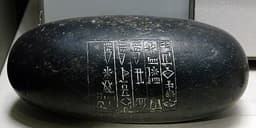
Shu-Sin
Emperor · Ancient
34.5Total
Basic Information
Born
-782
-2037
Died
-771
-2029
Era
Ancient
Ancient
Nationality
Zhou China
Ur
Occupation
Emperor
Emperor
Civilization
Eastern
Middle Eastern
Score Comparison
Military (10%)
47.5
10.2
Political (20%)
26.4
25.0
Influence (20%)
44.0
43.2
Legacy (20%)
38.3
34.2
Leadership (15%)
55.3
45.0
Strategy (15%)
38.6
36.8
TOTAL
41.4
34.5
King You of Zhou — Complete Timeline
771 BC
Quanrong sack of HaojingWar
Quanrong tribes attacked and sacked the Western Zhou capital Haojing. King You was killed in the invasion, ending the Western Zhou dynasty. The capital was destroyed and the royal family fled east.
Western ZhouCapital SackDynasty End
Impact: nationaltragic
Beacon fire incidentPolitical Action◆ Major
King You of Zhou allegedly lit beacon fires multiple times to amuse his concubine Bao Si by summoning feudal lords for false alarms. This eroded trust in the warning system, contributing to the Quanrong invasion that destroyed the Western Zhou capital Haojing.
Western ZhouBeaconQuanrong
Impact: nationaldestructive
Shu-Sin — Complete Timeline
2037 BC
Construction of the Amorite WallPolitical Action◆ Major
Shu-Sin ordered the construction of a massive defensive wall, known as the Amorite Wall, stretching across the region between the Tigris and Euphrates rivers. The wall was intended to prevent incursions by nomadic Amorite tribes into Sumerian territory, but it ultimately failed to stop their migration.
Defensive WallAmorite IncursionsSumer
Impact: regional
This comparison has not been analyzed yet.
One-time AI generation (~1 minute). Scores and timeline are already available below.
Rankings
🥇
King You of ZhouLeader
Mil: 47.5Pol: 26.4Inf: 44.0
41.4
🥈
Shu-Sin
Mil: 10.2Pol: 25.0Inf: 43.2
34.5
+6.9 behind
How This Comparison Works
Algorithm
Each figure is scored on 6 dimensions (0—100 scale) based on structured historical data: Military (10%), Political (20%), Influence (20%), Legacy (20%), Leadership (15%), Strategy (15%). The weighted total produces the final ranking.
Data Sources
Scores are computed from structured sub-indicators in the database. Scale factors adjust for era (Ancient ×0.85, Modern ×1.0) and civilization size (Eastern ×1.05, Other ×0.80) to account for differences in population and military scale.
Maximum 3 Figures
Comparisons are limited to 2—3 figures to ensure readability and statistical meaningfulness.
Error Margins
±5 points per dimension — Sub-scores are derived from historical records with inherent uncertainty. Two figures within 5 points on a dimension should be considered roughly equivalent in that area.
Total Score Accuracy
±3 points overall — The weighted combination of 6 dimensions produces a total score with approximately ±3 points of uncertainty. Differences of less than 3 points are not statistically significant— the figures are effectively tied.
Known Limitations
- Historical records are incomplete and uneven across civilizations
- Figures from oral-tradition societies may be underrepresented
- Occupation labels can misclassify multi-role figures
- Scores measure capability and impact, not moral character
- Quantitative scoring is a comparison tool, not absolute truth
Capability Radar
Military (10%) — Battles & Warfare
Battles
5
5
Win Rate
5
5
Expansion
0
5
Political (20%) — Governance & Reform
Reform
0
20
Diplomacy
5
15
Economy
5
20
Influence (20%) — Cultural & Global Reach
Cultural
10
10
Global
10
5
Legacy (20%) — Historical Impact
Historical
30
15
Longevity
20
10
Leadership (15%) — Power & Stability
Tenure
20
30
Stability
0
25
Strategy (15%) — Tactics & Innovation
Strategy
5
10
Tactics
5
5
Reform
0
15
Similar Comparisons
Comments & Discussion
No comments yet. Be the first to share your thoughts!