Loading...
This comparison has not been analyzed yet.
One-time AI generation (~1 minute). Scores and timeline are already available below.
Ptolemy VI Philometor vs Shu-Sin
Ptolemy VI Philometor leads by 15.8 pts · 2 figures compared
…

Ptolemy VI Philometor
Emperor · Ancient
50.3Total
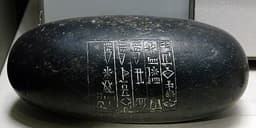
Shu-Sin
Emperor · Ancient
34.5Total
Basic Information
Born
-186
-2037
Died
-145
-2029
Era
Ancient
Ancient
Nationality
Ptolemaic Kingdom
Ur
Occupation
Emperor
Emperor
Civilization
Middle Eastern
Middle Eastern
Score Comparison
Military (10%)
30.0
10.2
Political (20%)
54.7
25.0
Influence (20%)
48.6
43.2
Legacy (20%)
39.2
34.2
Leadership (15%)
74.0
45.0
Strategy (15%)
60.0
36.8
TOTAL
50.3
34.5
Ptolemy VI Philometor — Complete Timeline
170 BC
Sixth Syrian WarWar
Ptolemy VI led a campaign against the Seleucid king Antiochus IV, but was defeated and captured. Antiochus IV invaded Egypt and was crowned as pharaoh, but was forced to withdraw by the Roman envoy Gaius Popillius Laenas, who drew a line in the sand.
Seleucid WarRoman InterventionCapture
Impact: regionaltragic
163 BC
Reign as Co-Ruler with Cleopatra II and Ptolemy VIIIPolitical Action◆ Major
After a period of civil war with his brother Ptolemy VIII, Ptolemy VI was restored as sole ruler of Egypt. He ruled jointly with his sister-wife Cleopatra II, maintaining stability and good relations with Rome, while his brother ruled Cyrenaica.
Co-RulershipCivil WarStability
Impact: nationalconstructive
145 BC
Death at the Battle of the Oenoparus RiverWar◆ Major
Ptolemy VI died fighting alongside the Seleucid usurper Alexander Balas against Demetrius II. He was thrown from his horse and killed, ending his reign. His death led to the return of Ptolemy VIII and further dynastic chaos.
BattleDeath in BattleSeleucid Intervention
Impact: regionaltragic
Shu-Sin — Complete Timeline
2037 BC
Construction of the Amorite WallPolitical Action◆ Major
Shu-Sin ordered the construction of a massive defensive wall, known as the Amorite Wall, stretching across the region between the Tigris and Euphrates rivers. The wall was intended to prevent incursions by nomadic Amorite tribes into Sumerian territory, but it ultimately failed to stop their migration.
Defensive WallAmorite IncursionsSumer
Impact: regional
This comparison has not been analyzed yet.
One-time AI generation (~1 minute). Scores and timeline are already available below.
Rankings
🥇
Ptolemy VI PhilometorLeader
Mil: 30.0Pol: 54.7Inf: 48.6
50.3
🥈
Shu-Sin
Mil: 10.2Pol: 25.0Inf: 43.2
34.5
+15.8 behind
How This Comparison Works
Algorithm
Each figure is scored on 6 dimensions (0—100 scale) based on structured historical data: Military (10%), Political (20%), Influence (20%), Legacy (20%), Leadership (15%), Strategy (15%). The weighted total produces the final ranking.
Data Sources
Scores are computed from structured sub-indicators in the database. Scale factors adjust for era (Ancient ×0.85, Modern ×1.0) and civilization size (Eastern ×1.05, Other ×0.80) to account for differences in population and military scale.
Maximum 3 Figures
Comparisons are limited to 2—3 figures to ensure readability and statistical meaningfulness.
Error Margins
±5 points per dimension — Sub-scores are derived from historical records with inherent uncertainty. Two figures within 5 points on a dimension should be considered roughly equivalent in that area.
Total Score Accuracy
±3 points overall — The weighted combination of 6 dimensions produces a total score with approximately ±3 points of uncertainty. Differences of less than 3 points are not statistically significant— the figures are effectively tied.
Known Limitations
- Historical records are incomplete and uneven across civilizations
- Figures from oral-tradition societies may be underrepresented
- Occupation labels can misclassify multi-role figures
- Scores measure capability and impact, not moral character
- Quantitative scoring is a comparison tool, not absolute truth
Capability Radar
Military (10%) — Battles & Warfare
Battles
45
5
Win Rate
50
5
Expansion
25
5
Political (20%) — Governance & Reform
Reform
40
20
Diplomacy
55
15
Economy
45
20
Influence (20%) — Cultural & Global Reach
Cultural
30
10
Global
20
5
Legacy (20%) — Historical Impact
Historical
35
15
Longevity
20
10
Leadership (15%) — Power & Stability
Tenure
60
30
Stability
50
25
Strategy (15%) — Tactics & Innovation
Strategy
35
10
Tactics
40
5
Reform
20
15
Similar Comparisons
Comments & Discussion
No comments yet. Be the first to share your thoughts!