Loading...
King Wuling of Zhao vs Taharqa
King Wuling of Zhao leads by 2.4 pts · 2 figures compared
…
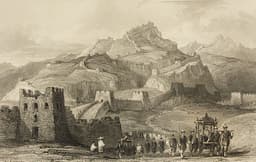
King Wuling of Zhao
Emperor · Ancient
60.6Total
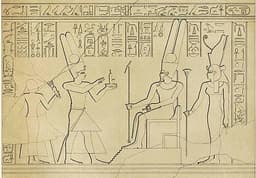
Taharqa
Emperor · Ancient
58.2Total
Basic Information
Born
-340
-690
Died
-295
-664
Era
Ancient
Ancient
Nationality
China
Third Intermediate Egypt
Occupation
Emperor
Emperor
Civilization
Eastern
Other
Score Comparison
Military (10%)
67.3
52.5
Political (20%)
65.0
68.0
Influence (20%)
55.0
56.4
Legacy (20%)
52.0
48.3
Leadership (15%)
66.0
74.0
Strategy (15%)
75.0
55.0
TOTAL
60.6
58.2
King Wuling of Zhao — Complete Timeline
307 BC
Introduced cavalry and Hu clothing reformsReform
King Wuling of Zhao ordered his army to adopt the clothing and archery techniques of the nomadic Hu (Xiongnu) peoples, including trousers and horseback archery. This military reform created a highly mobile cavalry force that gave Zhao a tactical advantage over rival states.
Military ReformCavalryCultural Change
Impact: regionalconstructive
299 BC
Abdicated in favor of his sonPolitical Action◆ Major
King Wuling abdicated the throne to his son, King Huiwen, but retained power as 'Lord Father' (Zhufu). This unusual arrangement was intended to allow him to focus on military campaigns, but it created a power struggle within the royal family.
AbdicationPower StruggleSuccession
Impact: national
296 BC
Conquered the Zhongshan stateWar◆ Major
King Wuling led a prolonged campaign to conquer the Zhongshan state, a non-Chinese kingdom located within Zhao's borders. The annexation of Zhongshan expanded Zhao's territory and population, strengthening its position among the Warring States.
ConquestTerritorial ExpansionZhongshan
Impact: regional
295 BC
Starved to death in the Shaqiu PalacePolitical Action◆ Major
During a succession conflict between his sons, King Wuling was trapped in the Shaqiu Palace by rebels loyal to his grandson. He was denied food and water for three months, eventually starving to death. His death ended Zhao's period of expansion.
DeathSuccession CrisisTragedy
Impact: nationaltragic
Taharqa — Complete Timeline
701 BC
Mention in the Bible as TirhakahCultural
Taharqa is mentioned in the Hebrew Bible (2 Kings 19:9, Isaiah 37:9) as 'Tirhakah, king of Cush,' who marched against the Assyrian king Sennacherib during the siege of Jerusalem. This reference confirms his historical significance in the Levant.
BiblicalTirhakahJerusalem
Impact: regional
690 BC
Accession to the thronePolitical Action◆ Major
Taharqa became pharaoh of the 25th Dynasty, succeeding his brother Shebitku. He inherited a kingdom facing Assyrian expansion under Sennacherib and later Esarhaddon.
Accession25th DynastyKushite
Impact: national
680 BC
Construction of the Kawa TempleCultural◆ Major
Taharqa commissioned a large temple to the god Amun at Kawa in Nubia, along with other building projects at Karnak and Jebel Barkal. These constructions reinforced Kushite religious legitimacy.
ArchitectureTempleKawa
Impact: regionalconstructive
671 BC
Assyrian invasion of EgyptWar
The Assyrian king Esarhaddon invaded Egypt, defeating Taharqa's forces at the Battle of Ishupri. Esarhaddon captured Memphis, forcing Taharqa to flee south to Nubia, and installed Assyrian vassal rulers.
Assyrian InvasionEsarhaddonMemphis
Impact: regionaldestructive
669 BC
Recapture of MemphisWar◆ Major
After Esarhaddon's death, Taharqa returned from Nubia and recaptured Memphis from the Assyrian garrison. This brief reconquest restored Kushite control over Lower Egypt for a short period.
RecaptureMemphisKushite
Impact: regional
664 BC
Final defeat by AshurbanipalWar
The Assyrian king Ashurbanipal launched a second invasion of Egypt, defeating Taharqa's forces and sacking Thebes. Taharqa fled to Nubia, where he died later that year, ending effective Kushite rule over Egypt.
AshurbanipalThebesKushite Defeat
Impact: regionaltragic
Expert Analysis
Origins
King Wuling of Zhao (c. 340–295 BCE) was a ruler of the Zhao state during the Warring States period in China. Born as the son of King Su of Zhao, he ascended the throne in 325 BCE at a time when Zhao was a relatively weak state surrounded by aggressive neighbors. His early life was shaped by the constant warfare and the need for military innovation.
Taharqa (c. 690–664 BCE) was a Kushite pharaoh of the 25th Dynasty of Egypt, also known as Tirhakah in the Bible. He was born in Nubia (modern Sudan) as the son of Piye, the founder of the dynasty. Taharqa grew up in the royal court at Napata and was educated in both Egyptian and Kushite traditions. His brother Shebitku preceded him as pharaoh.
Rise to Power
King Wuling inherited the Zhao throne in 325 BCE. His key turning point was the decision to reform the army by adopting cavalry and Hu clothing. In 307 BCE, he ordered his soldiers to wear trousers and use horseback archery, a radical move that broke with Chinese tradition. This reform allowed Zhao to field a mobile cavalry force, leading to the conquest of the Zhongshan state in 295 BCE after a prolonged campaign.
Taharqa became pharaoh around 690 BCE after the death of his brother Shebitku. He inherited a kingdom threatened by the expanding Assyrian Empire under Sennacherib and later Esarhaddon. His early reign focused on consolidating control over Egypt and Nubia, and he launched building projects to legitimize his rule.
Leadership & Governance
King Wuling was a reformer who prioritized military strength over tradition. He personally led campaigns and was willing to share power by abdicating in 299 BCE to his son Huiwen while retaining authority as 'Lord Father.' However, this arrangement led to instability and a succession crisis.
Taharqa was a capable administrator who invested in monumental construction, including temples at Kawa, Karnak, and Jebel Barkal. He maintained Kushite control over Egypt through a combination of diplomacy and military force. His leadership scored 74.0, reflecting his ability to inspire loyalty and manage a diverse empire.
Triumph & Tragedy
King Wuling's greatest triumph was the conquest of Zhongshan, which expanded Zhao's territory and demonstrated the effectiveness of his cavalry reforms. He also successfully defended against neighboring states. However, his abdication led to a civil war between his sons. In 295 BCE, he was trapped in the Shaqiu Palace by rebels and starved to death, a tragic end for a reformer.
Taharqa's greatest success was the brief recapture of Memphis from the Assyrians after Esarhaddon's death in 669 BCE. He also left a lasting cultural legacy through his building projects. But his reign ended in defeat: Assyrian king Ashurbanipal invaded Egypt in 664 BCE, sacking Thebes and forcing Taharqa to flee to Nubia, where he died. His military score of 52.5 reflects these losses.
Character & Destiny
King Wuling was bold and innovative, willing to defy tradition for strategic advantage. His decision to abdicate showed a desire to groom his successor but also revealed a lack of foresight about the power struggles it would cause. His death was a direct result of his unconventional governance.
Taharqa was a resilient leader who fought to preserve his empire against overwhelming odds. His determination to reclaim Memphis showed his strategic ambition, but he ultimately faced superior Assyrian military power. His leadership score of 74.0 indicates his ability to rally his people, but his strategy score of 55.0 suggests he was outmatched tactically.
Legacy
King Wuling's cavalry reforms had a lasting impact on Chinese warfare. The adoption of horseback archery spread to other states and eventually contributed to the unification of China under the Qin. He is remembered as a visionary reformer, though his personal tragedy is often highlighted. His influence score is 55.0, reflecting moderate long-term impact.
Taharqa's legacy is more mixed. He is remembered as a great builder and the last pharaoh of the 25th Dynasty. His role in biblical history (as Tirhakah) gives him a presence in religious texts. However, his empire collapsed after his death, and Egypt fell under Assyrian control. His influence score is 56.4, slightly higher than Wuling's.
Conclusion
While both figures faced significant challenges, King Wuling of Zhao had a greater overall impact. His military reforms (scoring 75.0 in strategy) changed Chinese military doctrine and contributed to the end of the Warring States period. In contrast, Taharqa's reign ended in defeat and the collapse of his dynasty. The total score gap of 2.4 points reflects Wuling's edge in military and strategy, despite Taharqa's higher leadership score. King Wuling's innovations proved more enduring, making him the more consequential historical figure.
Rankings
🥇
King Wuling of ZhaoLeader
Mil: 67.3Pol: 65.0Inf: 55.0
60.6
🥈
Taharqa
Mil: 52.5Pol: 68.0Inf: 56.4
58.2
+2.4 behind
How This Comparison Works
Algorithm
Each figure is scored on 6 dimensions (0—100 scale) based on structured historical data: Military (10%), Political (20%), Influence (20%), Legacy (20%), Leadership (15%), Strategy (15%). The weighted total produces the final ranking.
Data Sources
Scores are computed from structured sub-indicators in the database. Scale factors adjust for era (Ancient ×0.85, Modern ×1.0) and civilization size (Eastern ×1.05, Other ×0.80) to account for differences in population and military scale.
Maximum 3 Figures
Comparisons are limited to 2—3 figures to ensure readability and statistical meaningfulness.
Error Margins
±5 points per dimension — Sub-scores are derived from historical records with inherent uncertainty. Two figures within 5 points on a dimension should be considered roughly equivalent in that area.
Total Score Accuracy
±3 points overall — The weighted combination of 6 dimensions produces a total score with approximately ±3 points of uncertainty. Differences of less than 3 points are not statistically significant— the figures are effectively tied.
Known Limitations
- Historical records are incomplete and uneven across civilizations
- Figures from oral-tradition societies may be underrepresented
- Occupation labels can misclassify multi-role figures
- Scores measure capability and impact, not moral character
- Quantitative scoring is a comparison tool, not absolute truth
Capability Radar
Military (10%) — Battles & Warfare
Battles
65
55
Win Rate
70
40
Expansion
70
60
Political (20%) — Governance & Reform
Reform
85
50
Diplomacy
70
55
Economy
65
50
Influence (20%) — Cultural & Global Reach
Cultural
75
55
Global
60
45
Legacy (20%) — Historical Impact
Historical
80
60
Longevity
70
50
Leadership (15%) — Power & Stability
Tenure
75
65
Stability
60
45
Strategy (15%) — Tactics & Innovation
Strategy
75
55
Tactics
80
50
Reform
90
45
Similar Comparisons
Comments & Discussion
No comments yet. Be the first to share your thoughts!