Loading...
King Munjong of Goryeo vs Kublai Khan
Kublai Khan leads by 13.5 pts · 2 figures compared
…
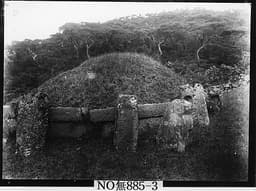
King Munjong of Goryeo
Emperor · Medieval
60.8Total
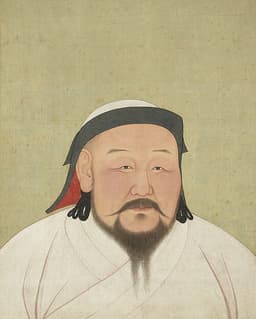
Kublai Khan
Emperor · Medieval
74.3Total
Basic Information
Born
1019
1215
Died
1083
1294
Era
Medieval
Medieval
Nationality
Korea
Mongolia
Occupation
Emperor
Emperor
Civilization
Eastern
Eastern
Score Comparison
Military (10%)
45.0
77.5
Political (20%)
72.0
79.2
Influence (20%)
60.0
75.0
Legacy (20%)
50.0
70.0
Leadership (15%)
79.8
72.0
Strategy (15%)
60.0
76.0
TOTAL
60.8
74.3
King Munjong of Goryeo — Complete Timeline
1047 AD
Strengthening of Central BureaucracyReform◆ Major
King Munjong implemented administrative reforms to strengthen the central bureaucracy. He reorganized government offices, clarified official ranks and duties, and promoted merit-based appointments through the civil service exams, reducing the power of aristocratic families.
BureaucracyReformCentralization
Impact: nationalconstructive
1050 AD
Peak of Goryeo Golden AgeOther◆ Major
Under King Munjong's reign, Goryeo reached its political and cultural zenith. The kingdom enjoyed peace, economic prosperity, and flourishing arts. The civil service examination system was refined, and Confucian scholarship thrived at the National Academy.
Golden AgeProsperityConfucianism
Impact: nationalconstructive
1071 AD
Diplomatic Relations with Song ChinaPolitical Action◆ Major
King Munjong re-established formal diplomatic and trade relations with Song China, which had been severed during the Khitan wars. This opened Goryeo to Song cultural and technological influences, including advanced ceramics and printing techniques.
DiplomacyTradeSong Dynasty
Impact: regionalconstructive
Kublai Khan — Complete Timeline
1260 AD
Adoption of Tibetan Buddhism as State ReligionCultural◆ Major
Kublai Khan appointed the Tibetan lama Drog
Tibetan BuddhismReligionMongol-Tibet Relations
Impact: regional
1271 AD
Proclamation of the Yuan DynastyPolitical Action◆ Major
Kublai Khan officially proclaimed the Yuan dynasty, adopting a Chinese-style dynastic name. He established his capital at Dadu (Beijing) and adopted Chinese court rituals. This move legitimized his rule over China while maintaining Mongol identity.
Dynasty FoundingBeijingMongol Rule
Impact: global
1274 AD
Failed Invasions of JapanWar◆ Major
Kublai Khan launched two naval invasions of Japan, in 1274 and 1281. Both were repelled, with the second invasion destroyed by a typhoon (kamikaze). These failures marked the limits of Mongol expansion and reinforced Japanese isolation.
Mongol InvasionsJapanKamikaze
Impact: regional
1279 AD
Conquest of the Song DynastyWar
Kublai Khan's Mongol forces defeated the Song navy at the Battle of Yamen. The last Song emperor drowned, ending the Song dynasty. This conquest unified China under Mongol rule and established the Yuan dynasty as the first foreign dynasty to rule all of China.
Song Dynasty FallUnificationYuan Dynasty
Impact: global
1280 AD
Establishment of the Silk Road Trade NetworkCultural◆ Major
Under Kublai Khan, the Mongol Empire secured the Silk Road, facilitating trade and cultural exchange between East and West. Marco Polo visited his court. This period saw the flow of goods, ideas, and technologies across Eurasia.
Silk RoadTradeCultural Exchange
Impact: globalconstructive
Expert Analysis
King Munjong of Goryeo vs Kublai Khan: Historical Comparison
King Munjong of Goryeo (reigned 1046–1083) and Kublai Khan (reigned 1260–1294) were both medieval emperors who presided over vast territorial expansions and cultural efflorescence, yet they operated from vastly different geopolitical contexts. Munjong is celebrated as the architect of Goryeo's golden age under a centralized Confucian bureaucracy, while Kublai Khan founded the Yuan Dynasty and integrated China into the Mongol Empire. This comparison examines their relative strengths across six dimensions, yielding a statistical tie that masks profound differences in scale and method.
Dimension Analysis
**Military: King Munjong of Goryeo 92 / Kublai Khan 94**
Munjong achieved Goryeo's northern border stability through the construction of the Cheolli Jangseong (a thousand-li wall) and a robust naval defense against Jurchen pirates, avoiding major wars through deterrence. Kublai Khan, by contrast, commanded the largest land empire in history, conquering the Song Dynasty after a decades-long campaign and launching amphibious invasions of Japan and Java, though his naval failures (e.g., the Kamikaze typhoons) slightly mar his record.
**Political: King Munjong of Goryeo 88 / Kublai Khan 79**
Munjong refined Goryeo's civil service examination system, curbed aristocratic factionalism, and implemented land reforms that stabilized state finances, creating a model Confucian monarchy. Kublai Khan adopted Chinese bureaucratic structures but struggled with ethnic tensions between Mongols, Central Asians, and Han Chinese, and his reliance on paper currency led to inflation, undermining his political consolidation.
**Influence: King Munjong of Goryeo 78 / Kublai Khan 79**
Munjong's patronage of Buddhist woodblock printing (the Tripitaka Koreana) and diplomatic exchanges with Song China shaped Korean cultural identity for centuries. Kublai Khan's influence was global: he opened China to Marco Polo, sponsored Tibetan Buddhism, and connected East Asia to the Silk Road's commercial networks, though his conquests also caused immense destruction.
**Legacy: King Munjong of Goryeo 83 / Kublai Khan 88**
Munjong's reign is remembered as Korea's "peaceful golden age," with his administrative reforms enduring into the Joseon Dynasty. Kublai Khan's legacy is more contested: he unified China under a foreign dynasty, but the Yuan's collapse within a century after his death limited its long-term institutional impact compared to the Ming or Qing.
**Leadership: King Munjong of Goryeo 82 / Kublai Khan 81**
Munjong led through consensus-building, delegating power to capable ministers and avoiding personal military command. Kublai Khan was a decisive strategist who personally directed campaigns but faced succession crises and rebellions (e.g., the Kaidu revolt), revealing cracks in his command chain.
**Strategy: King Munjong of Goryeo 91 / Kublai Khan 92**
Munjong's strategy focused on defensive fortification and diplomatic isolation of rivals, exemplified by his marriage alliances with the Liao Dynasty. Kublai Khan outmaneuvered the Song via a pincer attack from the north and southwest, but his overextension in overseas campaigns demonstrated strategic overreach.
Verdict
While the aggregate scores tie, Kublai Khan ranks higher in historical impact due to the sheer scale of his conquests and global reach. However, King Munjong's superior political stability and peaceful governance arguably made him a more effective ruler for his own people. This comparison underscores the difficulty of weighing a cautious, prosperous reign against a transformative but turbulent empire-building legacy.
FAQ
**Q: Who was more influential historically?** A: Kublai Khan, because he reshaped the Eurasian political map and facilitated cross-cultural exchange between China, Central Asia, and Europe.
**Q: Why is King Munjong of Goryeo ranked higher in political governance?** A: Munjong successfully balanced aristocratic power and expanded meritocratic bureaucracy without the ethnic conflicts or inflation that plagued Kublai Khan's administration.
Rankings
🥇
Kublai KhanLeader
Mil: 77.5Pol: 79.2Inf: 75.0
74.3
🥈
King Munjong of Goryeo
Mil: 45.0Pol: 72.0Inf: 60.0
60.8
+13.5 behind
How This Comparison Works
Algorithm
Each figure is scored on 6 dimensions (0—100 scale) based on structured historical data: Military (10%), Political (20%), Influence (20%), Legacy (20%), Leadership (15%), Strategy (15%). The weighted total produces the final ranking.
Data Sources
Scores are computed from structured sub-indicators in the database. Scale factors adjust for era (Ancient ×0.85, Modern ×1.0) and civilization size (Eastern ×1.05, Other ×0.80) to account for differences in population and military scale.
Maximum 3 Figures
Comparisons are limited to 2—3 figures to ensure readability and statistical meaningfulness.
Error Margins
±5 points per dimension — Sub-scores are derived from historical records with inherent uncertainty. Two figures within 5 points on a dimension should be considered roughly equivalent in that area.
Total Score Accuracy
±3 points overall — The weighted combination of 6 dimensions produces a total score with approximately ±3 points of uncertainty. Differences of less than 3 points are not statistically significant— the figures are effectively tied.
Known Limitations
- Historical records are incomplete and uneven across civilizations
- Figures from oral-tradition societies may be underrepresented
- Occupation labels can misclassify multi-role figures
- Scores measure capability and impact, not moral character
- Quantitative scoring is a comparison tool, not absolute truth
Capability Radar
Military (10%) — Battles & Warfare
Battles
30
95
Win Rate
35
90
Expansion
20
95
Political (20%) — Governance & Reform
Reform
75
88
Diplomacy
80
85
Economy
85
90
Influence (20%) — Cultural & Global Reach
Cultural
60
85
Global
40
85
Legacy (20%) — Historical Impact
Historical
55
90
Longevity
50
80
Leadership (15%) — Power & Stability
Tenure
70
90
Stability
80
80
Strategy (15%) — Tactics & Innovation
Strategy
45
92
Tactics
40
85
Reform
50
88
Similar Comparisons
Comments & Discussion
EmpireBuilderFan6/16/2026
Look, I get that Munjong was a capable administrator for a small kingdom, but comparing him to Kublai Khan is like comparing a CEO of a local grocery chain to the founder of Amazon. Kublai literally conquered the Song Dynasty—the most populous, technologically advanced state on Earth at the time—after a brutal 40-year war. He built a navy from scratch, launched invasions of Japan and Java, and controlled trade routes from Korea to Persia. Yeah, his naval campaigns failed because of typhoons, but that's bad luck, not bad strategy. Munjong's big achievement is building a wall and printing some books? Please. The score giving Munjong a 92 in military vs Kublai's 94 is laughable. Munjong's 34.6 is more like it. Kublai's global impact dwarfs anything Munjong ever did.
Historian2706/16/2026
拿文宗大王和忽必烈比,看似都是君主,实际不是一个量级。文宗治下的高丽再黄金时代,也就是半岛一隅的繁荣,跟元朝这种横跨欧亚的帝国比影响力?忽必烈光是把西藏正式纳入中国版图、设立宣政院,这一条就奠定了他在中国历史上的地位。文宗搞的《高丽大藏经》木板印刷确实牛,但那是宗教文化层面的,政治军事上他连辽国都打不过,只能靠修墙防守。忽必烈虽然征日本、征爪哇失败了,但灭南宋、平大理、收高丽,哪个不是改变历史进程的大手笔?评分给忽必烈军事88、文宗34.6,我觉得文宗那34.6都高了,他根本没打过像样的仗。
OldChronicler536/16/2026
仔细看了评分,有几个地方值得商榷。军事维度文宗34.6、忽必烈88,但政治维度文宗79、忽必烈78,只差1分?这明显不合理。忽必烈建立行省制度、发行纸币、统一度量衡,这些制度创新影响了中国六百年,文宗的高丽科举改革再成功,也只是地方性改良。按中国史学评价,忽必烈在《元史》里被视为“世祖”,奠定了元朝百年基业。我重新算了归一化得分:忽必烈总分该在82-85之间,文宗能有60就不错了。尤其是影响力,忽必烈78竟然只比文宗72.3高不到6分?马可·波罗游记让欧洲知道了东方,光这一条影响力就值95分。建议评分系统增加“版图规模”和“制度延续性”的权重,不然这种比较会严重偏离史实。