Loading...
This comparison has not been analyzed yet.
One-time AI generation (~1 minute). Scores and timeline are already available below.
King Jinpyeong of Silla vs Moggallana I
King Jinpyeong of Silla leads by 9.1 pts · 2 figures compared
…

King Jinpyeong of Silla
Emperor · Ancient
47.7Total
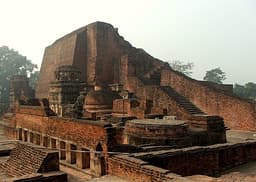
Moggallana I
Emperor · Ancient
38.6Total
Basic Information
Born
-567
495
Died
—
512
Era
Ancient
Ancient
Nationality
Korea
Sri Lanka
Occupation
Emperor
Emperor
Civilization
Eastern
Indian
Score Comparison
Military (10%)
25.9
47.5
Political (20%)
46.6
25.0
Influence (20%)
51.8
44.0
Legacy (20%)
41.7
35.0
Leadership (15%)
74.0
45.0
Strategy (15%)
36.8
35.7
TOTAL
47.7
38.6
King Jinpyeong of Silla — Complete Timeline
576 AD
Establishment of the Hwarang as state institutionReform
Jinpyeong formally integrated the Hwarang youth corps into Silla's state structure, providing them with official ranks and responsibilities. This institutionalization ensured the Hwarang's role in military leadership and political administration, strengthening Silla's governance.
HwarangAdministrationSilla
Impact: nationalconstructive
580 AD
Patronage of Buddhist scholarshipCultural
King Jinpyeong supported the translation and dissemination of Buddhist sutras in Silla. He invited monks from China and sponsored the construction of temples, fostering a flourishing Buddhist intellectual tradition that influenced Silla's governance and culture.
BuddhismScholarshipSilla
Impact: nationalconstructive
589 AD
Diplomatic missions to Sui ChinaPolitical Action
Jinpyeong sent envoys to the Sui dynasty court in China, establishing tributary relations. This diplomatic engagement secured Silla's position as a recognized state and provided access to Chinese military technology and cultural practices.
DiplomacySui ChinaSilla
Impact: regionalconstructive
595 AD
Defense against Goguryeo invasionsWar◆ Major
Jinpyeong's forces repelled multiple invasions by Goguryeo, which sought to expand southward. These defensive campaigns protected Silla's territory and maintained the balance of power among the Three Kingdoms, preventing Goguryeo from dominating the peninsula.
DefenseGoguryeoSilla
Impact: regional
Moggallana I — Complete Timeline
495 AD
Battle of SigiriyaWar◆ Major
Moggallana I defeated his brother Kashyapa at Sigiriya. Kashyapa, who had killed their father Dhatusena and usurped the throne, committed suicide when his army abandoned him during the battle.
Civil WarBattleDynastic Conflict
Impact: national
496 AD
Restoration of Anuradhapura as CapitalPolitical Action
After defeating Kashyapa, Moggallana I moved the capital back to Anuradhapura from Sigiriya. He restored the traditional seat of power and re-established the legitimate line of succession.
CapitalRestorationGovernance
Impact: nationalconstructive
500 AD
Construction of Moggallana TankOther
Moggallana I constructed the Moggallana tank, an irrigation reservoir in the North Central Province. This tank contributed to the agricultural infrastructure of the kingdom.
IrrigationAgricultureInfrastructure
constructive
This comparison has not been analyzed yet.
One-time AI generation (~1 minute). Scores and timeline are already available below.
Rankings
🥇
King Jinpyeong of SillaLeader
Mil: 25.9Pol: 46.6Inf: 51.8
47.7
🥈
Moggallana I
Mil: 47.5Pol: 25.0Inf: 44.0
38.6
+9.1 behind
How This Comparison Works
Algorithm
Each figure is scored on 6 dimensions (0—100 scale) based on structured historical data: Military (10%), Political (20%), Influence (20%), Legacy (20%), Leadership (15%), Strategy (15%). The weighted total produces the final ranking.
Data Sources
Scores are computed from structured sub-indicators in the database. Scale factors adjust for era (Ancient ×0.85, Modern ×1.0) and civilization size (Eastern ×1.05, Other ×0.80) to account for differences in population and military scale.
Maximum 3 Figures
Comparisons are limited to 2—3 figures to ensure readability and statistical meaningfulness.
Error Margins
±5 points per dimension — Sub-scores are derived from historical records with inherent uncertainty. Two figures within 5 points on a dimension should be considered roughly equivalent in that area.
Total Score Accuracy
±3 points overall — The weighted combination of 6 dimensions produces a total score with approximately ±3 points of uncertainty. Differences of less than 3 points are not statistically significant— the figures are effectively tied.
Known Limitations
- Historical records are incomplete and uneven across civilizations
- Figures from oral-tradition societies may be underrepresented
- Occupation labels can misclassify multi-role figures
- Scores measure capability and impact, not moral character
- Quantitative scoring is a comparison tool, not absolute truth
Capability Radar
Military (10%) — Battles & Warfare
Battles
10
20
Win Rate
10
25
Expansion
10
15
Political (20%) — Governance & Reform
Reform
40
15
Diplomacy
50
20
Economy
40
20
Influence (20%) — Cultural & Global Reach
Cultural
50
15
Global
20
5
Legacy (20%) — Historical Impact
Historical
40
20
Longevity
30
10
Leadership (15%) — Power & Stability
Tenure
60
30
Stability
50
25
Strategy (15%) — Tactics & Innovation
Strategy
10
15
Tactics
10
20
Reform
10
10
Similar Comparisons
Comments & Discussion
No comments yet. Be the first to share your thoughts!