Loading...
Moggallana I vs Thutmose IV
Thutmose IV leads by 3.4 pts · 2 figures compared
…
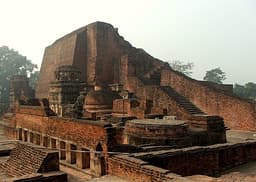
Moggallana I
Emperor · Ancient
38.6Total

Thutmose IV
Emperor · Ancient
42.0Total
Basic Information
Born
495
-1400
Died
512
-1390
Era
Ancient
Ancient
Nationality
Sri Lanka
Egypt
Occupation
Emperor
Emperor
Civilization
Indian
Middle Eastern
Score Comparison
Military (10%)
47.5
47.5
Political (20%)
25.0
27.9
Influence (20%)
44.0
49.4
Legacy (20%)
35.0
41.7
Leadership (15%)
45.0
48.4
Strategy (15%)
35.7
30.3
TOTAL
38.6
42.0
Moggallana I — Complete Timeline
495 AD
Battle of SigiriyaWar◆ Major
Moggallana I defeated his brother Kashyapa at Sigiriya. Kashyapa, who had killed their father Dhatusena and usurped the throne, committed suicide when his army abandoned him during the battle.
Civil WarBattleDynastic Conflict
Impact: national
496 AD
Restoration of Anuradhapura as CapitalPolitical Action
After defeating Kashyapa, Moggallana I moved the capital back to Anuradhapura from Sigiriya. He restored the traditional seat of power and re-established the legitimate line of succession.
CapitalRestorationGovernance
Impact: nationalconstructive
500 AD
Construction of Moggallana TankOther
Moggallana I constructed the Moggallana tank, an irrigation reservoir in the North Central Province. This tank contributed to the agricultural infrastructure of the kingdom.
IrrigationAgricultureInfrastructure
constructive
Thutmose IV — Complete Timeline
1400 BC
Dream Stele InscriptionCultural◆ Major
Thutmose IV erected the Dream Stele between the paws of the Great Sphinx of Giza. The inscription recounts a dream in which the god Harmachis promised him the throne if he cleared the sand from the Sphinx. This act legitimized his rule and restored the monument.
SphinxDream SteleRestoration
Impact: globalconstructive
1398 BC
Campaign in NubiaWar
Thutmose IV led a campaign into Nubia to suppress a rebellion and secure gold mines. He defeated the rebels and extended Egyptian control southward, ensuring continued access to valuable resources.
NubiaGoldRebellion
Impact: regional
1395 BC
Marriage to a Mitanni PrincessPolitical Action◆ Major
Thutmose IV married a daughter of the Mitanni king Artatama I, sealing a peace treaty between Egypt and Mitanni. This diplomatic marriage ended hostilities and established an alliance that lasted for decades.
DiplomacyMitanniMarriage
Impact: regionalconstructive
Expert Analysis
Origins
Moggallana I (born c. 470 CE) was a prince of the Moriya dynasty in Sri Lanka. His father, King Dhatusena, had restored the kingdom after decades of foreign rule. Moggallana was the rightful heir, but his half-brother Kashyapa murdered their father and seized the throne in 477 CE. Moggallana fled to India, where he gathered support from local rulers. His early life was defined by exile and the need to reclaim his birthright.
Thutmose IV (born c. 1400 BCE) was a pharaoh of the 18th Dynasty of Egypt, son of Amenhotep II. He was not the crown prince; his elder brother was originally intended to succeed. Thutmose IV's early life is shrouded in mystery, but he likely received military training and was involved in his father's campaigns. His famous Dream Stele narrative suggests he was a prince who proved his legitimacy through divine intervention.
Rise to Power
Moggallana I's rise came through the Battle of Sigiriya (c. 495 CE). After years of preparation, he returned from India with an army and confronted Kashyapa at Sigiriya, the fortress capital built by the usurper. In the battle, Kashyapa's army was defeated; Kashyapa committed suicide when his elephant veered into a marsh. Moggallana then marched to Anuradhapura and was crowned king. His rise was a classic restoration of a deposed dynasty through military force.
Thutmose IV's rise to power was less violent. After the death of Amenhotep II, Thutmose IV claimed the throne, possibly against his elder brother's claims. To legitimize his rule, he commissioned the Dream Stele, which he placed between the paws of the Great Sphinx. The stele recounts that while hunting, he fell asleep near the Sphinx, and the god Harmachis promised him the throne if he cleared the sand from the statue. This act of restoration became a powerful propaganda tool, establishing him as divinely chosen.
Leadership & Governance
Moggallana I's governance focused on restoring traditional institutions. He moved the capital back to Anuradhapura from Sigiriya, reestablishing the traditional seat of power. He invested in irrigation infrastructure, building the Moggallana Tank to support agriculture. His leadership style was conservative and restorationist, aiming to undo the changes made by Kashyapa. However, his political score of 25.0 reflects limited administrative reforms or diplomatic initiatives.
Thutmose IV was a diplomat and builder. He secured Egypt's borders through a marriage alliance with Mitanni, marrying a princess to end hostilities. This diplomatic approach scored him 27.9 in politics, slightly higher than Moggallana. He also led a campaign in Nubia to suppress a rebellion and secure gold mines, maintaining Egyptian control. His building projects included additions to the Temple of Karnak and the restoration of the Sphinx, which boosted his influence score of 49.4.
Triumph & Tragedy
Moggallana I's greatest triumph was defeating Kashyapa and reclaiming the throne, ending a usurpation that had lasted 18 years. His restoration of Anuradhapura as capital reestablished stability. His construction of the Moggallana Tank improved irrigation, aiding agriculture. However, his failure to expand the kingdom or forge strong alliances left his legacy limited. His military score of 47.5 matches Thutmose IV's, but his overall score of 38.6 is lower due to weaker political and influence scores.
Thutmose IV's greatest triumph was the Dream Stele, which not only legitimized his rule but also preserved the Sphinx for millennia. His diplomatic marriage to a Mitanni princess brought peace and stability to Egypt's northern border. However, his Nubian campaign, while successful, was a typical imperial venture. His legacy is also marred by the fact that his son, Amenhotep III, would later overshadow him. Thutmose IV's overall score of 42.0 reflects a balanced but unspectacular reign.
Character & Destiny
Moggallana I was a determined and patient figure, waiting years in exile before striking. His decision to restore the capital to Anuradhapura shows a reverence for tradition. However, his reliance on military force and lack of diplomatic outreach may have limited his impact. His character was shaped by the injustice of his father's murder, driving his quest for revenge and restoration.
Thutmose IV was pragmatic and shrewd, using propaganda (the Dream Stele) to secure his position. His willingness to marry a foreign princess for peace indicates a diplomatic mindset. However, his reign was relatively short (c. 1400–1390 BCE), and he did not achieve the monumental building projects of his predecessors. His destiny was to be a transitional figure, maintaining the empire rather than expanding it.
Legacy
Moggallana I's legacy is primarily as the restorer of the Moriya dynasty. The Moggallana Tank still exists as a historical irrigation work, but his reign is often overshadowed by the dramatic story of Sigiriya. In Sri Lankan history, he is remembered as the rightful king who punished a parricide. His legacy score of 35.0 reflects this limited but solid impact.
Thutmose IV's legacy is more enduring. The Dream Stele remains a famous artifact, and his role in preserving the Sphinx is celebrated. His diplomatic marriage set a precedent for Egyptian foreign policy. However, his reign is often seen as a prelude to the golden age of his son, Amenhotep III. His legacy score of 41.7 is higher than Moggallana's, reflecting broader recognition.
Conclusion
Thutmose IV had a greater impact than Moggallana I. While Moggallana restored his dynasty and built a tank, Thutmose IV's actions—the Dream Stele, the Mitanni alliance, and the Nubian campaign—had wider historical and cultural significance. Thutmose IV's total score of 42.0 surpasses Moggallana's 38.6, and his influence score of 49.4 dwarfs Moggallana's 44.0. Thutmose IV's legacy is tied to one of the world's most iconic monuments, the Sphinx, ensuring his name endures. Moggallana I, though a capable restorer, remains a regional figure. Thus, Thutmose IV is the more significant ruler.
Rankings
🥇
Thutmose IVLeader
Mil: 47.5Pol: 27.9Inf: 49.4
42.0
🥈
Moggallana I
Mil: 47.5Pol: 25.0Inf: 44.0
38.6
+3.4 behind
How This Comparison Works
Algorithm
Each figure is scored on 6 dimensions (0—100 scale) based on structured historical data: Military (10%), Political (20%), Influence (20%), Legacy (20%), Leadership (15%), Strategy (15%). The weighted total produces the final ranking.
Data Sources
Scores are computed from structured sub-indicators in the database. Scale factors adjust for era (Ancient ×0.85, Modern ×1.0) and civilization size (Eastern ×1.05, Other ×0.80) to account for differences in population and military scale.
Maximum 3 Figures
Comparisons are limited to 2—3 figures to ensure readability and statistical meaningfulness.
Error Margins
±5 points per dimension — Sub-scores are derived from historical records with inherent uncertainty. Two figures within 5 points on a dimension should be considered roughly equivalent in that area.
Total Score Accuracy
±3 points overall — The weighted combination of 6 dimensions produces a total score with approximately ±3 points of uncertainty. Differences of less than 3 points are not statistically significant— the figures are effectively tied.
Known Limitations
- Historical records are incomplete and uneven across civilizations
- Figures from oral-tradition societies may be underrepresented
- Occupation labels can misclassify multi-role figures
- Scores measure capability and impact, not moral character
- Quantitative scoring is a comparison tool, not absolute truth
Capability Radar
Military (10%) — Battles & Warfare
Battles
20
20
Win Rate
25
25
Expansion
15
15
Political (20%) — Governance & Reform
Reform
15
20
Diplomacy
20
25
Economy
20
20
Influence (20%) — Cultural & Global Reach
Cultural
15
35
Global
5
20
Legacy (20%) — Historical Impact
Historical
20
40
Longevity
10
30
Leadership (15%) — Power & Stability
Tenure
30
30
Stability
25
30
Strategy (15%) — Tactics & Innovation
Strategy
15
15
Tactics
20
15
Reform
10
10
Similar Comparisons
Comments & Discussion
No comments yet. Be the first to share your thoughts!