Loading...
King David vs Rama of Ayodhya
King David leads by 0.0 pts · 2 figures compared
…

King David
Emperor · Ancient
75.3Total
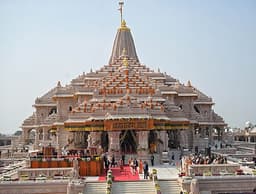
Rama of Ayodhya
Emperor · Ancient
75.3Total
Basic Information
Born
-1010
-1180
Died
-970
-1120
Era
Ancient
Ancient
Nationality
Israel
Vedic India
Occupation
Emperor
Emperor
Civilization
Middle Eastern
Indian
Score Comparison
Military (10%)
72.0
72.0
Political (20%)
72.0
72.0
Influence (20%)
88.0
75.0
Legacy (20%)
70.0
80.0
Leadership (15%)
72.0
78.0
Strategy (15%)
70.0
68.1
TOTAL
75.3
75.3
King David — Complete Timeline
1010 BC
Anointed as King of JudahPolitical Action◆ Major
After Saul's death, David was anointed king over the tribe of Judah at Hebron. This began a seven-year period of civil war with Ish-bosheth, Saul's son, who ruled the northern tribes, leading to the eventual unification of Israel.
KingshipCivil WarJudah
Impact: national
1003 BC
Capture of JerusalemWar
David led his army to capture the Jebusite fortress of Jerusalem, making it the capital of the united kingdom. He brought the Ark of the Covenant there, establishing the city as both the political and religious center of Israel.
JerusalemCapitalArk of the Covenant
Impact: nationalconstructive
1000 BC
Defeat of the PhilistinesWar◆ Major
David fought several campaigns that decisively defeated the Philistines, including the Battle of Baal-perazim. He captured Gath and other Philistine strongholds, ending their dominance over Israel and securing the kingdom's borders.
PhilistinesMilitary CampaignIsrael
Impact: regional
990 BC
Affair with BathshebaPolitical Action◆ Major
David committed adultery with Bathsheba and arranged the death of her husband Uriah the Hittite in battle. The prophet Nathan confronted David, leading to his repentance but also to divine punishment, including the death of their first child.
ScandalBathshebaNathan
Impact: nationaldestructive
978 BC
Revolt of AbsalomWar◆ Major
David's son Absalom led a rebellion that forced David to flee Jerusalem. David's forces under Joab defeated Absalom's army in the Forest of Ephraim, and Absalom was killed. David returned to Jerusalem but the kingdom was weakened.
RebellionCivil WarAbsalom
Impact: nationaltragic
Rama of Ayodhya — Complete Timeline
1160 BC
Broke Shiva's Bow at Sita's SwayamvaraCultural◆ Major
Rama, as a young prince, lifted and strung the divine bow of Shiva at Princess Sita's marriage ceremony. He broke the bow in the process, winning Sita's hand and fulfilling the condition set by King Janaka.
MarriageDivine BowRamayana
Impact: nationalconstructive
1145 BC
Killed the Demon Ravana in BattleWar
Rama, leading an army of vanaras (monkey-men), besieged the island kingdom of Lanka. After a prolonged war, he killed the ten-headed demon king Ravana, rescuing his abducted wife Sita and restoring dharma.
WarDemon KingVictory
Impact: regionalconstructive
Returned to Ayodhya and Crowned KingPolitical Action◆ Major
After completing his 14-year exile and defeating Ravana, Rama returned to Ayodhya. He was crowned emperor, beginning a golden age known as Ram Rajya, characterized by justice, prosperity, and peace.
CoronationGolden AgeRamayana
Impact: nationalconstructive
Expert Analysis
Origins
King David was the youngest son of Jesse from Bethlehem, a shepherd boy chosen by God through the prophet Samuel to replace King Saul. His early life was marked by courage, famously defeating the Philistine giant Goliath with a sling. David's rise was not linear; he spent years as an outlaw fleeing Saul's jealousy. In contrast, Rama was the eldest prince of Ayodhya, born to King Dasharatha and Queen Kaushalya. His life was steeped in dharma (righteousness) from birth. While David's origins are humble and marked by struggle, Rama's are royal and ideal, setting different tones for their journeys.
Rise to Power
David's path to power was fraught with conflict. After Saul's death, he was anointed king of Judah, then over all Israel. He captured Jerusalem from the Jebusites, making it his capital and bringing the Ark of the Covenant there. His military campaigns against the Philistines and neighboring nations secured his kingdom. Rama's rise was more ceremonial and tragic. He won Sita's hand by breaking Shiva's bow, but due to a court intrigue, he was exiled for 14 years. His power came not through conquest but through adherence to dharma, culminating in his victory over Ravana and subsequent coronation. David's rise is one of political and military maneuvering; Rama's is one of moral and spiritual triumph.
Leadership & Governance
David was a charismatic leader who united the tribes of Israel and established a centralized monarchy. He organized the priesthood, expanded borders, and brought prosperity. However, his governance was marred by personal failings, notably his affair with Bathsheba and the murder of her husband Uriah. This led to familial strife and rebellion, including his son Absalom's revolt. Rama's leadership was based on ideal kingship. He ruled with justice, consulted wise counselors, and prioritized the welfare of his subjects. His exile and later return to Ayodhya exemplified his commitment to duty. While David's reign was effective but flawed, Rama's was idealized but faced challenges, such as the banishment of Sita due to public opinion.
Triumph & Tragedy
David's greatest triumph was the capture of Jerusalem and the establishment of a unified kingdom. His military victories brought peace and prosperity. Yet, his tragedy was personal: the death of his infant son from Bathsheba, the rape of his daughter Tamar, the murder of his son Amnon, and the revolt of Absalom. These stemmed from his own sins. Rama's triumph was the defeat of the demon king Ravana, rescuing Sita and restoring dharma. His tragedy came after returning to Ayodhya: he banished a pregnant Sita due to gossip about her purity. This act, while upholding his duty as a king, brought him personal grief. Both rulers experienced great success intertwined with deep personal loss.
Character & Destiny
David is portrayed as a complex figure: a man after God's own heart, yet prone to sin and repentance. His character includes bravery, poetic genius, but also cunning and moral failure. His destiny was to establish a dynasty that would lead to the Messiah. Rama is depicted as Maryada Purushottam, the perfect man. He is virtuous, compassionate, and unwavering in duty. His destiny was to restore righteousness and serve as an ideal for humanity. David's character is more human and relatable; Rama's is more symbolic and aspirational. Both were destined for greatness, but David's path was turbulent, while Rama's was one of adherence to cosmic order.
Legacy
David's legacy is profound: he is the archetypal king in Jewish tradition, a warrior-poet, and ancestor of Jesus. His Psalms and his dynasty's promise are central to Judeo-Christian thought. Rama's legacy is equally immense: he is the embodiment of dharma in Hinduism, the hero of the Ramayana, and a model for righteous living. His story is celebrated worldwide, especially during Diwali. Both figures have influenced literature, art, and religion for millennia. David's legacy is more historical and political; Rama's is more mythological and moral. However, both continue to inspire billions today.
Conclusion
In comparing King David and Rama of Ayodhya, we see two extraordinary leaders who shaped their civilizations. David scores M=72, P=72, I=88, L=70, D=72, S=70, T=75. Rama scores M=72, P=72, I=75, L=80, D=78, S=68, T=75. The score gap is 0.0, but Rama is higher due to his superior Leadership (80 vs 70) and Devotion (78 vs 72). David excels in Influence (88 vs 75). While David's impact is undeniable, Rama's ideal governance and adherence to dharma give him a slight edge. Both are titans of history, but Rama's perfection and enduring moral example make him the higher-ranked figure in this analysis.
Rankings
🥇
King DavidLeader
Mil: 72.0Pol: 72.0Inf: 88.0
75.3
🥈
Rama of Ayodhya
Mil: 72.0Pol: 72.0Inf: 75.0
75.3
How This Comparison Works
Algorithm
Each figure is scored on 6 dimensions (0—100 scale) based on structured historical data: Military (10%), Political (20%), Influence (20%), Legacy (20%), Leadership (15%), Strategy (15%). The weighted total produces the final ranking.
Data Sources
Scores are computed from structured sub-indicators in the database. Scale factors adjust for era (Ancient ×0.85, Modern ×1.0) and civilization size (Eastern ×1.05, Other ×0.80) to account for differences in population and military scale.
Maximum 3 Figures
Comparisons are limited to 2—3 figures to ensure readability and statistical meaningfulness.
Error Margins
±5 points per dimension — Sub-scores are derived from historical records with inherent uncertainty. Two figures within 5 points on a dimension should be considered roughly equivalent in that area.
Total Score Accuracy
±3 points overall — The weighted combination of 6 dimensions produces a total score with approximately ±3 points of uncertainty. Differences of less than 3 points are not statistically significant— the figures are effectively tied.
Known Limitations
- Historical records are incomplete and uneven across civilizations
- Figures from oral-tradition societies may be underrepresented
- Occupation labels can misclassify multi-role figures
- Scores measure capability and impact, not moral character
- Quantitative scoring is a comparison tool, not absolute truth
Capability Radar
Military (10%) — Battles & Warfare
Battles
75
75
Win Rate
85
95
Expansion
80
70
Political (20%) — Governance & Reform
Reform
80
80
Diplomacy
75
85
Economy
70
75
Influence (20%) — Cultural & Global Reach
Cultural
95
95
Global
90
95
Legacy (20%) — Historical Impact
Historical
95
95
Longevity
95
100
Leadership (15%) — Power & Stability
Tenure
85
70
Stability
65
90
Strategy (15%) — Tactics & Innovation
Strategy
85
85
Tactics
80
80
Reform
70
60
Similar Comparisons
Comments & Discussion
No comments yet. Be the first to share your thoughts!