Loading...
King David vs Qin Shi Huang
Qin Shi Huang leads by 9.9 pts · 2 figures compared
…

King David
Emperor · Ancient
75.3Total
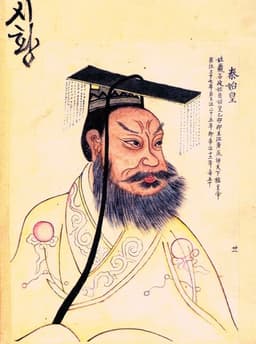
Qin Shi Huang
Emperor · Ancient
85.2Total
Basic Information
Born
-1010
-259
Died
-970
-210
Era
Ancient
Ancient
Nationality
Israel
China
Occupation
Emperor
Emperor
Civilization
Middle Eastern
Eastern
Score Comparison
Military (10%)
72.0
80.0
Political (20%)
72.0
90.0
Influence (20%)
88.0
85.0
Legacy (20%)
70.0
90.0
Leadership (15%)
72.0
78.0
Strategy (15%)
70.0
82.0
TOTAL
75.3
85.2
King David — Complete Timeline
1010 BC
Anointed as King of JudahPolitical Action◆ Major
After Saul's death, David was anointed king over the tribe of Judah at Hebron. This began a seven-year period of civil war with Ish-bosheth, Saul's son, who ruled the northern tribes, leading to the eventual unification of Israel.
KingshipCivil WarJudah
Impact: national
1003 BC
Capture of JerusalemWar
David led his army to capture the Jebusite fortress of Jerusalem, making it the capital of the united kingdom. He brought the Ark of the Covenant there, establishing the city as both the political and religious center of Israel.
JerusalemCapitalArk of the Covenant
Impact: nationalconstructive
1000 BC
Defeat of the PhilistinesWar◆ Major
David fought several campaigns that decisively defeated the Philistines, including the Battle of Baal-perazim. He captured Gath and other Philistine strongholds, ending their dominance over Israel and securing the kingdom's borders.
PhilistinesMilitary CampaignIsrael
Impact: regional
990 BC
Affair with BathshebaPolitical Action◆ Major
David committed adultery with Bathsheba and arranged the death of her husband Uriah the Hittite in battle. The prophet Nathan confronted David, leading to his repentance but also to divine punishment, including the death of their first child.
ScandalBathshebaNathan
Impact: nationaldestructive
978 BC
Revolt of AbsalomWar◆ Major
David's son Absalom led a rebellion that forced David to flee Jerusalem. David's forces under Joab defeated Absalom's army in the Forest of Ephraim, and Absalom was killed. David returned to Jerusalem but the kingdom was weakened.
RebellionCivil WarAbsalom
Impact: nationaltragic
Qin Shi Huang — Complete Timeline
246 BC
Construction of the Mausoleum and Terracotta ArmyOther◆ Major
Qin Shi Huang commissioned a vast mausoleum complex near Xi'an, guarded by thousands of life-sized terracotta soldiers, horses, and chariots. The project employed hundreds of thousands of workers and reflected his obsession with immortality and imperial power.
Impact: global
230 BC
Conquest of the Six Warring StatesWar
From 230 to 221 BCE, Ying Zheng led the Qin state in a series of campaigns that conquered the Han, Zhao, Wei, Chu, Yan, and Qi states. This unified China under a single ruler for the first time, ending the Warring States period.
Impact: global
221 BC
Standardization of Writing, Currency, and MeasurementsReform◆ Major
Qin Shi Huang ordered the standardization of Chinese script, currency, and weights and measures across the unified empire. This facilitated administration, trade, and cultural integration, laying a foundation for future dynasties.
Impact: globalconstructive
Proclamation of the Qin DynastyPolitical Action
After conquering the last independent state, Ying Zheng declared himself Shi Huangdi (First Emperor), founding the Qin Dynasty. He adopted a new title to signify his supreme authority and initiated centralized imperial rule.
Impact: global
214 BC
Initiation of the Great Wall ConstructionOther◆ Major
Qin Shi Huang ordered the connection and extension of existing northern fortifications to create a unified defensive wall against nomadic Xiongnu raids. This project involved massive conscripted labor and became the precursor to the later Great Wall.
Impact: regional
213 BC
Burning of Books and Burying of ScholarsPolitical Action◆ Major
On the advice of Li Si, Qin Shi Huang ordered the burning of historical records and philosophical texts not aligned with Legalist doctrine. He also had 460 Confucian scholars buried alive to suppress dissent and consolidate ideological control.
Impact: nationaldestructive
Expert Analysis
Origins
Qin Shi Huang, born Ying Zheng in 259 BC, was the son of King Zhuangxiang of Qin and a former concubine, Zhao Ji. His early life was marked by political intrigue and hostage situations, shaping his ruthless pragmatism. In contrast, King David, born around 1040 BC in Bethlehem, was the youngest son of Jesse, a shepherd. His anointing by the prophet Samuel set him on a path to kingship, rooted in divine favor and pastoral humility.
Rise to Power
Qin Shi Huang ascended the Qin throne at age 13, but real power lay with regent Lü Buwei. By 22, he orchestrated a coup to eliminate Lü and other rivals, then embarked on a 17-year campaign to conquer the six Warring States, unifying China in 221 BC. His rise was driven by military strategy and Legalist philosophy. David's rise was more dramatic: he gained fame by killing Goliath, became a favored courtier of King Saul, but was forced into exile due to Saul's jealousy. After Saul's death, David was anointed king of Judah, and later, after a civil war, king of all Israel. His path combined military prowess, charisma, and religious legitimacy.
Leadership & Governance
Qin Shi Huang centralized power, abolishing feudalism and dividing the empire into 36 commanderies. He standardized writing, currency, weights, measures, and even axle lengths. He initiated massive infrastructure projects, including roads and the Great Wall. However, his rule was authoritarian: he suppressed Confucianism, burned books, and buried scholars alive. His Legalist approach prioritized order over freedom. David unified the tribes of Israel, established Jerusalem as the capital, and centralized religious worship by bringing the Ark of the Covenant there. He organized a professional army and a bureaucracy, but his governance was more personal and tribal, relying on loyalty and covenant relationships. His reign saw expansion and consolidation, but also internal strife.
Triumph & Tragedy
Qin Shi Huang's greatest triumph was the unification of China, creating a model that would endure for millennia. His standardization projects facilitated trade and communication. Yet his legacy is marred by the Burning of Books and Burying of Scholars (213-210 BC), a cultural catastrophe. His obsession with immortality led to mercury poisoning and an early death at 49, with his dynasty collapsing within four years. David's triumphs include capturing Jerusalem (c. 1000 BC), defeating the Philistines, and establishing a united kingdom. His tragedy was personal: the affair with Bathsheba led to the death of their first child and familial strife, including the revolt of his son Absalom. David's later years were marked by political maneuvering over succession.
Character & Destiny
Qin Shi Huang was ambitious, paranoid, and megalomaniacal. He believed his dynasty would last 10,000 generations and sought to control everything, from history to the afterlife. His destiny was to be China's first emperor, a title that defined him. David was complex: a man after God's own heart, yet flawed by lust and violence. He was a warrior, poet, and politician. His destiny, as prophesied, was to create a dynasty that would produce the Messiah. Both men were shaped by their times and left indelible marks.
Legacy
Qin Shi Huang's legacy is foundational for China. The name "China" may derive from "Qin." His standardization laid the groundwork for a unified civilization. The Great Wall, though later expanded, is a symbol of Chinese endurance. However, his harsh methods and book burning cast a long shadow. David's legacy is spiritual and political. He is revered in Judaism, Christianity, and Islam as a model king and author of Psalms. His dynasty lasted nearly 400 years, and his lineage is central to messianic prophecies. David's life story has inspired countless works of art and literature.
Conclusion
Qin Shi Huang and King David were both unifiers, but their methods and impacts differ starkly. Qin Shi Huang's numerical advantage (score gap 9.9) reflects his broader systemic changes: he transformed a collection of warring states into a centralized empire with standardized systems that persist. David's legacy is more personal and religious, shaping faith traditions. While David's moral failings make him more relatable, Qin Shi Huang's cold efficiency created a political template. On balance, Qin Shi Huang's influence on civilization's scale—from writing to infrastructure—gives him a higher historical impact. His scores in military (80 vs 72), political (90 vs 72), and economic (85 vs 70) domains underscore his transformative role. King David, though a towering figure in religious history, cannot match the sheer breadth of Qin Shi Huang's reforms. Thus, Qin Shi Huang emerges as the more influential figure in world history.
**Scores:** Qin Shi Huang (M=80, P=90, I=85, L=90, D=78, S=82, T=85) vs King David (M=72, P=72, I=88, L=70, D=72, S=70, T=75).
Rankings
🥇
Qin Shi HuangLeader
Mil: 80.0Pol: 90.0Inf: 85.0
85.2
🥈
King David
Mil: 72.0Pol: 72.0Inf: 88.0
75.3
+9.9 behind
How This Comparison Works
Algorithm
Each figure is scored on 6 dimensions (0—100 scale) based on structured historical data: Military (10%), Political (20%), Influence (20%), Legacy (20%), Leadership (15%), Strategy (15%). The weighted total produces the final ranking.
Data Sources
Scores are computed from structured sub-indicators in the database. Scale factors adjust for era (Ancient ×0.85, Modern ×1.0) and civilization size (Eastern ×1.05, Other ×0.80) to account for differences in population and military scale.
Maximum 3 Figures
Comparisons are limited to 2—3 figures to ensure readability and statistical meaningfulness.
Error Margins
±5 points per dimension — Sub-scores are derived from historical records with inherent uncertainty. Two figures within 5 points on a dimension should be considered roughly equivalent in that area.
Total Score Accuracy
±3 points overall — The weighted combination of 6 dimensions produces a total score with approximately ±3 points of uncertainty. Differences of less than 3 points are not statistically significant— the figures are effectively tied.
Known Limitations
- Historical records are incomplete and uneven across civilizations
- Figures from oral-tradition societies may be underrepresented
- Occupation labels can misclassify multi-role figures
- Scores measure capability and impact, not moral character
- Quantitative scoring is a comparison tool, not absolute truth
Capability Radar
Military (10%) — Battles & Warfare
Battles
75
85
Win Rate
85
90
Expansion
80
90
Political (20%) — Governance & Reform
Reform
80
95
Diplomacy
75
75
Economy
70
90
Influence (20%) — Cultural & Global Reach
Cultural
95
95
Global
90
85
Legacy (20%) — Historical Impact
Historical
95
95
Longevity
95
95
Leadership (15%) — Power & Stability
Tenure
85
70
Stability
65
65
Strategy (15%) — Tactics & Innovation
Strategy
85
85
Tactics
80
80
Reform
70
95
Similar Comparisons
Comments & Discussion
No comments yet. Be the first to share your thoughts!