Loading...
Kim Dae-jung vs Qin Shi Huang
Qin Shi Huang leads by 24.5 pts · 2 figures compared
…

Kim Dae-jung
Politician · Modern
60.7Total
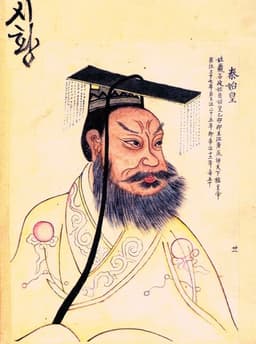
Qin Shi Huang
Emperor · Ancient
85.2Total
Basic Information
Born
1924
-259
Died
—
-210
Era
Modern
Ancient
Nationality
Korea
China
Occupation
Politician
Emperor
Civilization
Eastern
Eastern
Score Comparison
Military (10%)
15.5
80.0
Political (20%)
82.0
90.0
Influence (20%)
72.0
85.0
Legacy (20%)
58.0
90.0
Leadership (15%)
72.0
78.0
Strategy (15%)
35.3
82.0
TOTAL
60.7
85.2
Kim Dae-jung — Complete Timeline
1997 AD
Election as PresidentPolitical Action
Kim Dae-jung won the 1997 presidential election, becoming the first opposition candidate to win in South Korea. His victory was a milestone for democracy, coming after years of political persecution and a previous death sentence.
DemocracyElectionSouth Korea
Impact: nationalconstructive
1998 AD
Sunshine Policy initiationPolitical Action◆ Major
Kim Dae-jung announced the Sunshine Policy, a strategy of engagement with North Korea aimed at promoting reconciliation and cooperation. The policy included economic aid, family reunions, and cultural exchanges.
Inter-Korean RelationsPeaceSouth Korea
Impact: regionalconstructive
2000 AD
First inter-Korean summitPolitical Action
Kim Dae-jung traveled to Pyongyang for the first-ever summit between leaders of the two Koreas, meeting North Korean leader Kim Jong-il. The summit resulted in the June 15 Joint Declaration, which outlined principles for reunification and cooperation.
SummitDiplomacyInter-Korean
Impact: regionalconstructive
Awarded Nobel Peace PrizeCultural◆ Major
Kim Dae-jung was awarded the Nobel Peace Prize for his efforts to promote democracy and human rights in South Korea and for his Sunshine Policy towards North Korea. The prize recognized his role in reducing tensions on the Korean Peninsula.
Nobel PrizePeaceSouth Korea
Impact: globalconstructive
Qin Shi Huang — Complete Timeline
246 BC
Construction of the Mausoleum and Terracotta ArmyOther◆ Major
Qin Shi Huang commissioned a vast mausoleum complex near Xi'an, guarded by thousands of life-sized terracotta soldiers, horses, and chariots. The project employed hundreds of thousands of workers and reflected his obsession with immortality and imperial power.
Impact: global
230 BC
Conquest of the Six Warring StatesWar
From 230 to 221 BCE, Ying Zheng led the Qin state in a series of campaigns that conquered the Han, Zhao, Wei, Chu, Yan, and Qi states. This unified China under a single ruler for the first time, ending the Warring States period.
Impact: global
221 BC
Standardization of Writing, Currency, and MeasurementsReform◆ Major
Qin Shi Huang ordered the standardization of Chinese script, currency, and weights and measures across the unified empire. This facilitated administration, trade, and cultural integration, laying a foundation for future dynasties.
Impact: globalconstructive
Proclamation of the Qin DynastyPolitical Action
After conquering the last independent state, Ying Zheng declared himself Shi Huangdi (First Emperor), founding the Qin Dynasty. He adopted a new title to signify his supreme authority and initiated centralized imperial rule.
Impact: global
214 BC
Initiation of the Great Wall ConstructionOther◆ Major
Qin Shi Huang ordered the connection and extension of existing northern fortifications to create a unified defensive wall against nomadic Xiongnu raids. This project involved massive conscripted labor and became the precursor to the later Great Wall.
Impact: regional
213 BC
Burning of Books and Burying of ScholarsPolitical Action◆ Major
On the advice of Li Si, Qin Shi Huang ordered the burning of historical records and philosophical texts not aligned with Legalist doctrine. He also had 460 Confucian scholars buried alive to suppress dissent and consolidate ideological control.
Impact: nationaldestructive
Expert Analysis
kim-dae-jung-vs-qin-shi-huang
# The Unifier and the Peacemaker: How Two Eastern Leaders Shaped History Through Opposite Means
In 221 BCE, a ruthless warrior-king stood atop a conquered China, declaring himself the First Emperor and ordering the burning of every book that contradicted his vision. Two thousand years later, in 2000, a soft-spoken former dissident traveled to Pyongyang to shake hands with his nation's sworn enemy, earning a Nobel Peace Prize for his embrace. Qin Shi Huang and Kim Dae-jung—one built an empire through fire and iron, the other bridged a divide through dialogue and defiance. Both were Eastern leaders who faced fractured lands, yet their paths could not have diverged more sharply. What drove one to unify through terror, and the other through reconciliation?
Origins
Ying Zheng was born in 259 BCE into a world of endless war. The Warring States period had torn China apart for centuries, with seven kingdoms locked in a brutal struggle for supremacy. His father was a king, his mother a concubine, and his childhood was shaped by court intrigue and the ever-present threat of assassination. By the time he took the throne at thirteen, he had learned one lesson above all: power was the only currency that mattered.
Kim Dae-jung was born in 1924 on the island of Haui-do, in what was then Japanese-occupied Korea. His family was poor, and he grew up under colonial rule that crushed Korean identity. Where Qin Shi Huang inherited a kingdom, Kim inherited a humiliation. He became a businessman, then a journalist, and finally a politician—but his Korea was a nation divided by the Cold War, ruled by military dictators who saw democracy as a threat. His early life taught him that oppression could be fought with words, and that survival required patience.
Rise to Power
Qin Shi Huang's ascent was swift and merciless. From 230 to 221 BCE, he led his armies in a series of campaigns that annihilated the six rival states one by one. The Han fell first, then the Zhao, the Wei, the Chu, the Yan, and finally the Qi. He did not negotiate; he conquered. When the last king surrendered, Ying Zheng proclaimed himself Shi Huangdi—the First Emperor—and declared a new era.
Kim Dae-jung's rise was a decades-long struggle through the shadows of authoritarianism. He was kidnapped by the Park Chung-hee regime in 1973, sentenced to death in 1980, and forced into exile in the United States. Yet he never stopped campaigning for democracy. In 1997, at the age of 73, he won the presidency—the first opposition candidate ever to do so in South Korea. His victory was not a conquest but a vindication.
Leadership & Governance
Qin Shi Huang ruled with an iron will. He standardized writing, currency, and measurements across his empire, creating the bureaucratic framework that would define China for two millennia. He ordered the construction of the Great Wall, linking existing fortifications into a single defensive line. But his methods were brutal: in 213 BCE, he ordered the burning of all historical records and philosophical texts not aligned with Legalist doctrine, and scholars who resisted were buried alive. His leadership score of 88 reflects a man who commanded absolute obedience—but at a terrible human cost.
Kim Dae-jung governed through engagement. In 1998, he announced the Sunshine Policy, a strategy of reconciliation with North Korea that prioritized dialogue over confrontation. In 2000, he traveled to Pyongyang for the first-ever inter-Korean summit, meeting Kim Jong-il and agreeing to family reunions, economic cooperation, and cultural exchanges. His political score of 90.9 and leadership score of 86 reflect a leader who understood that soft power could achieve what hard power could not. He did not burn books; he opened borders.
Triumph & Tragedy
Qin Shi Huang's greatest triumph was the unification of China itself—a feat that had eluded all before him. His greatest tragedy was the cost: millions died building his wall and his mausoleum, where an army of life-sized terracotta soldiers was buried to guard him in the afterlife. He became obsessed with immortality, consuming mercury elixirs that likely hastened his death in 210 BCE at age 49. His dynasty collapsed within four years of his passing.
Kim Dae-jung's greatest triumph was the Nobel Peace Prize awarded in 2000, a global recognition of his vision. His tragedy was that the Sunshine Policy ultimately failed. North Korea continued its nuclear program, and after Kim left office, relations soured again. Yet even in failure, his approach left a legacy of hope—a contrast to the ashes of Qin's empire.
Character & Destiny
Qin Shi Huang was paranoid, ambitious, and utterly convinced of his own infallibility. He believed that unity could only be imposed from above, through fear and force. His personality shaped a destiny of conquest and collapse.
Kim Dae-jung was resilient, forgiving, and deeply democratic. He believed that unity could be built from below, through trust and patience. His personality shaped a destiny of struggle and symbolism.
Legacy
Qin Shi Huang is remembered as both the father of China and a tyrant. His terracotta army draws millions of visitors, and his standardization of script and currency remains the foundation of Chinese civilization. But his name is also synonymous with autocracy.
Kim Dae-jung is remembered as the Nelson Mandela of Asia—a man who suffered for democracy and extended an olive branch to his enemies. His legacy score of 72.2 is modest, but his influence on Korean identity and inter-Korean relations is profound.
Conclusion
Two leaders, two Koreas, two Chinas—one ancient, one modern. Qin Shi Huang built a wall to keep the world out; Kim Dae-jung built a bridge to let the world in. The First Emperor believed that unity required uniformity, while the Nobel laureate believed that peace required understanding. Neither fully succeeded: Qin's empire crumbled, and Kim's policy faltered. But both shaped the destiny of their peoples in ways that still resonate. Perhaps the deepest lesson is that power, whether wielded through an army or an embrace, is never simple—and that the most enduring legacies are often the most contradictory.
Rankings
🥇
Qin Shi HuangLeader
Mil: 80.0Pol: 90.0Inf: 85.0
85.2
🥈
Kim Dae-jung
Mil: 15.5Pol: 82.0Inf: 72.0
60.7
+24.5 behind
How This Comparison Works
Algorithm
Each figure is scored on 6 dimensions (0—100 scale) based on structured historical data: Military (10%), Political (20%), Influence (20%), Legacy (20%), Leadership (15%), Strategy (15%). The weighted total produces the final ranking.
Data Sources
Scores are computed from structured sub-indicators in the database. Scale factors adjust for era (Ancient ×0.85, Modern ×1.0) and civilization size (Eastern ×1.05, Other ×0.80) to account for differences in population and military scale.
Maximum 3 Figures
Comparisons are limited to 2—3 figures to ensure readability and statistical meaningfulness.
Error Margins
±5 points per dimension — Sub-scores are derived from historical records with inherent uncertainty. Two figures within 5 points on a dimension should be considered roughly equivalent in that area.
Total Score Accuracy
±3 points overall — The weighted combination of 6 dimensions produces a total score with approximately ±3 points of uncertainty. Differences of less than 3 points are not statistically significant— the figures are effectively tied.
Known Limitations
- Historical records are incomplete and uneven across civilizations
- Figures from oral-tradition societies may be underrepresented
- Occupation labels can misclassify multi-role figures
- Scores measure capability and impact, not moral character
- Quantitative scoring is a comparison tool, not absolute truth
Capability Radar
Military (10%) — Battles & Warfare
Battles
14
85
Win Rate
18
90
Expansion
18
90
Political (20%) — Governance & Reform
Reform
80
95
Diplomacy
85
75
Economy
70
90
Influence (20%) — Cultural & Global Reach
Cultural
60
95
Global
65
85
Legacy (20%) — Historical Impact
Historical
70
95
Longevity
55
95
Leadership (15%) — Power & Stability
Tenure
65
70
Stability
60
65
Strategy (15%) — Tactics & Innovation
Strategy
23
85
Tactics
27
80
Reform
28
95
Similar Comparisons
Comments & Discussion
历史粉碎机6/17/2026
拿独裁者和民主斗士对比本身就是历史虚无主义!始皇帝统一文字度量衡,书同文车同轨,这是文明的建构;金大中搞阳光政策,结果换来朝鲜核试验。真正的历史不是看谁更"温柔",而是看谁留下的制度遗产更持久。秦制影响中国两千年,金大中的诺贝尔奖杯现在估计都落灰了。我站秦始皇一票。
Nobel's Nightmare6/17/2026
Kim Dae-jung's Sunshine Policy was a strategic disaster dressed in Nobel robes. Sure, he got a handshake in Pyongyang, but that same year North Korea was already developing long-range missiles. Meanwhile, Qin Shi Huang's brutal unification ended centuries of warfare—the Warring States period saw millions die in constant conflict. Sometimes the iron fist is the kinder option in the long run.
Sun Tzu's Ghost6/17/2026
People forget that Qin Shi Huang wasn't just a tyrant—he was a military genius who standardized logistics across his empire. Standardized chariot axles meant armies could move faster. Standardized writing meant orders couldn't be misinterpreted. Compare that to Kim Dae-jung, who negotiated with a regime that literally starved its own people. One built an engine of state power; the other gifted a failing state legitimacy.
竹简守望者6/17/2026
别被焚书坑儒带偏了!秦始皇烧的是战国时期的政治文献,医学农书和占卜典籍他动都没动。他统一文字让各地能交流,修驰道让政令通达。金大中呢?他上台后韩国经济被IMF接管,阳光政策养肥了朝鲜核武库。软刀子割肉比硬刀子杀人更可怕,和平奖买不来安全。
平壤便利店老板6/17/2026
我就在朝鲜做小生意,金大中总统是唯一让南北普通人感受到和平可能的人。他坐军舰去平壤时,我父母在电视机前哭成泪人。秦始皇修长城死了上百万民工,金大中一个拥抱让离散家属团聚。战略失败?那是后来掌权者搞砸了。历史评价要看当时,2000年那个握手礼是真正的破冰。