Loading...
This comparison has not been analyzed yet.
One-time AI generation (~1 minute). Scores and timeline are already available below.
Khosrow II Parviz vs Nerva
Khosrow II Parviz leads by 25.8 pts · 2 figures compared
…

Khosrow II Parviz
Emperor · Ancient
64.7Total
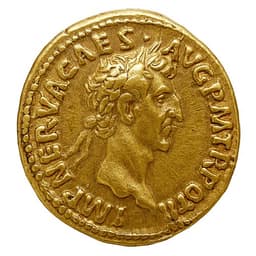
Nerva
Emperor · Ancient
38.9Total
Basic Information
Born
-570
30
Died
—
98
Era
Ancient
Ancient
Nationality
Sasanian Empire
Roman Empire
Occupation
Emperor
Emperor
Civilization
Middle Eastern
Western
Score Comparison
Military (10%)
78.0
24.5
Political (20%)
72.0
35.1
Influence (20%)
62.0
45.5
Legacy (20%)
52.0
41.7
Leadership (15%)
72.0
33.6
Strategy (15%)
68.1
43.7
TOTAL
64.7
38.9
Khosrow II Parviz — Complete Timeline
590 AD
Accession to the Sasanian thronePolitical Action◆ Major
Khosrow II Parviz ascended the throne after the overthrow of his father Hormizd IV. His reign began amid civil war, as the general Bahram Chobin had declared himself king, forcing Khosrow to flee to the Byzantine Empire.
SuccessionSasanian EmpireCivil War
Impact: national
591 AD
Restoration to the throne with Byzantine aidPolitical Action◆ Major
Khosrow II secured military support from the Byzantine Emperor Maurice to reclaim his throne. With a Byzantine army, he defeated Bahram Chobin and was restored as king, ceding territory in Armenia and Mesopotamia to the Byzantines in return.
RestorationByzantine AllianceTerritorial Cession
Impact: regional
614 AD
Conquest of Jerusalem and capture of the True CrossWar
During the Byzantine-Sasanian War of 602-628, Khosrow II's forces captured Jerusalem after a siege. They seized the relic of the True Cross and took it to Ctesiphon, a major symbolic and religious blow to the Byzantine Empire.
ConquestJerusalemTrue Cross
Impact: globaldestructive
619 AD
Occupation of EgyptWar◆ Major
Khosrow II's armies conquered Egypt, the breadbasket of the Byzantine Empire. This occupation cut off grain supplies to Constantinople and brought the Sasanian Empire to its greatest territorial extent, stretching from the Indus to the Nile.
ConquestEgyptSasanian Expansion
Impact: regional
627 AD
Defeat at the Battle of Nineveh and collapse of his empireWar
The Byzantine Emperor Heraclius launched a counter-offensive and defeated the Sasanian army at the Battle of Nineveh. This victory allowed the Byzantines to advance towards Ctesiphon, leading to the collapse of Khosrow's conquests.
BattleByzantine Counter-OffensiveSasanian Decline
Impact: globaltragic
628 AD
Overthrow and execution by his son Kavad IIPolitical Action◆ Major
Following the military disaster, Khosrow II was overthrown in a palace coup led by his son Kavad II. He was imprisoned and executed, and Kavad II immediately sued for peace with the Byzantines, ending the war.
CoupRegicideEnd of Reign
Impact: nationaltragic
Nerva — Complete Timeline
96 AD
Accession as Roman EmperorPolitical Action◆ Major
After the assassination of Domitian, the Roman Senate elected Nerva as emperor. He was the first of the Five Good Emperors, chosen for his moderate and experienced governance.
Imperial SuccessionSenateFive Good Emperors
Impact: globalconstructive
97 AD
Implementation of Fiscal ReformsReform
Nerva introduced economic reforms including land distribution to the poor, reduction of taxes, and a program to purchase grain for distribution. These measures aimed to alleviate financial strain on the state and citizens.
Economic ReformTaxationSocial Welfare
Impact: nationalconstructive
Adoption of TrajanPolitical Action
Facing opposition from the Praetorian Guard and military unrest, Nerva adopted Trajan, a popular general, as his son and successor. This established the principle of adoption based on merit, ensuring a stable succession.
AdoptionSuccessionTrajanPraetorian Guard
Impact: globalconstructive
This comparison has not been analyzed yet.
One-time AI generation (~1 minute). Scores and timeline are already available below.
Rankings
🥇
Khosrow II ParvizLeader
Mil: 78.0Pol: 72.0Inf: 62.0
64.7
🥈
Nerva
Mil: 24.5Pol: 35.1Inf: 45.5
38.9
+25.8 behind
How This Comparison Works
Algorithm
Each figure is scored on 6 dimensions (0—100 scale) based on structured historical data: Military (10%), Political (20%), Influence (20%), Legacy (20%), Leadership (15%), Strategy (15%). The weighted total produces the final ranking.
Data Sources
Scores are computed from structured sub-indicators in the database. Scale factors adjust for era (Ancient ×0.85, Modern ×1.0) and civilization size (Eastern ×1.05, Other ×0.80) to account for differences in population and military scale.
Maximum 3 Figures
Comparisons are limited to 2—3 figures to ensure readability and statistical meaningfulness.
Error Margins
±5 points per dimension — Sub-scores are derived from historical records with inherent uncertainty. Two figures within 5 points on a dimension should be considered roughly equivalent in that area.
Total Score Accuracy
±3 points overall — The weighted combination of 6 dimensions produces a total score with approximately ±3 points of uncertainty. Differences of less than 3 points are not statistically significant— the figures are effectively tied.
Known Limitations
- Historical records are incomplete and uneven across civilizations
- Figures from oral-tradition societies may be underrepresented
- Occupation labels can misclassify multi-role figures
- Scores measure capability and impact, not moral character
- Quantitative scoring is a comparison tool, not absolute truth
Capability Radar
Military (10%) — Battles & Warfare
Battles
85
4
Win Rate
80
7
Expansion
85
11
Political (20%) — Governance & Reform
Reform
65
30
Diplomacy
70
40
Economy
70
20
Influence (20%) — Cultural & Global Reach
Cultural
65
10
Global
65
20
Legacy (20%) — Historical Impact
Historical
70
40
Longevity
60
30
Leadership (15%) — Power & Stability
Tenure
75
10
Stability
55
20
Strategy (15%) — Tactics & Innovation
Strategy
80
13
Tactics
75
18
Reform
70
22
Similar Comparisons
Comments & Discussion
No comments yet. Be the first to share your thoughts!