Loading...
Cleopatra Selene II vs Nerva
Cleopatra Selene II leads by 2.5 pts · 2 figures compared
…

Cleopatra Selene II
Emperor · Ancient
41.4Total
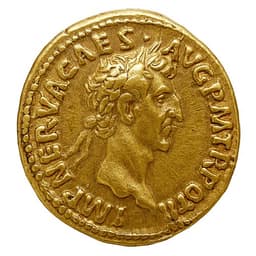
Nerva
Emperor · Ancient
38.9Total
Basic Information
Born
-40
30
Died
6
98
Era
Ancient
Ancient
Nationality
Mauretania
Roman Empire
Occupation
Emperor
Emperor
Civilization
Other
Western
Score Comparison
Military (10%)
37.6
24.5
Political (20%)
35.1
35.1
Influence (20%)
45.5
45.5
Legacy (20%)
35.8
41.7
Leadership (15%)
45.0
33.6
Strategy (15%)
52.6
43.7
TOTAL
41.4
38.9
Cleopatra Selene II — Complete Timeline
25 BC
Marriage to Juba IIPolitical Action◆ Major
Cleopatra Selene II married Juba II, king of Mauretania, in a union arranged by Augustus. The marriage combined the Ptolemaic and Numidian royal lines, creating a powerful client kingdom loyal to Rome. She became queen consort and co-ruler of Mauretania.
Marriage AllianceRoman Client KingdomPtolemaic Dynasty
Impact: regionalconstructive
Co-Rulership of MauretaniaPolitical Action◆ Major
Cleopatra Selene II ruled jointly with Juba II, wielding significant influence. She promoted Hellenistic culture and Egyptian traditions in the Mauretanian court. Her rule helped stabilize the region and fostered a blend of Roman, Greek, and Egyptian influences.
Co-RulershipHellenistic CultureEgyptian Influence
Impact: regionalconstructive
20 BC
Construction of CaesareaCultural◆ Major
Cleopatra Selene II oversaw the construction and beautification of Caesarea (modern Cherchell), the capital of Mauretania. She commissioned buildings, gardens, and a lighthouse modeled after the Pharos of Alexandria. The city became a major cultural and commercial center.
Urban DevelopmentArchitectureCapital City
Impact: regionalconstructive
Nerva — Complete Timeline
96 AD
Accession as Roman EmperorPolitical Action◆ Major
After the assassination of Domitian, the Roman Senate elected Nerva as emperor. He was the first of the Five Good Emperors, chosen for his moderate and experienced governance.
Imperial SuccessionSenateFive Good Emperors
Impact: globalconstructive
97 AD
Implementation of Fiscal ReformsReform
Nerva introduced economic reforms including land distribution to the poor, reduction of taxes, and a program to purchase grain for distribution. These measures aimed to alleviate financial strain on the state and citizens.
Economic ReformTaxationSocial Welfare
Impact: nationalconstructive
Adoption of TrajanPolitical Action
Facing opposition from the Praetorian Guard and military unrest, Nerva adopted Trajan, a popular general, as his son and successor. This established the principle of adoption based on merit, ensuring a stable succession.
AdoptionSuccessionTrajanPraetorian Guard
Impact: globalconstructive
Expert Analysis
Origins
Cleopatra Selene II was born in 40 BC in Alexandria, Egypt, to Cleopatra VII and Mark Antony. She was the twin sister of Alexander Helios and had a younger brother, Ptolemy Philadelphus. Her early life was spent in the Ptolemaic court, surrounded by Hellenistic culture and political intrigue. After the defeat of Antony and Cleopatra at the Battle of Actium in 31 BC, Octavian (later Augustus) brought the children to Rome. They were paraded in his triumph but later placed in the household of Octavia, Antony's Roman wife, who raised them with care. Cleopatra Selene received a Roman education, learning Latin and Roman customs, while retaining her Greek heritage.
Nerva was born on November 8, AD 30, in Narnia, Italy, into an old senatorial family. His father, Marcus Cocceius Nerva, was a jurist, and his grandfather was a consul. Nerva's family had connections to the Julio-Claudian dynasty, and he himself served as a consul under Nero in AD 65. He survived the turbulent reigns of Nero, Vespasian, Titus, and Domitian, maintaining a reputation for moderation and legal expertise. His early career was marked by administrative roles rather than military command.
Rise to Power
Cleopatra Selene II's rise came through marriage. In 25 BC, Augustus arranged her marriage to Juba II, king of Mauretania (modern Algeria and Morocco). Juba was a Numidian prince educated in Rome, loyal to Augustus. The union combined Ptolemaic and Numidian royal lines, creating a client kingdom under Roman oversight. Cleopatra Selene became queen consort, but she wielded significant influence, co-ruling with Juba. She used her position to promote Hellenistic culture, Egyptian religion, and trade. Her power was derived from her lineage and her ability to navigate Roman politics.
Nerva's rise was sudden. After the assassination of Domitian on September 18, AD 96, the Roman Senate elected Nerva as emperor. He was chosen for his moderate reputation and lack of clear ambition. At 66, he was old and childless, which helped avoid immediate opposition. However, his position was weak; he lacked military support and faced unrest from the Praetorian Guard. To secure his rule, he adopted Trajan, a popular general commanding legions on the Rhine, in AD 97. This adoption set a precedent for succession by merit.
Leadership & Governance
Cleopatra Selene II ruled Mauretania jointly with Juba II from 25 BC until her death around 5 BC. She focused on urban development and cultural integration. She oversaw the construction and beautification of Caesarea (modern Cherchell), the capital, which became a center of Hellenistic art and learning. She promoted the cult of Isis, blending Egyptian and Roman religious practices. Her governance was indirect; she worked through Juba, but sources suggest she was influential in policy, especially in promoting trade and Greek culture. Mauretania became a prosperous client kingdom, exporting grain, timber, and purple dye.
Nerva's reign lasted only 16 months (AD 96-98). He implemented fiscal reforms: he reduced taxes, distributed land to the poor, and established a program (alimenta) to provide grain for children. He also cut expenditures and returned property confiscated by Domitian. However, his rule was marked by weakness. The Praetorian Guard mutinied in AD 97, demanding the execution of Domitian's murderers; Nerva was forced to comply, tarnishing his authority. His adoption of Trajan was a strategic move to stabilize the empire. Nerva's leadership scored 33.6 in leadership, while Cleopatra Selene II scored 45.0, reflecting her effective co-rulership despite limited resources.
Triumph & Tragedy
Cleopatra Selene II's greatest success was establishing a stable, prosperous kingdom that fused Egyptian, Greek, and Roman cultures. Her building projects at Caesarea left a lasting architectural legacy. She also maintained Mauretania's independence within the Roman sphere. Her tragedy was that her kingdom did not survive long after her death; under later rulers, Mauretania was annexed by Rome in AD 40. Additionally, her children's fates are obscure; her son Ptolemy of Mauretania was executed by Caligula. Her influence was largely confined to her lifetime.
Nerva's triumph was his adoption of Trajan, which ensured a smooth succession and a golden age for Rome. His fiscal reforms, though limited in scope, provided relief to the poor and set a precedent for imperial welfare. His tragedy was his inability to control the military; his reign was marred by the Praetorian revolt, exposing the weakness of senatorial emperors. He died of natural causes in AD 98, but his short tenure left him with little personal achievement beyond the adoption.
Character & Destiny
Cleopatra Selene II was described as intelligent and cultured, with a strong sense of her Ptolemaic heritage. She used diplomacy and cultural patronage to maintain influence. Her destiny was shaped by her family's downfall; she rose from being a captive to a queen, but her power was always contingent on Roman approval. She died around 35, likely in childbirth or illness, her early death cutting short her potential.
Nerva was known for his mildness, legal expertise, and lack of ambition. He was a senator's emperor, chosen for his inoffensiveness. His character led him to avoid conflict, but also to be weak in crisis. His destiny was to be a transitional figure; his adoption of Trajan defined his legacy. He died at 68, having achieved stability through delegation.
Legacy
Cleopatra Selene II's legacy is as a symbol of Hellenistic resilience. Her promotion of Egyptian culture in Mauretania influenced North African art and religion. However, her long-term impact is limited; her kingdom was absorbed by Rome, and her children did not continue her line. She scored 35.8 in legacy, reflecting her obscurity outside specialist circles.
Nerva's legacy is more significant. He founded the Nerva-Antonine dynasty, which included Trajan, Hadrian, Antoninus Pius, and Marcus Aurelius—the Five Good Emperors. His adoption principle influenced Roman succession for a century. His fiscal reforms, though small, were a model for later emperors. He scored 41.7 in legacy, higher than Cleopatra Selene II. His total score is 38.9, slightly lower than her 41.4, but his impact on history is greater due to the dynasty he initiated.
Conclusion
While Cleopatra Selene II scored higher in total (41.4 vs 38.9), Nerva had greater historical impact. His adoption of Trajan set the stage for the Roman Empire's peak, while her achievements were localized and temporary. Nerva's legacy of peaceful succession and welfare policies shaped Roman governance for generations. Cleopatra Selene II's cultural fusion was notable, but it did not outlast her kingdom. Therefore, Nerva is the more influential figure.
Rankings
🥇
Cleopatra Selene IILeader
Mil: 37.6Pol: 35.1Inf: 45.5
41.4
🥈
Nerva
Mil: 24.5Pol: 35.1Inf: 45.5
38.9
+2.5 behind
How This Comparison Works
Algorithm
Each figure is scored on 6 dimensions (0—100 scale) based on structured historical data: Military (10%), Political (20%), Influence (20%), Legacy (20%), Leadership (15%), Strategy (15%). The weighted total produces the final ranking.
Data Sources
Scores are computed from structured sub-indicators in the database. Scale factors adjust for era (Ancient ×0.85, Modern ×1.0) and civilization size (Eastern ×1.05, Other ×0.80) to account for differences in population and military scale.
Maximum 3 Figures
Comparisons are limited to 2—3 figures to ensure readability and statistical meaningfulness.
Error Margins
±5 points per dimension — Sub-scores are derived from historical records with inherent uncertainty. Two figures within 5 points on a dimension should be considered roughly equivalent in that area.
Total Score Accuracy
±3 points overall — The weighted combination of 6 dimensions produces a total score with approximately ±3 points of uncertainty. Differences of less than 3 points are not statistically significant— the figures are effectively tied.
Known Limitations
- Historical records are incomplete and uneven across civilizations
- Figures from oral-tradition societies may be underrepresented
- Occupation labels can misclassify multi-role figures
- Scores measure capability and impact, not moral character
- Quantitative scoring is a comparison tool, not absolute truth
Capability Radar
Military (10%) — Battles & Warfare
Battles
40
4
Win Rate
43
7
Expansion
41
11
Political (20%) — Governance & Reform
Reform
25
30
Diplomacy
35
40
Economy
30
20
Influence (20%) — Cultural & Global Reach
Cultural
20
10
Global
10
20
Legacy (20%) — Historical Impact
Historical
20
40
Longevity
15
30
Leadership (15%) — Power & Stability
Tenure
30
10
Stability
25
20
Strategy (15%) — Tactics & Innovation
Strategy
50
13
Tactics
51
18
Reform
55
22
Similar Comparisons
Comments & Discussion
No comments yet. Be the first to share your thoughts!