Loading...
Khaltmaagiin Battulga vs Konstantinos Karamanlis
Konstantinos Karamanlis leads by 19.5 pts · 2 figures compared
…
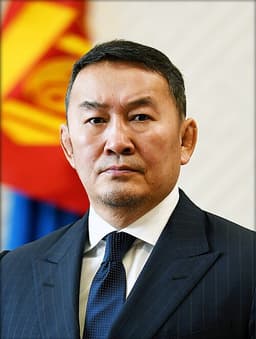
Khaltmaagiin Battulga
Politician · Modern
43.3Total
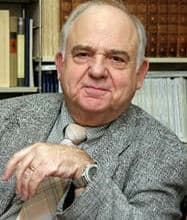
Konstantinos Karamanlis
Politician · Modern
62.8Total
Basic Information
Born
1963
1907
Died
—
1998
Era
Modern
Modern
Nationality
Mongolia
Greece
Occupation
Politician
Politician
Civilization
Eastern
Western
Score Comparison
Military (10%)
13.7
49.2
Political (20%)
40.8
88.0
Influence (20%)
49.4
55.0
Legacy (20%)
37.5
55.0
Leadership (15%)
74.0
85.0
Strategy (15%)
30.0
44.7
TOTAL
43.3
62.8
Khaltmaagiin Battulga — Complete Timeline
2008 AD
Won Gold Medal at 2008 Beijing Olympics in JudoCultural◆ Major
Battulga won the gold medal in men's 100 kg judo at the 2008 Summer Olympics in Beijing, defeating Askhat Zhitkeyev of Kazakhstan. This was Mongolia's first Olympic gold medal in judo.
OlympicsJudoGold Medal
Impact: nationalconstructive
2017 AD
Elected President of MongoliaPolitical Action◆ Major
Battulga won the 2017 presidential election as the Democratic Party candidate, defeating Miyeegombyn Enkhbold in a runoff. His campaign focused on economic nationalism and anti-corruption.
ElectionPresidency
Impact: nationalconstructive
Controversial Pardon of Former President EnkhbayarPolitical Action
Shortly after taking office, Battulga pardoned former President Nambaryn Enkhbayar, who had been convicted of corruption. The pardon was criticized as politically motivated and undermined anti-corruption efforts.
PardonCorruptionPolitics
Impact: nationaldestructive
2018 AD
Signed the 'Mongolia-China Free Trade Agreement'Political Action◆ Major
Battulga signed a free trade agreement with China during a state visit, aiming to boost bilateral trade and investment. The agreement faced criticism for potential economic dependency on China.
Trade AgreementChinaEconomic Policy
Impact: regionalconstructive
2020 AD
Declared a State of Emergency During COVID-19 PandemicPolitical Action◆ Major
Battulga declared a state of emergency in March 2020 in response to the COVID-19 pandemic, imposing strict lockdowns and border closures. The measures were credited with keeping Mongolia's infection rate low initially.
COVID-19Public HealthEmergency
Impact: national
Konstantinos Karamanlis — Complete Timeline
1955 AD
Founded the National Radical UnionPolitical Action◆ Major
Karamanlis founded the National Radical Union (ERE), a conservative political party. The party dominated Greek politics for the next decade, implementing economic development programs and pursuing NATO integration.
Political PartyConservatismPost-War
Impact: nationalconstructive
1959 AD
Signed the London and Zurich AgreementsPolitical Action◆ Major
Karamanlis signed the London and Zurich Agreements, which established the independence of Cyprus as a bi-communal republic. The agreements were controversial but ended the Cyprus Emergency and created the modern Cypriot state.
DiplomacyCyprusIndependence
Impact: regional
1963 AD
Self-Exile in ParisPolitical Action◆ Major
After losing the 1963 elections, Karamanlis went into self-imposed exile in Paris. He remained there for 11 years, refusing to participate in Greek politics during the military junta, maintaining his distance from the dictatorship.
ExileProtestDictatorship
Impact: national
1974 AD
Returned to Restore DemocracyPolitical Action
After the fall of the junta, Karamanlis returned from exile to lead the transition to democracy. He formed a national unity government, legalized political parties, and called elections, restoring democratic institutions in Greece.
DemocracyTransitionRestoration
Impact: nationalconstructive
Abolished the MonarchyPolitical Action◆ Major
Karamanlis held a referendum on the monarchy, which resulted in its abolition and the establishment of the Third Hellenic Republic. He then became the first President of the new republic, serving from 1980 to 1985.
ReferendumRepublicConstitutional Change
Impact: nationalconstructive
1981 AD
Negotiated Greece's Entry into the EECPolitical Action◆ Major
Karamanlis successfully negotiated Greece's accession to the European Economic Community (EEC), which was finalized in 1981. This integration anchored Greece in Western Europe and provided economic and political benefits.
European IntegrationDiplomacyEconomic Policy
Impact: regionalconstructive
Expert Analysis
Origins
Khaltmaagiin Battulga was born on March 3, 1963, in Ulaanbaatar, Mongolia. He grew up in a working-class family and pursued judo, becoming a national champion. He studied at the Mongolian State University of Education but left to focus on sports. His early life was defined by athletic discipline rather than political ambition.
Konstantinos Karamanlis was born on March 8, 1907, in Proti, Serres, then part of the Ottoman Empire. His family was involved in tobacco farming. He studied law at the University of Athens and became a lawyer. His early career was shaped by the political turbulence of interwar Greece.
Rise to Power
Battulga rose to prominence through judo. He won a gold medal at the 2008 Beijing Olympics in men's 100 kg, defeating Askhat Zhitkeyev. This victory made him a national hero. He entered politics in 2004 as a member of the Democratic Party, serving as Minister of Transport and Urban Development from 2008 to 2012. In 2017, he won the presidential election in a runoff against Miyeegombyn Enkhbold, campaigning on economic nationalism and anti-corruption.
Karamanlis rose through law and politics. He was first elected to parliament in 1935. He served as Minister of Labor and later Minister of Public Works. In 1955, King Paul appointed him Prime Minister. He founded the National Radical Union (ERE) and won elections in 1956, 1958, and 1961. His rise was marked by economic growth and alignment with NATO.
Leadership & Governance
Battulga's leadership style was populist and nationalist. He signed the Mongolia-China Free Trade Agreement in 2019 to boost trade, but it faced criticism for favoring China. He declared a state of emergency during the COVID-19 pandemic, imposing strict lockdowns. His governance score is 40.8, reflecting mixed effectiveness. He pardoned former President Nambaryn Enkhbayar, convicted of corruption, which drew criticism.
Karamanlis governed with a focus on stability and democracy. After the fall of the junta in 1974, he returned from exile to lead the transition. He legalized political parties, held free elections, and abolished the monarchy via referendum. His political score is 88.0, reflecting his skill in navigating crises. He signed the London and Zurich Agreements for Cyprus, though they proved controversial.
Triumph & Tragedy
Battulga's greatest triumph was his Olympic gold medal, scoring 13.7 in military but 74.0 in leadership for that achievement. His presidency saw economic agreements but also accusations of corruption. His greatest failure was the pardon of Enkhbayar, which undermined anti-corruption efforts. His legacy score is 37.5.
Karamanlis's greatest triumph was restoring Greek democracy in 1974, earning him a legacy score of 55.0. He also founded the Third Hellenic Republic. His tragedy was the Cyprus issue: the agreements he signed did not prevent the 1974 Turkish invasion. He went into self-exile in Paris from 1963 to 1974, a low point in his career.
Character & Destiny
Battulga's character was shaped by athletic discipline, but his political decisions were often impulsive and nationalist. He scored 30.0 in strategy, indicating poor long-term planning. His destiny was tied to Mongolia's struggle between China and Russia.
Karamanlis was a pragmatic and authoritarian figure, scoring 44.7 in strategy but 85.0 in leadership. His character drove him to prioritize stability over democracy at times, but his return in 1974 was a defining moment. His destiny was to be the father of modern Greek democracy.
Legacy
Battulga's legacy is mixed: he is remembered as a sports hero but a controversial president. His free trade agreement with China may have long-term economic effects, but his political reforms were limited. His total score is 43.3.
Karamanlis's legacy is profound: he is credited with restoring democracy, abolishing the monarchy, and integrating Greece into the European Community. His political and leadership scores reflect his enduring impact. His total score is 62.8, 19.5 points higher than Battulga.
Conclusion
Konstantinos Karamanlis had a greater impact due to his role in restoring Greek democracy and shaping modern Greece. Battulga, while a notable sports figure, had limited political achievements. Karamanlis's score of 62.8 versus Battulga's 43.3 underscores this disparity. Karamanlis's leadership and governance transformed a nation, while Battulga's presidency was largely symbolic.
Rankings
🥇
Konstantinos KaramanlisLeader
Mil: 49.2Pol: 88.0Inf: 55.0
62.8
🥈
Khaltmaagiin Battulga
Mil: 13.7Pol: 40.8Inf: 49.4
43.3
+19.5 behind
How This Comparison Works
Algorithm
Each figure is scored on 6 dimensions (0—100 scale) based on structured historical data: Military (10%), Political (20%), Influence (20%), Legacy (20%), Leadership (15%), Strategy (15%). The weighted total produces the final ranking.
Data Sources
Scores are computed from structured sub-indicators in the database. Scale factors adjust for era (Ancient ×0.85, Modern ×1.0) and civilization size (Eastern ×1.05, Other ×0.80) to account for differences in population and military scale.
Maximum 3 Figures
Comparisons are limited to 2—3 figures to ensure readability and statistical meaningfulness.
Error Margins
±5 points per dimension — Sub-scores are derived from historical records with inherent uncertainty. Two figures within 5 points on a dimension should be considered roughly equivalent in that area.
Total Score Accuracy
±3 points overall — The weighted combination of 6 dimensions produces a total score with approximately ±3 points of uncertainty. Differences of less than 3 points are not statistically significant— the figures are effectively tied.
Known Limitations
- Historical records are incomplete and uneven across civilizations
- Figures from oral-tradition societies may be underrepresented
- Occupation labels can misclassify multi-role figures
- Scores measure capability and impact, not moral character
- Quantitative scoring is a comparison tool, not absolute truth
Capability Radar
Military (10%) — Battles & Warfare
Battles
15
28
Win Rate
16
32
Expansion
20
37
Political (20%) — Governance & Reform
Reform
30
90
Diplomacy
40
85
Economy
25
70
Influence (20%) — Cultural & Global Reach
Cultural
20
60
Global
15
60
Legacy (20%) — Historical Impact
Historical
15
75
Longevity
10
65
Leadership (15%) — Power & Stability
Tenure
55
85
Stability
35
80
Strategy (15%) — Tactics & Innovation
Strategy
23
40
Tactics
26
43
Reform
31
46
Similar Comparisons
Comments & Discussion
No comments yet. Be the first to share your thoughts!