Loading...
Felix Houphouet-Boigny vs Konstantinos Karamanlis
Konstantinos Karamanlis leads by 3.0 pts · 2 figures compared
…

Felix Houphouet-Boigny
Politician · Modern
59.8Total
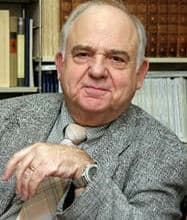
Konstantinos Karamanlis
Politician · Modern
62.8Total
Basic Information
Born
1905
1907
Died
1993
1998
Era
Modern
Modern
Nationality
Ivory Coast
Greece
Occupation
Politician
Politician
Civilization
Other
Western
Score Comparison
Military (10%)
48.6
49.2
Political (20%)
70.3
88.0
Influence (20%)
55.0
55.0
Legacy (20%)
58.0
55.0
Leadership (15%)
78.0
85.0
Strategy (15%)
44.6
44.7
TOTAL
59.8
62.8
Felix Houphouet-Boigny — Complete Timeline
1945 AD
Election to French Constituent AssemblyPolitical Action◆ Major
Houphouet-Boigny was elected as a deputy for Ivory Coast to the French Constituent Assembly. He became a leading African voice in French politics, advocating for colonial reforms.
French PoliticsColonial RepresentationReform
Impact: nationalconstructive
1946 AD
Founding of the RDAPolitical Action◆ Major
Houphouet-Boigny founded the African Democratic Rally (RDA), a pan-African political party that coordinated anti-colonial movements across French West Africa. The RDA became a major force in decolonization.
Political PartyPan-AfricanismDecolonization
Impact: regionalconstructive
1960 AD
Economic Miracle of Ivory CoastReform◆ Major
Houphouet-Boigny implemented policies that led to rapid economic growth, based on agricultural exports (cocoa, coffee) and foreign investment. Ivory Coast became one of Africa's most prosperous countries.
Economic GrowthAgricultureDevelopment
Impact: regionalconstructive
Independence of Ivory CoastPolitical Action
Houphouet-Boigny became the first President of independent Ivory Coast. He maintained close economic and political ties with France, pursuing a pro-Western foreign policy and capitalist development.
IndependenceDecolonizationPresidency
Impact: nationalconstructive
One-Party Rule and AuthoritarianismPolitical Action◆ Major
Houphouet-Boigny established a one-party state under the Democratic Party of Ivory Coast (PDCI). He suppressed political opposition, controlled the media, and maintained power through patronage and repression.
AuthoritarianismOne-Party StatePolitical Repression
Impact: nationaldestructive
1985 AD
Construction of Basilica of Our Lady of PeaceCultural◆ Major
Houphouet-Boigny commissioned the construction of the Basilica of Our Lady of Peace in Yamoussoukro, modeled on St. Peter's Basilica in Rome. The project cost $300 million and became the largest church in the world.
ArchitectureReligionPrestige Project
Impact: national
Konstantinos Karamanlis — Complete Timeline
1955 AD
Founded the National Radical UnionPolitical Action◆ Major
Karamanlis founded the National Radical Union (ERE), a conservative political party. The party dominated Greek politics for the next decade, implementing economic development programs and pursuing NATO integration.
Political PartyConservatismPost-War
Impact: nationalconstructive
1959 AD
Signed the London and Zurich AgreementsPolitical Action◆ Major
Karamanlis signed the London and Zurich Agreements, which established the independence of Cyprus as a bi-communal republic. The agreements were controversial but ended the Cyprus Emergency and created the modern Cypriot state.
DiplomacyCyprusIndependence
Impact: regional
1963 AD
Self-Exile in ParisPolitical Action◆ Major
After losing the 1963 elections, Karamanlis went into self-imposed exile in Paris. He remained there for 11 years, refusing to participate in Greek politics during the military junta, maintaining his distance from the dictatorship.
ExileProtestDictatorship
Impact: national
1974 AD
Returned to Restore DemocracyPolitical Action
After the fall of the junta, Karamanlis returned from exile to lead the transition to democracy. He formed a national unity government, legalized political parties, and called elections, restoring democratic institutions in Greece.
DemocracyTransitionRestoration
Impact: nationalconstructive
Abolished the MonarchyPolitical Action◆ Major
Karamanlis held a referendum on the monarchy, which resulted in its abolition and the establishment of the Third Hellenic Republic. He then became the first President of the new republic, serving from 1980 to 1985.
ReferendumRepublicConstitutional Change
Impact: nationalconstructive
1981 AD
Negotiated Greece's Entry into the EECPolitical Action◆ Major
Karamanlis successfully negotiated Greece's accession to the European Economic Community (EEC), which was finalized in 1981. This integration anchored Greece in Western Europe and provided economic and political benefits.
European IntegrationDiplomacyEconomic Policy
Impact: regionalconstructive
Expert Analysis
Origins
Félix Houphouët-Boigny was born on October 18, 1905, in Yamoussoukro, Ivory Coast, into a family of Baoulé chiefs. He trained as a medical assistant and worked as a doctor, which gave him insight into rural hardships. His experience under French colonial rule shaped his pragmatic approach to independence. Konstantinos Karamanlis was born on March 8, 1907, in the village of Proti, Macedonia, then part of the Ottoman Empire. His family were teachers and farmers. He studied law in Athens and became a lawyer. The Greek-Turkish population exchange of 1923 deeply affected his family, instilling a sense of national identity.
Rise to Power
Houphouët-Boigny rose through French colonial politics. In 1944, he founded the African Agricultural Union to defend African planters. In 1945, he was elected to the French Constituent Assembly, becoming a leading African voice. He founded the African Democratic Rally (RDA) in 1946, a pan-African party coordinating anti-colonial movements. He became the first President of independent Ivory Coast in 1960, maintaining close ties with France. Karamanlis entered Greek politics in 1935 as a deputy. He served as Minister of Public Works and later became Prime Minister in 1955 after the death of Alexandros Papagos. He founded the National Radical Union (ERE) in 1956, which dominated Greek politics. His key turning point was the 1974 fall of the junta; he returned from self-imposed exile in Paris to lead the transition to democracy.
Leadership & Governance
Houphouët-Boigny's leadership was paternalistic and centralized. He pursued a pro-Western, capitalist path, focusing on agricultural exports (cocoa, coffee) and foreign investment, leading to the 'Ivorian Economic Miracle' (1960-1980). He maintained strong ties with France, often called 'Françafrique'. He suppressed political opposition, ruling as a single-party state until 1990. His governance score is 78.0. Karamanlis's leadership was democratic and institution-building. He legalized political parties, held elections, and abolished the monarchy via referendum in 1974, establishing the Third Hellenic Republic. He pursued European integration, leading Greece into the EEC in 1981. His leadership score is 85.0. Both were pragmatic, but Karamanlis's focus on democratic institutions contrasts with Houphouët-Boigny's authoritarian stability.
Triumph & Tragedy
Houphouët-Boigny's triumph was the economic growth of Ivory Coast, with GDP per capita rising from $150 in 1960 to $1,200 in 1980. His tragedy was the subsequent collapse due to falling commodity prices and corruption, leaving a legacy of ethnic tension and political instability after his death. He also spent heavily on the Basilica of Our Lady of Peace in Yamoussoukro, criticized as a vanity project. Karamanlis's triumph was restoring democracy in 1974 without bloodshed, holding a referendum that abolished the monarchy with 69% support. His tragedy was the Cyprus issue: the 1974 Turkish invasion of Cyprus occurred under his watch, leading to partition. He also signed the London and Zurich Agreements (1959-1960) which were controversial. Both had mixed legacies.
Character & Destiny
Houphouët-Boigny was known as 'the Sage of Africa' for his diplomacy and conciliatory style. He avoided confrontation with France and other African leaders, often mediating conflicts. His character was cautious and pragmatic, but his refusal to prepare a successor led to chaos after his death. Karamanlis was a reserved, determined figure, known for his integrity and commitment to democratic institutions. He went into self-exile in Paris from 1963 to 1974, refusing to participate under the junta. His character was principled but aloof, which helped him lead the restoration but also left him criticized as distant. Both men's character shaped their nations' destinies: Houphouët-Boigny's stability gave way to civil war; Karamanlis's democratic foundation endured.
Legacy
Houphouët-Boigny's legacy is mixed: he is remembered as the father of independence and architect of the economic miracle, but also as a pro-French autocrat whose policies sowed ethnic divisions. His influence score is 55.0. Karamanlis's legacy is more positive: he is revered as the 'founder of the Third Hellenic Republic' and the leader who integrated Greece into Europe. His political score of 88.0 reflects his enduring impact. The system he established—democratic, pro-European—has lasted. Houphouët-Boigny's legacy is more fragile, with Ivory Coast still grappling with his shadow.
Conclusion
While Houphouët-Boigny had a significant impact on Ivory Coast, Karamanlis's restoration of democracy and European integration had a more profound and lasting effect on Greece and the region. Karamanlis's total score of 62.8 surpasses Houphouët-Boigny's 59.8. His political and leadership scores (88.0 and 85.0) are clearly higher than Houphouët-Boigny's (70.3 and 78.0). Karamanlis's legacy is more stable and institutionalized, whereas Houphouët-Boigny's personal rule left a weaker foundation. Therefore, Konstantinos Karamanlis had a greater impact in terms of establishing enduring democratic governance.
Rankings
🥇
Konstantinos KaramanlisLeader
Mil: 49.2Pol: 88.0Inf: 55.0
62.8
🥈
Felix Houphouet-Boigny
Mil: 48.6Pol: 70.3Inf: 55.0
59.8
+3.0 behind
How This Comparison Works
Algorithm
Each figure is scored on 6 dimensions (0—100 scale) based on structured historical data: Military (10%), Political (20%), Influence (20%), Legacy (20%), Leadership (15%), Strategy (15%). The weighted total produces the final ranking.
Data Sources
Scores are computed from structured sub-indicators in the database. Scale factors adjust for era (Ancient ×0.85, Modern ×1.0) and civilization size (Eastern ×1.05, Other ×0.80) to account for differences in population and military scale.
Maximum 3 Figures
Comparisons are limited to 2—3 figures to ensure readability and statistical meaningfulness.
Error Margins
±5 points per dimension — Sub-scores are derived from historical records with inherent uncertainty. Two figures within 5 points on a dimension should be considered roughly equivalent in that area.
Total Score Accuracy
±3 points overall — The weighted combination of 6 dimensions produces a total score with approximately ±3 points of uncertainty. Differences of less than 3 points are not statistically significant— the figures are effectively tied.
Known Limitations
- Historical records are incomplete and uneven across civilizations
- Figures from oral-tradition societies may be underrepresented
- Occupation labels can misclassify multi-role figures
- Scores measure capability and impact, not moral character
- Quantitative scoring is a comparison tool, not absolute truth
Capability Radar
Military (10%) — Battles & Warfare
Battles
19
28
Win Rate
26
32
Expansion
30
37
Political (20%) — Governance & Reform
Reform
70
90
Diplomacy
80
85
Economy
75
70
Influence (20%) — Cultural & Global Reach
Cultural
55
60
Global
55
60
Legacy (20%) — Historical Impact
Historical
60
75
Longevity
55
65
Leadership (15%) — Power & Stability
Tenure
85
85
Stability
75
80
Strategy (15%) — Tactics & Innovation
Strategy
32
40
Tactics
31
43
Reform
36
46
Similar Comparisons
Comments & Discussion
No comments yet. Be the first to share your thoughts!