Loading...
Khalifa of Mali vs Vlad the Impaler
Khalifa of Mali leads by 4.1 pts · 2 figures compared
…

Khalifa of Mali
Emperor · Medieval
57.5Total
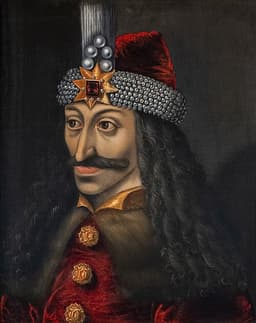
Vlad the Impaler
Emperor · Medieval
53.4Total
Basic Information
Born
1260
1431
Died
1274
1476
Era
Medieval
Medieval
Nationality
Mali Empire
Wallachia
Occupation
Emperor
Emperor
Civilization
Other
Western
Score Comparison
Military (10%)
34.2
40.0
Political (20%)
68.0
27.9
Influence (20%)
68.0
82.0
Legacy (20%)
56.6
55.0
Leadership (15%)
45.0
38.1
Strategy (15%)
60.0
52.5
TOTAL
57.5
53.4
Vlad the Impaler — Complete Timeline
1448 AD
First Reign as Voivode of WallachiaPolitical Action
Vlad III assumed the throne of Wallachia for the first time, with Ottoman support, after the death of his father Vlad Dracul. His reign lasted only two months before he was deposed by John Hunyadi of Hungary.
ReignWallachiaOttoman
Impact: national
1457 AD
Impalement Campaign in WallachiaPolitical Action◆ Major
Vlad executed thousands of boyars, merchants, and peasants through impalement to consolidate power and eliminate opposition. This brutal method became his hallmark, earning him the posthumous name 'the Impaler' and inspiring the Dracula legend.
RepressionBrutalityDracula
Impact: nationaldestructive
1462 AD
Night Attack at TârgovișteWar◆ Major
Vlad launched a surprise night attack on the Ottoman camp of Sultan Mehmed II near T
BattleOttomanWallachia
Impact: regional
Imprisonment by Matthias CorvinusPolitical Action◆ Major
After being captured by Hungarian forces, Vlad was imprisoned by King Matthias Corvinus of Hungary for about 12 years. He was held in captivity at Visegr
ImprisonmentHungaryPropaganda
Impact: nationaltragic
1476 AD
Death in Battle against the OttomansWar◆ Major
Vlad was killed in combat near Bucharest while fighting against Ottoman forces, possibly betrayed by his own men. His head was sent to Constantinople as a trophy, ending his third and final reign as Voivode of Wallachia.
DeathBattleOttoman
Impact: nationaltragic
Expert Analysis
Origins
Khalifa of Mali (born c. 1270) was a grandson of Sundiata Keita, the founder of the Mali Empire. He ascended the throne in 1274 after the death of his father, Mansa Wali. Little is known about his early life, but he belonged to the Keita dynasty, which ruled one of the wealthiest empires in West Africa. His reign was brief and marked by mental instability, leading to his death by his own subjects.
Vlad III, known as Vlad the Impaler (born 1431), was the son of Vlad Dracul, a member of the Order of the Dragon. He was born in Sighișoara, Transylvania, and spent part of his childhood as a hostage of the Ottoman Empire. This experience shaped his deep hatred for the Ottomans. He became Voivode of Wallachia, a principality caught between Hungary and the Ottoman Empire.
Rise to Power
Khalifa became Mansa of Mali in 1274 after his father's death. He inherited a stable and prosperous empire, but his erratic behavior and cruelty alienated his court. According to oral tradition, he was known for shooting arrows at his own subjects for amusement. His reign lasted only a few years before he was assassinated.
Vlad first ruled Wallachia in 1448 with Ottoman support, but lost the throne after two months. He regained power in 1456 with Hungarian backing. He consolidated power by purging the boyar nobility, often through impalement. His most famous military action was the Night Attack at Târgoviște in 1462, where he attempted to assassinate Sultan Mehmed II. The attack failed but demonstrated his tactical daring.
Leadership & Governance
Khalifa's leadership style was erratic and tyrannical. He is described as having a madness that led him to commit unjust acts, such as killing innocent people. His governance was short-lived and ineffective, with no recorded reforms or positive achievements.
Vlad ruled through fear and brutal punishment. He impaled thousands of people, including boyars, merchants, and peasants, to enforce obedience. He also strengthened Wallachia's defenses and conducted raids against the Ottomans. However, his methods alienated both his own nobles and potential allies, leading to his eventual downfall.
Triumph & Tragedy
Khalifa's greatest success was inheriting a powerful empire; his tragedy was his mental instability, which led to his assassination and a brief period of chaos in Mali. His reign is a cautionary tale of how a ruler's personal failings can undermine a stable state.
Vlad's triumph was his fierce resistance against the Ottoman Empire, which earned him a reputation as a defender of Christianity. His tragic flaw was his extreme cruelty, which made him enemies even among his own people. He was captured by the Hungarians and imprisoned for over a decade, then died in battle against the Ottomans in 1476, possibly betrayed.
Character & Destiny
Khalifa's character was marked by madness and unpredictability. His destiny was sealed by his own actions, as he was killed by his subjects who could no longer tolerate his behavior. He scored 68.0 in political influence, but his leadership score of 45.0 reflects his failure to govern effectively.
Vlad was calculating, ruthless, and determined. His character combined military cunning with a paranoid brutality that destroyed potential alliances. His destiny was to be both a national hero in Romania and a symbol of evil worldwide. He scored 82.0 in influence, the highest of any category, due to his lasting cultural impact as the inspiration for Dracula.
Legacy
Khalifa's legacy is minimal; he is remembered primarily as a warning against tyranny. The Mali Empire continued after him, but his reign is a footnote in its history. He scored 56.6 in legacy.
Vlad's legacy is immense. He is a national symbol in Romania, celebrated for defending Wallachia against the Ottomans. Internationally, he is known as the historical figure behind Bram Stoker's Dracula, making him one of the most recognizable medieval rulers. He scored 55.0 in legacy, but his cultural influence far exceeds his political achievements.
Conclusion
While Khalifa of Mali scored higher overall (57.5 vs 53.4), Vlad the Impaler had a far greater impact on history and culture. Khalifa's reign was brief and destructive, leaving no lasting positive contributions. Vlad, despite his brutality, shaped Wallachian history and became a global cultural icon. The score gap of 4.1 points is misleading because Vlad's influence score of 82.0 dwarfs Khalifa's achievements. Therefore, Vlad the Impaler had a more significant and enduring impact, both politically and culturally.
Rankings
🥇
Khalifa of MaliLeader
Mil: 34.2Pol: 68.0Inf: 68.0
57.5
🥈
Vlad the Impaler
Mil: 40.0Pol: 27.9Inf: 82.0
53.4
+4.1 behind
How This Comparison Works
Algorithm
Each figure is scored on 6 dimensions (0—100 scale) based on structured historical data: Military (10%), Political (20%), Influence (20%), Legacy (20%), Leadership (15%), Strategy (15%). The weighted total produces the final ranking.
Data Sources
Scores are computed from structured sub-indicators in the database. Scale factors adjust for era (Ancient ×0.85, Modern ×1.0) and civilization size (Eastern ×1.05, Other ×0.80) to account for differences in population and military scale.
Maximum 3 Figures
Comparisons are limited to 2—3 figures to ensure readability and statistical meaningfulness.
Error Margins
±5 points per dimension — Sub-scores are derived from historical records with inherent uncertainty. Two figures within 5 points on a dimension should be considered roughly equivalent in that area.
Total Score Accuracy
±3 points overall — The weighted combination of 6 dimensions produces a total score with approximately ±3 points of uncertainty. Differences of less than 3 points are not statistically significant— the figures are effectively tied.
Known Limitations
- Historical records are incomplete and uneven across civilizations
- Figures from oral-tradition societies may be underrepresented
- Occupation labels can misclassify multi-role figures
- Scores measure capability and impact, not moral character
- Quantitative scoring is a comparison tool, not absolute truth
Capability Radar
Military (10%) — Battles & Warfare
Battles
31
45
Win Rate
34
40
Expansion
37
25
Political (20%) — Governance & Reform
Reform
0
20
Diplomacy
0
30
Economy
0
15
Influence (20%) — Cultural & Global Reach
Cultural
68
75
Global
75
65
Legacy (20%) — Historical Impact
Historical
74
70
Longevity
77
75
Leadership (15%) — Power & Stability
Tenure
5
35
Stability
0
10
Strategy (15%) — Tactics & Innovation
Strategy
43
55
Tactics
44
70
Reform
46
30
Similar Comparisons
Comments & Discussion
No comments yet. Be the first to share your thoughts!