Loading...
Rupert of the Palatinate vs Vlad the Impaler
Vlad the Impaler leads by 13.6 pts · 2 figures compared
…
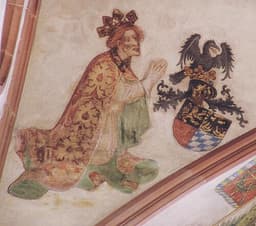
Rupert of the Palatinate
Emperor · Medieval
39.8Total
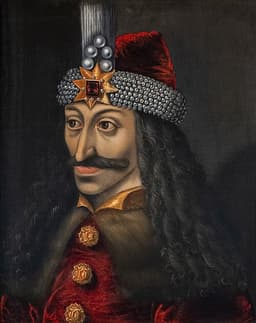
Vlad the Impaler
Emperor · Medieval
53.4Total
Basic Information
Born
1352
1431
Died
1410
1476
Era
Medieval
Medieval
Nationality
Holy Roman Empire
Wallachia
Occupation
Emperor
Emperor
Civilization
Western
Western
Score Comparison
Military (10%)
50.0
40.0
Political (20%)
26.4
27.9
Influence (20%)
47.9
82.0
Legacy (20%)
38.3
55.0
Leadership (15%)
38.1
38.1
Strategy (15%)
35.7
52.5
TOTAL
39.8
53.4
Rupert of the Palatinate — Complete Timeline
1400 AD
Election as King of the RomansPolitical Action◆ Major
The four Rhenish electors deposed Wenceslaus IV and elected Rupert of the Palatinate as King of the Romans. Rupert's election was contested by Wenceslaus and his supporters, leading to a divided empire. Rupert was never crowned Holy Roman Emperor by the Pope.
ElectionImperial PoliticsSchism
Impact: regional
1401 AD
Italian CampaignWar◆ Major
Rupert led an expedition to Italy to secure his coronation as Holy Roman Emperor and to support Pope Boniface IX against his rivals. The campaign was a failure; Rupert's army was defeated by the forces of Gian Galeazzo Visconti of Milan near Brescia. Rupert retreated to Germany without achieving his goals.
Italian CampaignMilitary DefeatCoronation
Impact: regionaltragic
1405 AD
Conflict with the Archbishop of MainzPolitical Action
Rupert became embroiled in a conflict with Archbishop Johann II of Mainz over the election of a new bishop in the diocese of Paderborn. The dispute escalated into a military confrontation, with Rupert besieging the archbishop's castle. The conflict was eventually resolved through mediation, but it weakened Rupert's authority.
Ecclesiastical ConflictSiegeImperial Authority
destructive
Vlad the Impaler — Complete Timeline
1448 AD
First Reign as Voivode of WallachiaPolitical Action
Vlad III assumed the throne of Wallachia for the first time, with Ottoman support, after the death of his father Vlad Dracul. His reign lasted only two months before he was deposed by John Hunyadi of Hungary.
ReignWallachiaOttoman
Impact: national
1457 AD
Impalement Campaign in WallachiaPolitical Action◆ Major
Vlad executed thousands of boyars, merchants, and peasants through impalement to consolidate power and eliminate opposition. This brutal method became his hallmark, earning him the posthumous name 'the Impaler' and inspiring the Dracula legend.
RepressionBrutalityDracula
Impact: nationaldestructive
1462 AD
Night Attack at TârgovișteWar◆ Major
Vlad launched a surprise night attack on the Ottoman camp of Sultan Mehmed II near T
BattleOttomanWallachia
Impact: regional
Imprisonment by Matthias CorvinusPolitical Action◆ Major
After being captured by Hungarian forces, Vlad was imprisoned by King Matthias Corvinus of Hungary for about 12 years. He was held in captivity at Visegr
ImprisonmentHungaryPropaganda
Impact: nationaltragic
1476 AD
Death in Battle against the OttomansWar◆ Major
Vlad was killed in combat near Bucharest while fighting against Ottoman forces, possibly betrayed by his own men. His head was sent to Constantinople as a trophy, ending his third and final reign as Voivode of Wallachia.
DeathBattleOttoman
Impact: nationaltragic
Expert Analysis
Origins
Rupert of the Palatinate was born in 1352 into the Wittelsbach dynasty, one of the most powerful families in the Holy Roman Empire. His father, Rupert II, was Elector Palatine, and young Rupert was groomed for leadership, receiving a thorough education in governance and chivalry. He inherited the Palatinate in 1398 and became one of the four Rhenish electors.
Vlad III, known as Vlad the Impaler, was born in 1431 in Sighișoara, Transylvania, into the House of Drăculești, a branch of the Basarab dynasty. His father, Vlad Dracul, was Voivode of Wallachia and a member of the Order of the Dragon, which gave Vlad his epithet. Vlad spent part of his childhood as a hostage of the Ottoman Empire, an experience that shaped his later ruthlessness.
Rise to Power
Rupert's rise came in 1400 when the four Rhenish electors deposed King Wenceslaus IV of Bohemia for incompetence and elected Rupert as King of the Romans. However, his election was contested by Wenceslaus and other princes, leading to a civil war. Rupert's authority was never fully recognized, and he spent much of his reign trying to assert control.
Vlad first became Voivode of Wallachia in 1448 with Ottoman support, but his reign lasted only two months. He regained the throne in 1456 after killing his rival Vladislav II with Hungarian assistance. His second reign lasted six years, during which he implemented his infamous impalement campaigns to centralize power and eliminate opposition from the boyar nobility.
Leadership & Governance
Rupert's leadership style was traditional and legalistic. He attempted to govern through established feudal structures and sought to restore imperial authority, but he lacked the military and political resources to enforce his will. His Italian campaign of 1401–1402 to secure coronation as Holy Roman Emperor failed due to lack of funds and support, ending in his return to Germany without achieving his goal.
Vlad's governance was authoritarian and terror-based. He used impalement as a tool of statecraft, executing thousands of boyars, merchants, and peasants to crush dissent and enforce order. His methods were brutal but effective in the short term: he reduced crime and stabilized his realm. However, his cruelty alienated his subjects and neighbors, leading to his eventual downfall.
Triumph & Tragedy
Rupert's greatest success was his election as King of the Romans, a testament to his political standing among the electors. However, his reign was marked by failure: he never became emperor, his Italian campaign was a disaster, and he died in 1410 with his authority largely nominal. His military score of 50.0 reflects his inability to project power, while his political score of 26.4 indicates his weak governance.
Vlad's triumphs include his famous Night Attack at Târgoviște in 1462, where he launched a surprise assault on Sultan Mehmed II's Ottoman army, causing heavy casualties and forcing the Sultan to retreat. This event, though a tactical failure (he failed to kill Mehmed), demonstrated his strategic audacity (strategy score 52.5). His tragedy was his imprisonment by Matthias Corvinus for 12 years after being captured by the Hungarians, and his eventual death in battle near Bucharest around 1476, betrayed by his own men. His head was sent to Constantinople.
Character & Destiny
Rupert was a cautious, conservative ruler who lacked the charisma or ruthlessness to overcome the challenges of a fragmented empire. His character was shaped by his upbringing as a prince-elector, comfortable with negotiation but unprepared for the brutal realities of imperial politics. His destiny was to be a footnote in history, a king who never made it to emperor.
Vlad's character was forged in captivity and conflict. He was paranoid, vengeful, and calculating, with a penchant for psychological warfare. His impalement campaigns were not random cruelty but calculated terror to maintain control. His destiny was to become a legend—both as a national hero in Romania for resisting the Ottomans and as the inspiration for Bram Stoker's Dracula. His influence score of 82.0 reflects this enduring cultural impact.
Legacy
Rupert's legacy is minimal. He is remembered as a failed king of Germany whose reign did little to affect the course of European history. His Wittelsbach dynasty continued but his personal impact on governance or culture is negligible. His legacy score of 38.3 reflects this obscurity.
Vlad's legacy is vast and contradictory. In Romanian folklore, he is a just but harsh ruler who defended his country. Internationally, he is synonymous with vampirism and horror due to Stoker's novel. His military tactics influenced later warfare, and his story has been retold in countless books, films, and games. His legacy score of 55.0 is higher than Rupert's, but his overall total score of 53.4 outpaces Rupert's 39.8 by 13.6 points.
Conclusion
Vlad the Impaler had significantly greater impact than Rupert of the Palatinate. While Rupert was a failed king whose reign was inconsequential, Vlad shaped the history of Wallachia, influenced Ottoman-Hungarian relations, and became a global cultural icon. Despite his brutality, Vlad's strategic acumen and lasting legacy outweigh Rupert's ineffectual rule. The data supports this: Vlad scores higher in influence (82.0 vs 47.9), legacy (55.0 vs 38.3), and strategy (52.5 vs 35.7). Rupert's only comparative strength is military score (50.0 vs 40.0), but this is undermined by his failure to achieve his goals. Thus, Vlad the Impaler emerges as the more significant historical figure.
Rankings
🥇
Vlad the ImpalerLeader
Mil: 40.0Pol: 27.9Inf: 82.0
53.4
🥈
Rupert of the Palatinate
Mil: 50.0Pol: 26.4Inf: 47.9
39.8
+13.6 behind
How This Comparison Works
Algorithm
Each figure is scored on 6 dimensions (0—100 scale) based on structured historical data: Military (10%), Political (20%), Influence (20%), Legacy (20%), Leadership (15%), Strategy (15%). The weighted total produces the final ranking.
Data Sources
Scores are computed from structured sub-indicators in the database. Scale factors adjust for era (Ancient ×0.85, Modern ×1.0) and civilization size (Eastern ×1.05, Other ×0.80) to account for differences in population and military scale.
Maximum 3 Figures
Comparisons are limited to 2—3 figures to ensure readability and statistical meaningfulness.
Error Margins
±5 points per dimension — Sub-scores are derived from historical records with inherent uncertainty. Two figures within 5 points on a dimension should be considered roughly equivalent in that area.
Total Score Accuracy
±3 points overall — The weighted combination of 6 dimensions produces a total score with approximately ±3 points of uncertainty. Differences of less than 3 points are not statistically significant— the figures are effectively tied.
Known Limitations
- Historical records are incomplete and uneven across civilizations
- Figures from oral-tradition societies may be underrepresented
- Occupation labels can misclassify multi-role figures
- Scores measure capability and impact, not moral character
- Quantitative scoring is a comparison tool, not absolute truth
Capability Radar
Military (10%) — Battles & Warfare
Battles
20
45
Win Rate
25
40
Expansion
10
25
Political (20%) — Governance & Reform
Reform
15
20
Diplomacy
25
30
Economy
20
15
Influence (20%) — Cultural & Global Reach
Cultural
15
75
Global
10
65
Legacy (20%) — Historical Impact
Historical
20
70
Longevity
10
75
Leadership (15%) — Power & Stability
Tenure
30
35
Stability
15
10
Strategy (15%) — Tactics & Innovation
Strategy
15
55
Tactics
20
70
Reform
10
30
Similar Comparisons
Comments & Discussion
No comments yet. Be the first to share your thoughts!