Loading...
Khaba vs Romulus
Romulus leads by 10.7 pts · 2 figures compared
…
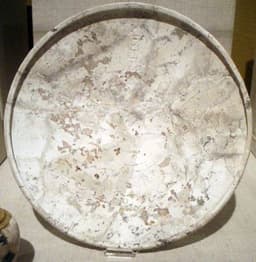
Khaba
Emperor · Ancient
37.0Total
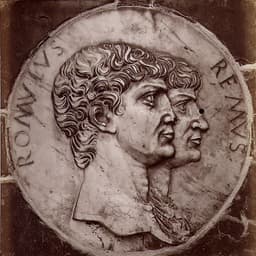
Romulus
Emperor · Ancient
47.7Total
Basic Information
Born
-2630
-771
Died
-2620
-716
Era
Ancient
Ancient
Nationality
Old Kingdom Egypt
Roman Kingdom
Occupation
Emperor
Emperor
Civilization
Middle Eastern
Western
Score Comparison
Military (10%)
10.2
38.3
Political (20%)
25.0
37.9
Influence (20%)
46.3
55.0
Legacy (20%)
37.5
55.0
Leadership (15%)
45.0
41.5
Strategy (15%)
45.0
45.0
TOTAL
37.0
47.7
Khaba — Complete Timeline
2630 BC
Construction of the Layer Pyramid at Zawyet el-AryanOther◆ Major
Khaba built the Layer Pyramid at Zawyet el-Aryan, a step pyramid with a unique construction of horizontal layers of stone. The pyramid was left unfinished, with only the core structure completed. It is associated with Khaba through seal impressions found at the site.
Pyramid ConstructionZawyet el-AryanUnfinished
Impact: national
Romulus — Complete Timeline
753 BC
Founding of RomePolitical Action
According to legend, Romulus founded the city of Rome on the Palatine Hill after killing his brother Remus. He established the Roman Kingdom, created the Senate, and organized the early Roman military and religious institutions.
FoundingLegend
Impact: global
Establishment of the Roman SenatePolitical Action◆ Major
Romulus created the Roman Senate, appointing 100 patricians as advisors. This institution became a central element of Roman government, providing counsel to kings and later playing a key role in the Republic.
GovernmentInstitution
Impact: globalconstructive
750 BC
Rape of the Sabine WomenWar◆ Major
Romulus orchestrated the abduction of Sabine women to provide wives for Roman men. This act led to war with the Sabines, but eventually resulted in the unification of Romans and Sabines under a joint rule.
LegendConflict
destructive
716 BC
Apotheosis as QuirinusCultural
After his death, Romulus was said to have been taken up to the heavens and deified as the god Quirinus. This legend reinforced the divine status of Rome's founder and became part of Roman state religion.
ReligionLegend
Expert Analysis
Origins
**Khaba** was a pharaoh of Egypt's Third Dynasty, reigning around 2670 BCE. Little is known of his early life; he is believed to have been a son of Pharaoh Sekhemkhet. His name appears on stone vessels from the Layer Pyramid at Zawyet el-Aryan, but no contemporary records detail his upbringing or family background. His reign was brief, likely less than a decade, and he ruled during a period of architectural experimentation with stone construction.
**Romulus** is the legendary founder of Rome, traditionally dated to 753 BCE. According to Roman mythology, he and his twin brother Remus were sons of the god Mars and the vestal virgin Rhea Silvia. Abandoned as infants, they were raised by a she-wolf and later by a shepherd. Romulus grew up in the pastoral landscape of Latium, learning leadership and combat skills. His early life is steeped in myth, but the narrative reflects the martial and agrarian values that would define Rome.
Rise to Power
**Khaba** ascended to the throne after the death of Sekhemkhet, likely as a member of the royal family. His reign was short and obscure; the main evidence of his rule is the unfinished Layer Pyramid. He may have faced challenges from competing factions, but specific turning points are unknown. His rise was typical of hereditary succession in the Old Kingdom, without recorded conflict.
**Romulus** rose to power by killing his brother Remus after a dispute over where to found the city. This act of fratricide established him as sole ruler. He then gathered followers—fugitives, exiles, and adventurers—to populate his new city, Rome. To secure women, he orchestrated the Rape of the Sabine Women, which led to war but eventually integration. His leadership in these events solidified his authority and demonstrated his ruthlessness and strategic cunning.
Leadership & Governance
**Khaba**'s leadership is reflected in his pyramid project. The Layer Pyramid was built with horizontal layers of stone, a departure from the stepped design of Djoser's pyramid. However, the pyramid was left unfinished—only the core remains—suggesting his reign ended prematurely or resources were insufficient. His governance likely followed the centralized model of the Third Dynasty, with control over labor and materials, but no reforms or administrative innovations are recorded.
**Romulus** established the foundational institutions of Rome. He created the Roman Senate, appointing 100 patricians as advisors, and divided the populace into patricians and plebeians. He also organized the army into legions and established religious rites. His leadership style was autocratic but pragmatic, using violence and diplomacy to expand Rome's population and territory. He welcomed outsiders, including criminals and slaves, into the city, which boosted numbers but also created social tensions.
Triumph & Tragedy
**Khaba**'s greatest achievement was initiating the Layer Pyramid, which showcases early experimentation with stone construction. Its unique horizontal layering influenced later pyramid building. However, its unfinished state is a tragedy; it stands as a monument to an interrupted reign. Khaba's obscurity means we cannot identify other successes or failures; his legacy is confined to a single incomplete structure.
**Romulus**'s triumphs include founding Rome, creating the Senate, and establishing military and religious institutions that lasted centuries. The Rape of the Sabine Women, while brutal, led to the integration of the Sabines into Roman society, strengthening the city. His apotheosis as the god Quirinus cemented his divine status. Yet, his fratricide and the abduction of women represent moral tragedies. His rule ended mysteriously—according to legend, he was either killed by senators or ascended to heaven, reflecting the tensions between his absolute power and the emerging aristocracy.
Character & Destiny
**Khaba** remains a shadowy figure; his character is inferred solely from his pyramid. The choice to build a layer pyramid suggests a practical, perhaps conservative, approach to architecture. His destiny was to be forgotten for millennia, his tomb unfinished and unidentified. He scored 45.0 in Leadership and Strategy, but his overall impact is minimal.
**Romulus** is portrayed as ambitious, violent, and charismatic. His decision to kill his brother shows a willingness to sacrifice personal bonds for power. His abduction of the Sabine women demonstrates strategic ruthlessness. According to ancient historians, his character blended military prowess with political cunning. His destiny was deification, but historical assessments note that his legendary status obscures the real man. He scored 41.5 in Leadership and 45.0 in Strategy, reflecting a balanced but not exceptional profile.
Legacy
**Khaba**'s legacy is the Layer Pyramid, which contributed to the evolution of pyramid construction. It is one of the earliest large stone structures and a precursor to the Great Pyramids. However, his name and deeds were largely lost; Egyptologists only identified him from a few inscriptions. His influence score of 46.3 is moderate, but his legacy score of 37.5 reflects limited enduring impact.
**Romulus**'s legacy is immense. He founded Rome, which became a world empire and shaped Western civilization. The Senate he created endured for over a thousand years. His myth served as a founding narrative for Rome, inspiring later leaders like Augustus. His military and political institutions were models for subsequent states. He scored 55.0 in both Influence and Legacy, the highest among his metrics. Romulus's impact is measured in the survival of Roman law, language, and culture.
Conclusion
Romulus clearly had greater impact than Khaba. While Khaba's pyramid is an archaeological curiosity, Romulus founded a city-state that grew into a Mediterranean superpower. Romulus's total score of 47.7 surpasses Khaba's 37.0 by 10.7 points, a significant gap. In Influence and Legacy, Romulus scores 55.0 compared to Khaba's 46.3 and 37.5, respectively. Khaba's military score of 10.2 is negligible beside Romulus's 38.3. Even in Leadership and Strategy, where they are closest (45.0 each), Romulus's achievements are historically consequential. Romulus's actions—founding Rome, creating the Senate, and establishing Roman identity—shaped the course of Western history. Khaba, by contrast, remains an obscure footnote. Therefore, Romulus stands as the more historically significant figure.
Rankings
🥇
RomulusLeader
Mil: 38.3Pol: 37.9Inf: 55.0
47.7
🥈
Khaba
Mil: 10.2Pol: 25.0Inf: 46.3
37.0
+10.7 behind
How This Comparison Works
Algorithm
Each figure is scored on 6 dimensions (0—100 scale) based on structured historical data: Military (10%), Political (20%), Influence (20%), Legacy (20%), Leadership (15%), Strategy (15%). The weighted total produces the final ranking.
Data Sources
Scores are computed from structured sub-indicators in the database. Scale factors adjust for era (Ancient ×0.85, Modern ×1.0) and civilization size (Eastern ×1.05, Other ×0.80) to account for differences in population and military scale.
Maximum 3 Figures
Comparisons are limited to 2—3 figures to ensure readability and statistical meaningfulness.
Error Margins
±5 points per dimension — Sub-scores are derived from historical records with inherent uncertainty. Two figures within 5 points on a dimension should be considered roughly equivalent in that area.
Total Score Accuracy
±3 points overall — The weighted combination of 6 dimensions produces a total score with approximately ±3 points of uncertainty. Differences of less than 3 points are not statistically significant— the figures are effectively tied.
Known Limitations
- Historical records are incomplete and uneven across civilizations
- Figures from oral-tradition societies may be underrepresented
- Occupation labels can misclassify multi-role figures
- Scores measure capability and impact, not moral character
- Quantitative scoring is a comparison tool, not absolute truth
Capability Radar
Military (10%) — Battles & Warfare
Battles
5
25
Win Rate
5
30
Expansion
5
35
Political (20%) — Governance & Reform
Reform
20
45
Diplomacy
15
25
Economy
20
30
Influence (20%) — Cultural & Global Reach
Cultural
25
70
Global
10
60
Legacy (20%) — Historical Impact
Historical
25
75
Longevity
20
80
Leadership (15%) — Power & Stability
Tenure
30
30
Stability
25
20
Strategy (15%) — Tactics & Innovation
Strategy
5
25
Tactics
5
20
Reform
5
40
Similar Comparisons
Comments & Discussion
No comments yet. Be the first to share your thoughts!