Loading...
This comparison has not been analyzed yet.
One-time AI generation (~1 minute). Scores and timeline are already available below.
Kenny Anthony vs Zhang Tingyu
Zhang Tingyu leads by 0.8 pts · 2 figures compared
…

Kenny Anthony
Politician · Modern
52.2Total
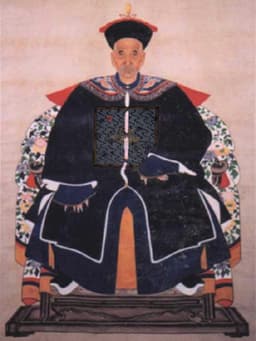
Zhang Tingyu
Politician · Modern
53.0Total
Basic Information
Born
1951
1672
Died
—
1755
Era
Modern
Modern
Nationality
Saint Lucia
China
Occupation
Politician
Politician
Civilization
Other
Eastern
Score Comparison
Military (10%)
50.0
11.2
Political (20%)
53.8
59.3
Influence (20%)
54.1
58.0
Legacy (20%)
41.7
54.0
Leadership (15%)
72.0
75.0
Strategy (15%)
43.8
37.4
TOTAL
52.2
53.0
Kenny Anthony — Complete Timeline
1990 AD
Published Legal ScholarshipCultural
Before entering politics, Anthony published academic works on Caribbean constitutional law and human rights. His scholarship influenced legal thinking in the region.
LegalScholarshipCaribbean
Impact: regionalconstructive
1997 AD
Elected Prime Minister of Saint LuciaPolitical Action◆ Major
Kenny Anthony led the Saint Lucia Labour Party to victory in the 1997 general election, becoming prime minister. His government focused on education reform and economic diversification.
ElectionSaint LuciaSLP
Impact: nationalconstructive
1998 AD
Implemented Education ReformsReform◆ Major
Anthony introduced free secondary education and expanded access to tertiary education in Saint Lucia. This policy increased literacy rates and educational attainment across the country.
EducationReformSaint Lucia
Impact: nationalprogressive
2006 AD
Lost 2006 General ElectionPolitical Action◆ Major
Anthony's SLP was defeated by the United Workers Party in the 2006 general election, ending his nine-year tenure. He stepped down as party leader but remained active in politics.
ElectionSaint LuciaDefeat
Impact: national
2011 AD
Returned as Prime Minister in 2011Political Action◆ Major
Anthony led the SLP to victory in the 2011 general election, returning as prime minister. His second term focused on economic recovery and infrastructure projects.
ElectionSaint LuciaSLP
Impact: nationalconstructive
Zhang Tingyu — Complete Timeline
1725 AD
Appointed Grand SecretaryPolitical Action◆ Major
Zhang Tingyu was appointed Grand Secretary of the Qing Empire, serving under the Yongzheng Emperor. He became a central figure in the administration, overseeing state affairs and drafting imperial edicts.
AppointmentGovernmentYongzheng Era
Impact: national
1735 AD
Served as Regent for the Qianlong EmperorPolitical Action◆ Major
Upon the death of the Yongzheng Emperor, Zhang Tingyu was appointed as one of the regents for the young Qianlong Emperor. He helped manage the transition of power and continued to advise the new emperor during the early years of his reign.
RegencySuccessionQianlong Era
Impact: national
1739 AD
Compiled the 'History of Ming'Cultural◆ Major
Zhang Tingyu oversaw the compilation of the official 'History of Ming' (Mingshi), a comprehensive dynastic history of the Ming Dynasty. The work was completed in 1739 and became the standard historical reference for the Ming period.
HistoriographyScholarshipMing Dynasty
Impact: nationalconstructive
1749 AD
Retired from OfficePolitical Action
Zhang Tingyu retired from his official positions after serving three emperors (Kangxi, Yongzheng, Qianlong). His retirement marked the end of a long and influential career in the Qing bureaucracy.
RetirementGovernmentLongevity
Impact: national
This comparison has not been analyzed yet.
One-time AI generation (~1 minute). Scores and timeline are already available below.
Rankings
🥇
Zhang TingyuLeader
Mil: 11.2Pol: 59.3Inf: 58.0
53.0
🥈
Kenny Anthony
Mil: 50.0Pol: 53.8Inf: 54.1
52.2
+0.8 behind
How This Comparison Works
Algorithm
Each figure is scored on 6 dimensions (0—100 scale) based on structured historical data: Military (10%), Political (20%), Influence (20%), Legacy (20%), Leadership (15%), Strategy (15%). The weighted total produces the final ranking.
Data Sources
Scores are computed from structured sub-indicators in the database. Scale factors adjust for era (Ancient ×0.85, Modern ×1.0) and civilization size (Eastern ×1.05, Other ×0.80) to account for differences in population and military scale.
Maximum 3 Figures
Comparisons are limited to 2—3 figures to ensure readability and statistical meaningfulness.
Error Margins
±5 points per dimension — Sub-scores are derived from historical records with inherent uncertainty. Two figures within 5 points on a dimension should be considered roughly equivalent in that area.
Total Score Accuracy
±3 points overall — The weighted combination of 6 dimensions produces a total score with approximately ±3 points of uncertainty. Differences of less than 3 points are not statistically significant— the figures are effectively tied.
Known Limitations
- Historical records are incomplete and uneven across civilizations
- Figures from oral-tradition societies may be underrepresented
- Occupation labels can misclassify multi-role figures
- Scores measure capability and impact, not moral character
- Quantitative scoring is a comparison tool, not absolute truth
Capability Radar
Military (10%) — Battles & Warfare
Battles
23
14
Win Rate
26
17
Expansion
29
23
Political (20%) — Governance & Reform
Reform
60
75
Diplomacy
55
70
Economy
60
65
Influence (20%) — Cultural & Global Reach
Cultural
30
50
Global
25
40
Legacy (20%) — Historical Impact
Historical
30
60
Longevity
20
55
Leadership (15%) — Power & Stability
Tenure
65
85
Stability
55
80
Strategy (15%) — Tactics & Innovation
Strategy
31
21
Tactics
33
25
Reform
34
28
Similar Comparisons
Comments & Discussion
No comments yet. Be the first to share your thoughts!