Loading...
Torcuato Fernandez-Miranda vs Zhang Tingyu
Torcuato Fernandez-Miranda leads by 3.5 pts · 2 figures compared
…

Torcuato Fernandez-Miranda
Politician · Modern
56.5Total
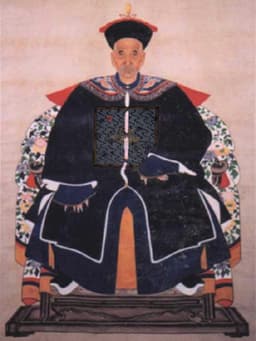
Zhang Tingyu
Politician · Modern
53.0Total
Basic Information
Born
1915
1672
Died
1980
1755
Era
Modern
Modern
Nationality
Spain
China
Occupation
Politician
Politician
Civilization
Western
Eastern
Score Comparison
Military (10%)
50.0
11.2
Political (20%)
70.0
59.3
Influence (20%)
60.0
58.0
Legacy (20%)
40.0
54.0
Leadership (15%)
78.0
75.0
Strategy (15%)
42.6
37.4
TOTAL
56.5
53.0
Torcuato Fernandez-Miranda — Complete Timeline
1969 AD
Appointed Minister of the MovementPolitical Action◆ Major
Franco appointed Fernandez-Miranda as Minister of the Movement, the single party of the Francoist regime. He oversaw the National Movement's structure and ideology.
Francoist SpainGovernment
Impact: national
1973 AD
Appointed Minister of EducationPolitical Action
Carrero Blanco appointed Fernandez-Miranda as Minister of Education. He implemented educational reforms, including the General Education Law of 1970, which modernized Spain's education system.
Francoist SpainEducation Reform
Impact: nationalconstructive
1975 AD
Appointed President of the CortesPolitical Action◆ Major
King Juan Carlos I appointed Fernandez-Miranda as President of the Cortes (the Francoist parliament). This position gave him control over the legislative process during the transition to democracy.
Spanish TransitionGovernment
Impact: national
1976 AD
Drafted the Law for Political ReformReform
As President of the Cortes, Fernandez-Miranda drafted the Law for Political Reform, a legal mechanism to dismantle the Francoist regime from within. The law was approved by the Cortes and later by referendum, enabling democratic elections.
Spanish TransitionDemocratizationLaw
Impact: nationalprogressive
Zhang Tingyu — Complete Timeline
1725 AD
Appointed Grand SecretaryPolitical Action◆ Major
Zhang Tingyu was appointed Grand Secretary of the Qing Empire, serving under the Yongzheng Emperor. He became a central figure in the administration, overseeing state affairs and drafting imperial edicts.
AppointmentGovernmentYongzheng Era
Impact: national
1735 AD
Served as Regent for the Qianlong EmperorPolitical Action◆ Major
Upon the death of the Yongzheng Emperor, Zhang Tingyu was appointed as one of the regents for the young Qianlong Emperor. He helped manage the transition of power and continued to advise the new emperor during the early years of his reign.
RegencySuccessionQianlong Era
Impact: national
1739 AD
Compiled the 'History of Ming'Cultural◆ Major
Zhang Tingyu oversaw the compilation of the official 'History of Ming' (Mingshi), a comprehensive dynastic history of the Ming Dynasty. The work was completed in 1739 and became the standard historical reference for the Ming period.
HistoriographyScholarshipMing Dynasty
Impact: nationalconstructive
1749 AD
Retired from OfficePolitical Action
Zhang Tingyu retired from his official positions after serving three emperors (Kangxi, Yongzheng, Qianlong). His retirement marked the end of a long and influential career in the Qing bureaucracy.
RetirementGovernmentLongevity
Impact: national
Expert Analysis
Origins
Torcuato Fernandez-Miranda was born in 1915 in Gijón, Spain, into a conservative family. He studied law at the University of Oviedo, where he later became a professor of political law. His early career was shaped by the Francoist regime, but he maintained a technocratic approach, focusing on legal structures rather than ideology. His academic background gave him a deep understanding of constitutional law, which later proved crucial.
Zhang Tingyu was born in 1672 in Tongcheng, Anhui, during the Qing dynasty. He came from a scholarly family; his father Zhang Ying was a high-ranking official. Zhang excelled in the imperial examinations, earning his jinshi degree in 1700. He entered the Hanlin Academy, a traditional path for bureaucratic advancement. His early career was marked by meticulous work in historical compilation and administration.
Rise to Power
Fernandez-Miranda rose during the late Francoist period. In 1969, he was appointed Minister of Education under Admiral Carrero Blanco, where he implemented the General Education Law of 1970, which modernized Spain's education system. His key turning point came in 1973 when he became President of the Cortes (the Francoist parliament). This position gave him control over the legislative machinery. After Franco's death in 1975, King Juan Carlos I, his former student, relied on him to orchestrate the transition. Fernandez-Miranda drafted the Law for Political Reform in 1976, a legal mechanism that dismantled the Francoist regime from within, leading to democratic elections.
Zhang Tingyu rose steadily through the Qing bureaucracy. He caught the attention of the Kangxi Emperor through his work on historical records. In 1722, the Yongzheng Emperor appointed him Grand Secretary, making him one of the highest officials. Zhang became a trusted advisor, overseeing major state affairs. Upon Yongzheng's death in 1735, Zhang was named a regent for the young Qianlong Emperor, solidifying his power. He also led the compilation of the 'History of Ming' (Mingshi), completed in 1739, which became the official dynastic history.
Leadership & Governance
Fernandez-Miranda's leadership was defined by legal precision and strategic patience. He operated within the Francoist system but used its own laws to transform it. His approach was top-down: he drafted the Law for Political Reform, which was approved by the Cortes and then by referendum in 1976. He then oversaw the legalization of political parties and the first democratic elections in 1977. His governance score of 78.0 reflects his ability to navigate complex political transitions without violence, though his military score is a neutral 50.0 due to his non-military role.
Zhang Tingyu's leadership was based on administrative competence and loyalty. He managed the Qing bureaucracy efficiently, implementing Yongzheng's reforms and ensuring stability during Qianlong's early reign. His governance score of 75.0 is comparable to Fernandez-Miranda's, but his political score of 59.3 is lower, reflecting his role as an executor rather than a revolutionary. Zhang's strategy score of 37.4 is notably low because his decisions were often reactive, following imperial directives rather than initiating bold changes.
Triumph & Tragedy
Fernandez-Miranda's greatest triumph was the successful transition to democracy without civil war. The Law for Political Reform dismantled Francoism legally, and he ensured the military remained neutral. However, his greatest failure was his inability to control the pace of change after 1977. He opposed the legalization of the Communist Party, which the King overruled, leading to his marginalization. He retired in 1978, his influence waning as democracy consolidated.
Zhang Tingyu's triumph was his longevity and service under three emperors. He completed the 'History of Ming', a monumental work that shaped historical understanding. As regent, he ensured a smooth succession for Qianlong. His tragedy was his fall from grace in later years. After retirement, he was accused of corruption by political rivals and stripped of honors posthumously in 1799, though later rehabilitated. His legacy score of 54.0 is higher than Fernandez-Miranda's 40.0, partly due to his historical compilation.
Character & Destiny
Fernandez-Miranda was methodical and cautious, a legalist who believed in institutional change. His character was shaped by his academic background; he was a professor who applied constitutional theory to practice. His destiny was to be the architect of Spain's democracy, but his reluctance to embrace full democratization cost him influence. He scored 78.0 in leadership but only 42.6 in strategy, indicating a tactical rather than visionary approach.
Zhang Tingyu was diligent and loyal, a quintessential Confucian official. He prioritized stability and adherence to tradition. His destiny was to serve powerful emperors, but his lack of independent initiative limited his impact. His strategy score of 37.4 suggests he was more of an administrator than a strategist. Historical assessments often note his caution and inability to adapt to changing circumstances.
Legacy
Fernandez-Miranda's legacy is the Spanish Constitution of 1978 and the democratic system that followed. His Law for Political Reform is considered a masterstroke of legal transition. However, his personal legacy is modest; he is less famous than King Juan Carlos or Adolfo Suárez. His influence score of 60.0 reflects his critical but behind-the-scenes role.
Zhang Tingyu's legacy is more tangible. The 'History of Ming' remains a key source for Ming studies. He also contributed to the stability of the Qing dynasty during a crucial period. His legacy score of 54.0 is higher, but his overall total score of 53.0 is slightly lower than Fernandez-Miranda's 56.5.
Conclusion
Torcuato Fernandez-Miranda had a greater impact on history than Zhang Tingyu. While Zhang served three emperors and compiled a major historical work, Fernandez-Miranda fundamentally transformed Spain's political system. His total score of 56.5 surpasses Zhang's 53.0, and his political score of 70.0 is significantly higher than Zhang's 59.3. Fernandez-Miranda's transition model influenced other democratizations, whereas Zhang's work, though important, was confined to the Qing dynasty. Fernandez-Miranda's role in dismantling a dictatorship and establishing democracy is a more profound and lasting achievement than Zhang's administrative service. Thus, Fernandez-Miranda emerges as the more consequential figure.
Rankings
🥇
Torcuato Fernandez-MirandaLeader
Mil: 50.0Pol: 70.0Inf: 60.0
56.5
🥈
Zhang Tingyu
Mil: 11.2Pol: 59.3Inf: 58.0
53.0
+3.5 behind
How This Comparison Works
Algorithm
Each figure is scored on 6 dimensions (0—100 scale) based on structured historical data: Military (10%), Political (20%), Influence (20%), Legacy (20%), Leadership (15%), Strategy (15%). The weighted total produces the final ranking.
Data Sources
Scores are computed from structured sub-indicators in the database. Scale factors adjust for era (Ancient ×0.85, Modern ×1.0) and civilization size (Eastern ×1.05, Other ×0.80) to account for differences in population and military scale.
Maximum 3 Figures
Comparisons are limited to 2—3 figures to ensure readability and statistical meaningfulness.
Error Margins
±5 points per dimension — Sub-scores are derived from historical records with inherent uncertainty. Two figures within 5 points on a dimension should be considered roughly equivalent in that area.
Total Score Accuracy
±3 points overall — The weighted combination of 6 dimensions produces a total score with approximately ±3 points of uncertainty. Differences of less than 3 points are not statistically significant— the figures are effectively tied.
Known Limitations
- Historical records are incomplete and uneven across civilizations
- Figures from oral-tradition societies may be underrepresented
- Occupation labels can misclassify multi-role figures
- Scores measure capability and impact, not moral character
- Quantitative scoring is a comparison tool, not absolute truth
Capability Radar
Military (10%) — Battles & Warfare
Battles
28
14
Win Rate
30
17
Expansion
33
23
Political (20%) — Governance & Reform
Reform
90
75
Diplomacy
85
70
Economy
40
65
Influence (20%) — Cultural & Global Reach
Cultural
30
50
Global
60
40
Legacy (20%) — Historical Impact
Historical
75
60
Longevity
70
55
Leadership (15%) — Power & Stability
Tenure
65
85
Stability
80
80
Strategy (15%) — Tactics & Innovation
Strategy
37
21
Tactics
42
25
Reform
43
28
Similar Comparisons
Comments & Discussion
No comments yet. Be the first to share your thoughts!