Loading...
This comparison has not been analyzed yet.
One-time AI generation (~1 minute). Scores and timeline are already available below.
Kebek vs Pulakeshin I
Kebek leads by 11.8 pts · 2 figures compared
…
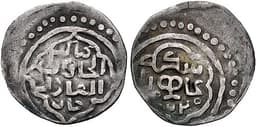
Kebek
Emperor · Medieval
55.3Total

Pulakeshin I
Emperor · Medieval
43.5Total
Basic Information
Born
1280
535
Died
1325
566
Era
Medieval
Medieval
Nationality
Chagatai Khanate
India
Occupation
Emperor
Emperor
Civilization
Eastern
Indian
Score Comparison
Military (10%)
38.3
50.0
Political (20%)
68.0
27.9
Influence (20%)
52.5
50.2
Legacy (20%)
44.2
42.5
Leadership (15%)
74.0
45.0
Strategy (15%)
60.0
43.7
TOTAL
55.3
43.5
Kebek — Complete Timeline
1309 AD
Became Khan of the Chagatai KhanatePolitical Action◆ Major
Kebek became Khan of the Chagatai Khanate in 1309, succeeding his brother Esen Buqa I. His reign focused on administrative and economic reforms, moving the khanate toward greater stability and centralization.
Chagatai KhanateKhanEsen Buqa I
Impact: regional
1310 AD
Reformed Coinage SystemReform◆ Major
Kebek introduced a standardized silver coinage system across the Chagatai Khanate, replacing the diverse local currencies. The coins, known as 'Kebek dirhams,' facilitated trade and tax collection, strengthening the khanate's economy.
CoinageEconomic ReformTrade
Impact: regionalconstructive
1312 AD
Implemented Administrative ReformsReform◆ Major
Kebek reorganized the Chagatai Khanate's administration, dividing it into provinces (tumens) governed by appointed officials. He also established a centralized tax system and a postal relay network, improving governance and communication.
AdministrationTax ReformCentralization
Impact: regionalconstructive
1314 AD
Defeated by the Yuan DynastyWar
Kebek's forces were defeated by the Yuan dynasty in a border conflict in 1314. The loss forced him to pay tribute to the Yuan, acknowledging their supremacy and ending Kebek's expansionist ambitions in the east.
Yuan DynastyDefeatTribute
Impact: regionaldestructive
Pulakeshin I — Complete Timeline
543 AD
Foundation of the Chalukya dynasty of BadamiPolitical Action◆ Major
Pulakeshin I established the Chalukya dynasty by fortifying the hill fort of Badami (Vatapi) in present-day Karnataka. He performed the Ashvamedha sacrifice and assumed the title 'Maharaja', laying the foundation for a major Deccan power.
Dynasty FoundationChalukyaBadami
Impact: regionalconstructive
545 AD
Performance of the Ashvamedha sacrificeCultural◆ Major
Pulakeshin I performed the Ashvamedha (horse sacrifice) to assert his imperial sovereignty. This Vedic ritual was a declaration of his status as an independent ruler and is recorded in the Badami cave inscriptions.
AshvamedhaImperial AuthorityVedic Ritual
Impact: regionalconstructive
This comparison has not been analyzed yet.
One-time AI generation (~1 minute). Scores and timeline are already available below.
Rankings
🥇
KebekLeader
Mil: 38.3Pol: 68.0Inf: 52.5
55.3
🥈
Pulakeshin I
Mil: 50.0Pol: 27.9Inf: 50.2
43.5
+11.8 behind
How This Comparison Works
Algorithm
Each figure is scored on 6 dimensions (0—100 scale) based on structured historical data: Military (10%), Political (20%), Influence (20%), Legacy (20%), Leadership (15%), Strategy (15%). The weighted total produces the final ranking.
Data Sources
Scores are computed from structured sub-indicators in the database. Scale factors adjust for era (Ancient ×0.85, Modern ×1.0) and civilization size (Eastern ×1.05, Other ×0.80) to account for differences in population and military scale.
Maximum 3 Figures
Comparisons are limited to 2—3 figures to ensure readability and statistical meaningfulness.
Error Margins
±5 points per dimension — Sub-scores are derived from historical records with inherent uncertainty. Two figures within 5 points on a dimension should be considered roughly equivalent in that area.
Total Score Accuracy
±3 points overall — The weighted combination of 6 dimensions produces a total score with approximately ±3 points of uncertainty. Differences of less than 3 points are not statistically significant— the figures are effectively tied.
Known Limitations
- Historical records are incomplete and uneven across civilizations
- Figures from oral-tradition societies may be underrepresented
- Occupation labels can misclassify multi-role figures
- Scores measure capability and impact, not moral character
- Quantitative scoring is a comparison tool, not absolute truth
Capability Radar
Military (10%) — Battles & Warfare
Battles
30
20
Win Rate
35
20
Expansion
35
25
Political (20%) — Governance & Reform
Reform
65
25
Diplomacy
50
20
Economy
60
20
Influence (20%) — Cultural & Global Reach
Cultural
30
20
Global
25
10
Legacy (20%) — Historical Impact
Historical
35
25
Longevity
30
30
Leadership (15%) — Power & Stability
Tenure
50
30
Stability
55
25
Strategy (15%) — Tactics & Innovation
Strategy
40
20
Tactics
40
20
Reform
45
15
Similar Comparisons
Comments & Discussion
No comments yet. Be the first to share your thoughts!