Loading...
Kavad I vs Merneptah
Kavad I leads by 6.6 pts · 2 figures compared
…

Kavad I
Emperor · Ancient
56.5Total
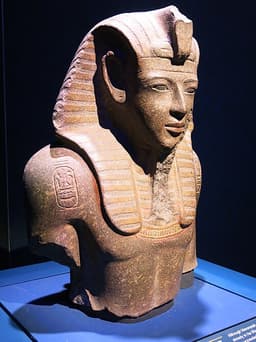
Merneptah
Emperor · Ancient
49.9Total
Basic Information
Born
449
-1213
Died
531
-1203
Era
Ancient
Ancient
Nationality
Sasanian Empire
Egypt
Occupation
Emperor
Emperor
Civilization
Middle Eastern
Middle Eastern
Score Comparison
Military (10%)
47.5
52.5
Political (20%)
60.0
48.0
Influence (20%)
56.4
52.5
Legacy (20%)
49.2
49.2
Leadership (15%)
74.0
40.0
Strategy (15%)
52.5
60.0
TOTAL
56.5
49.9
Kavad I — Complete Timeline
488 AD
Support for the Mazdakite movementPolitical Action◆ Major
Kavad I embraced the Mazdakite movement, a religious and social reformist sect that advocated for communal property and egalitarianism. This support alienated the Zoroastrian clergy and nobility, leading to political instability.
MazdakismReligious ReformSocial Movement
Impact: nationalprogressive
496 AD
Deposition and imprisonment by the nobilityPolitical Action◆ Major
The Sasanian nobility and Zoroastrian clergy, opposed to Kavad's Mazdakite policies, deposed him and imprisoned him in the 'Castle of Oblivion'. His brother Jamasp was placed on the throne as a puppet ruler.
CoupImprisonmentNobility
Impact: nationaldestructive
498 AD
Escape and restoration to the throne with Hephthalite aidPolitical Action◆ Major
Kavad escaped from prison with the help of his supporters and fled to the Hephthalite Huns. With their military backing, he returned to Persia, defeated Jamasp, and was restored as king, now indebted to the Hephthalites.
EscapeRestorationHephthalites
Impact: national
500 AD
Implementation of tax and administrative reformsReform◆ Major
After his restoration, Kavad I implemented significant tax and administrative reforms to strengthen the central government. He introduced a fixed land tax and reorganized the bureaucracy, reducing the power of the nobility.
Tax ReformAdministrationCentralization
Impact: nationalconstructive
Merneptah — Complete Timeline
1210 BC
Libyan War campaignWar◆ Major
Merneptah repelled an invasion by Libyan tribes and their Sea Peoples allies in the western Delta. The victory was recorded in the Great Karnak Inscription. This campaign secured Egypt's western borders and prevented a major incursion into the Nile Valley.
LibyaSea PeoplesDefense
Impact: regional
Suppression of the revolt in CanaanWar
Merneptah conducted a military campaign in Canaan to suppress rebellions against Egyptian control. The campaign included the capture of the cities of Gezer, Yanoam, and Ashkelon. This reasserted Egyptian authority over the region for the remainder of his reign.
CanaanRevoltMilitary
Impact: regional
1208 BC
Merneptah Stele inscriptionCultural◆ Major
Merneptah commissioned a victory stele at Thebes that contains the earliest known extrabiblical reference to Israel. The stele describes a military campaign in Canaan and states 'Israel is laid waste, its seed is not.' This provides the first historical evidence of Israel as a people in the region.
IsraelSteleCanaan
Impact: global
Expert Analysis
Origins
Kavad I was born around 449 AD into the Sasanian royal family, the son of Peroz I. His early life was marked by the empire's struggles against the Hephthalite Huns, which shaped his pragmatic and reformist outlook. He received a traditional Zoroastrian education but later became sympathetic to the Mazdakite movement, a radical egalitarian sect.
Merneptah was born around 1260 BC, the 13th son of Ramesses II and Queen Isetnofret. Unlike his father's long reign, Merneptah came to power late in life, around his 60s. His upbringing was in the opulent court of the 19th Dynasty, where he was groomed for military command rather than administration, given his position as a younger son.
Rise to Power
Kavad I ascended the throne in 488 AD after the death of his uncle Balash. His early reign was unstable, and he faced opposition from the nobility and Zoroastrian clergy. In 496 AD, the nobility deposed him and imprisoned him in the Castle of Oblivion. He escaped with the help of his supporters and fled to the Hephthalite Huns, who provided military aid. In 499 AD, he returned and restored his throne, marking a turning point in his rule.
Merneptah became pharaoh in 1213 BC after the death of Ramesses II. His rise was uneventful compared to Kavad's, as he inherited a stable but overextended empire. He had served as a military commander under his father, which prepared him for the defensive campaigns he would face.
Leadership & Governance
Kavad I's leadership was defined by his support for the Mazdakite movement, which advocated for communal property and social equality. This earned him the enmity of the nobility but also weakened their power. After his restoration, he implemented tax and administrative reforms, introducing a fixed land tax that centralized revenue and strengthened the crown. His governance scored 74.0 in leadership, reflecting his ability to maintain power despite opposition.
Merneptah's governance was more traditional. He maintained the bureaucratic structures of his father, focusing on military defense and temple building. He scored 40.0 in leadership, indicating less innovation. His most notable administrative act was the commissioning of the Merneptah Stele, which recorded his campaigns and provided the first extrabiblical mention of Israel.
Triumph & Tragedy
Kavad I's greatest triumph was his restoration to the throne with Hephthalite aid and the subsequent reforms that stabilized the Sasanian economy. His tragedy was the eventual suppression of the Mazdakite movement after his death by his son Khosrow I, who killed many Mazdakites. Kavad's support for them had also caused internal strife.
Merneptah's triumph was his successful campaign against the Libyans and Sea Peoples in 1208 BC, recorded in the Great Karnak Inscription. This victory preserved Egypt's western borders. His tragedy was the limited scope of his achievements; he failed to expand the empire and faced rebellions in Canaan, which he suppressed but did not pacify permanently.
Character & Destiny
Kavad I was pragmatic and willing to use radical ideas to achieve political goals. His support for Mazdakism was both ideological and strategic, as it curbed noble power. His escape and restoration show resilience and cunning. Historians note his score of 52.5 in strategy, reflecting calculated moves.
Merneptah was a cautious and conservative ruler, typical of a son who inherits a long-lived father's empire. He focused on defense rather than expansion. His character is reflected in his stele, which emphasizes his role as protector of Egypt. He scored 60.0 in strategy, higher than Kavad, due to his effective defensive campaigns.
Legacy
Kavad I's legacy is mixed. His reforms laid the groundwork for his son Khosrow I's golden age, but his association with Mazdakism tainted his reputation in traditional Zoroastrian sources. His total score of 56.5 reflects moderate influence, with legacy at 49.2.
Merneptah's legacy is primarily tied to the Merneptah Stele, which provides crucial evidence for early Israelite history. His military score of 52.5 and political score of 48.0 indicate a competent but unremarkable reign. His total score of 49.9 is slightly lower than Kavad's.
Conclusion
Kavad I had a greater overall impact than Merneptah. Despite Merneptah's valuable stele, Kavad's reforms significantly altered the Sasanian state's structure and influenced the trajectory of Persian history. His political maneuvering and leadership score of 74.0 far exceeds Merneptah's 40.0, and his total score of 56.5 versus 49.9 supports this. While Merneptah's stele is historically important, Kavad's actions reshaped an empire.
Rankings
🥇
Kavad ILeader
Mil: 47.5Pol: 60.0Inf: 56.4
56.5
🥈
Merneptah
Mil: 52.5Pol: 48.0Inf: 52.5
49.9
+6.6 behind
How This Comparison Works
Algorithm
Each figure is scored on 6 dimensions (0—100 scale) based on structured historical data: Military (10%), Political (20%), Influence (20%), Legacy (20%), Leadership (15%), Strategy (15%). The weighted total produces the final ranking.
Data Sources
Scores are computed from structured sub-indicators in the database. Scale factors adjust for era (Ancient ×0.85, Modern ×1.0) and civilization size (Eastern ×1.05, Other ×0.80) to account for differences in population and military scale.
Maximum 3 Figures
Comparisons are limited to 2—3 figures to ensure readability and statistical meaningfulness.
Error Margins
±5 points per dimension — Sub-scores are derived from historical records with inherent uncertainty. Two figures within 5 points on a dimension should be considered roughly equivalent in that area.
Total Score Accuracy
±3 points overall — The weighted combination of 6 dimensions produces a total score with approximately ±3 points of uncertainty. Differences of less than 3 points are not statistically significant— the figures are effectively tied.
Known Limitations
- Historical records are incomplete and uneven across civilizations
- Figures from oral-tradition societies may be underrepresented
- Occupation labels can misclassify multi-role figures
- Scores measure capability and impact, not moral character
- Quantitative scoring is a comparison tool, not absolute truth
Capability Radar
Military (10%) — Battles & Warfare
Battles
55
55
Win Rate
50
60
Expansion
40
40
Political (20%) — Governance & Reform
Reform
85
40
Diplomacy
60
50
Economy
65
45
Influence (20%) — Cultural & Global Reach
Cultural
55
35
Global
45
40
Legacy (20%) — Historical Impact
Historical
65
60
Longevity
50
55
Leadership (15%) — Power & Stability
Tenure
70
60
Stability
40
55
Strategy (15%) — Tactics & Innovation
Strategy
50
55
Tactics
45
50
Reform
60
30
Similar Comparisons
Comments & Discussion
No comments yet. Be the first to share your thoughts!