Loading...
Kangxi Emperor vs Peter I of Serbia
Kangxi Emperor leads by 20.8 pts · 2 figures compared
…
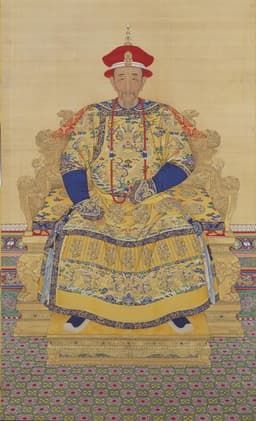
Kangxi Emperor
Emperor · Modern
73.4Total
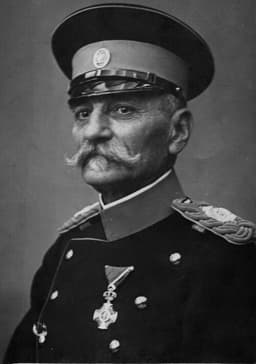
Peter I of Serbia
Emperor · Modern
52.6Total
Basic Information
Born
1654
1844
Died
1722
1921
Era
Modern
Modern
Nationality
China
Serbia
Occupation
Emperor
Emperor
Civilization
Eastern
Western
Score Comparison
Military (10%)
85.0
55.0
Political (20%)
78.0
60.0
Influence (20%)
69.8
58.0
Legacy (20%)
65.0
48.3
Leadership (15%)
81.3
53.2
Strategy (15%)
72.7
35.0
TOTAL
73.4
52.6
Kangxi Emperor — Complete Timeline
1673 AD
Suppression of the Revolt of the Three FeudatoriesWar
The Kangxi Emperor faced a major rebellion led by three powerful Han Chinese feudatories in southern China, including Wu Sangui. He personally directed military campaigns, and by 1681 the revolt was crushed, consolidating Qing control over the south.
RebellionFeudatoriesQing Dynasty
Impact: national
1683 AD
Conquest of TaiwanWar◆ Major
Kangxi ordered the invasion of Taiwan, then held by the Ming loyalist Zheng Keshuang. Qing naval forces defeated the Zheng fleet, and Taiwan was incorporated into the Qing Empire as a prefecture, ending the last major Ming resistance.
TaiwanConquestMing Loyalists
Impact: regional
1689 AD
Treaty of NerchinskPolitical Action◆ Major
The Kangxi Emperor negotiated the Treaty of Nerchinsk with the Russian Empire, establishing the border between Siberia and Manchuria. This was China's first treaty with a European power and secured the northern frontier, allowing trade and diplomatic relations.
TreatyRussiaBorder
Impact: globalconstructive
1691 AD
Incorporation of Outer MongoliaPolitical Action◆ Major
Kangxi personally met with Khalkha Mongol leaders at Dolon Nor, where they formally submitted to Qing authority. This brought Outer Mongolia under Qing control, ending the Dzungar threat and expanding the empire's northern borders.
MongoliaExpansionQing
Impact: regionalconstructive
1716 AD
Compilation of the Kangxi DictionaryCultural◆ Major
Kangxi commissioned the Kangxi Dictionary, a comprehensive dictionary of Chinese characters. It became the standard reference for Chinese lexicography, containing over 47,000 characters and influencing scholarship for centuries.
DictionaryLanguageScholarship
Impact: globalconstructive
Peter I of Serbia — Complete Timeline
1903 AD
Became King of SerbiaPolitical Action◆ Major
Peter I Kara
CoupDynasty ChangeKarađorđević
Impact: national
1912 AD
Led Serbia in the Balkan WarsWar◆ Major
King Peter I led Serbia during the First and Second Balkan Wars, which resulted in the expansion of Serbian territory and the expulsion of the Ottoman Empire from most of the Balkans. Serbia emerged as a regional power.
Balkan WarsTerritorial ExpansionOttoman Empire
Impact: regional
1915 AD
World War I and the Retreat through AlbaniaWar
After the Austro-Hungarian and German invasion of Serbia, King Peter I led the Serbian army and government on a retreat through the mountains of Albania to the Adriatic coast. The retreat was a humanitarian disaster but preserved the army for future campaigns.
World War IRetreatHumanitarian Crisis
Impact: regionaltragic
1918 AD
Proclaimed King of the Serbs, Croats, and SlovenesPolitical Action
Following the end of World War I, King Peter I was proclaimed King of the newly formed Kingdom of Serbs, Croats, and Slovenes (later Yugoslavia). This united South Slavic peoples under a single monarchy.
YugoslaviaUnificationMonarchy
Impact: regionalconstructive
Expert Analysis
Origins
Kangxi Emperor, born Xuanye in 1654, was the third emperor of the Qing dynasty. He was the son of the Shunzhi Emperor and Empress Xiaokangzhang. Raised in the Forbidden City, he received a rigorous Confucian education and was trained in martial arts. His early years were marked by the regency of four Manchu princes after his father's death in 1661, a period of political instability.
Peter I of Serbia, born in 1844 in Belgrade, was the son of Prince Alexander Karađorđević of Serbia and Persida Nenadović. His family was exiled when he was a child after the abdication of his father in 1858. Peter grew up in exile, studying in Geneva and France, and later serving in the French Foreign Legion. He married Princess Zorka of Montenegro, strengthening ties between Serbia and Montenegro.
Rise to Power
Kangxi assumed personal rule in 1669 after outmaneuvering the regent Oboi, who had become dictatorial. He then faced the Revolt of the Three Feudatories (1673–1681), a major rebellion led by Wu Sangui and other Han Chinese lords. Kangxi personally directed the campaign, eventually crushing the revolt and consolidating Qing control over southern China. This victory solidified his authority and demonstrated his military acumen.
Peter I became King of Serbia in 1903 after the May Coup, in which King Alexander Obrenović was assassinated. The coup was orchestrated by military officers who sought to restore the Karađorđević dynasty. Peter's accession was supported by Russia and marked a shift toward constitutional monarchy. He led Serbia through the Balkan Wars (1912–1913), which doubled Serbian territory and expelled the Ottoman Empire from the Balkans.
Leadership & Governance
Kangxi ruled with a blend of Confucian principles and Manchu traditions. He reformed the civil service examination system, promoted scholarship, and commissioned the Kangxi Dictionary (1716), a landmark in Chinese lexicography. He also managed a vast empire with efficiency, using both Manchu and Han officials. His military campaigns expanded Qing borders to include Taiwan (1683), Outer Mongolia (1691), and parts of Siberia, secured via the Treaty of Nerchinsk (1689) with Russia. Kangxi's governance scored 81.3 in leadership, reflecting his ability to maintain stability and foster cultural achievements.
Peter I was a constitutional monarch who respected parliamentary democracy. He delegated military command to his son Alexander and generals, focusing on national unity. His leadership during World War I was symbolic; after the Austro-Hungarian invasion, he led the army and government on a retreat through Albania in 1915, a harrowing journey that preserved the Serbian state. His political score of 60.0 reflects his role as a unifying figure rather than an active administrator.
Triumph & Tragedy
Kangxi's greatest triumph was the stabilization and expansion of the Qing Empire. He incorporated Taiwan, ended the Mongol threat, and secured the northern border. His cultural legacy includes the Kangxi Dictionary and patronage of arts. However, his later years saw succession disputes and corruption among officials. The costly campaigns also strained the treasury.
Peter I's triumph was leading Serbia through the Balkan Wars and founding the Kingdom of Serbs, Croats, and Slovenes (later Yugoslavia) in 1918, fulfilling the dream of South Slavic unity. His tragedy was the devastation of World War I: Serbia lost 25% of its population, and the retreat through Albania caused immense suffering. His health declined, and he died in 1921, just as the new kingdom faced internal ethnic tensions.
Character & Destiny
Kangxi was pragmatic, intelligent, and resilient. He personally led campaigns and engaged in diplomacy. His character shaped his destiny: his decisive action against the feudatories and his strategic patience in dealing with Russia and Mongolia secured his legacy. Historians rate his strategy at 72.7, reflecting his long-term vision.
Peter I was principled and steadfast, but his destiny was shaped by larger forces. He was a constitutional monarch in an era of nationalism and war. His character as a father figure to his people helped Serbia survive WWI, but he lacked the power to direct events. His strategy score of 35.0 indicates he was more a symbol than a strategist.
Legacy
Kangxi's legacy is immense: he established the foundations for the Qing dynasty's golden age, which lasted into the 18th century. The Kangxi Dictionary influenced Chinese lexicography for centuries. His territorial gains remain part of modern China. He scored 65.0 in legacy, reflecting his enduring impact on Chinese history.
Peter I is remembered as a unifying figure who led Serbia through war and created Yugoslavia. However, the kingdom's instability and eventual dissolution limit his legacy. His score of 48.3 reflects a more localized and transitional impact.
Conclusion
Kangxi Emperor had a far greater impact on world history than Peter I of Serbia. With a total score of 73.4 against Peter's 52.6, Kangxi's military (85.0 vs 55.0), political (78.0 vs 60.0), and leadership (81.3 vs 53.2) scores demonstrate his superior effectiveness. Kangxi transformed China into a stable, expansive empire with lasting cultural contributions. Peter I, while important for Serbian and Yugoslav history, operated on a smaller stage and his achievements were less enduring. The Qing Empire under Kangxi shaped East Asia for centuries, whereas the Kingdom of Yugoslavia lasted only 73 years. Thus, Kangxi's legacy is more significant and lasting.
Rankings
🥇
Kangxi EmperorLeader
Mil: 85.0Pol: 78.0Inf: 69.8
73.4
🥈
Peter I of Serbia
Mil: 55.0Pol: 60.0Inf: 58.0
52.6
+20.8 behind
How This Comparison Works
Algorithm
Each figure is scored on 6 dimensions (0—100 scale) based on structured historical data: Military (10%), Political (20%), Influence (20%), Legacy (20%), Leadership (15%), Strategy (15%). The weighted total produces the final ranking.
Data Sources
Scores are computed from structured sub-indicators in the database. Scale factors adjust for era (Ancient ×0.85, Modern ×1.0) and civilization size (Eastern ×1.05, Other ×0.80) to account for differences in population and military scale.
Maximum 3 Figures
Comparisons are limited to 2—3 figures to ensure readability and statistical meaningfulness.
Error Margins
±5 points per dimension — Sub-scores are derived from historical records with inherent uncertainty. Two figures within 5 points on a dimension should be considered roughly equivalent in that area.
Total Score Accuracy
±3 points overall — The weighted combination of 6 dimensions produces a total score with approximately ±3 points of uncertainty. Differences of less than 3 points are not statistically significant— the figures are effectively tied.
Known Limitations
- Historical records are incomplete and uneven across civilizations
- Figures from oral-tradition societies may be underrepresented
- Occupation labels can misclassify multi-role figures
- Scores measure capability and impact, not moral character
- Quantitative scoring is a comparison tool, not absolute truth
Capability Radar
Military (10%) — Battles & Warfare
Battles
85
30
Win Rate
88
35
Expansion
92
25
Political (20%) — Governance & Reform
Reform
88
60
Diplomacy
90
70
Economy
85
50
Influence (20%) — Cultural & Global Reach
Cultural
88
50
Global
80
40
Legacy (20%) — Historical Impact
Historical
90
55
Longevity
85
45
Leadership (15%) — Power & Stability
Tenure
95
55
Stability
92
45
Strategy (15%) — Tactics & Innovation
Strategy
90
40
Tactics
82
30
Reform
85
45
Similar Comparisons
Comments & Discussion
No comments yet. Be the first to share your thoughts!