Loading...
This comparison has not been analyzed yet.
One-time AI generation (~1 minute). Scores and timeline are already available below.
Kalashoka vs Ousanas
Kalashoka leads by 6.1 pts · 2 figures compared
…

Kalashoka
Emperor · Ancient
45.5Total
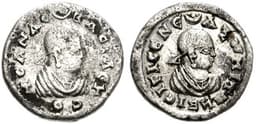
Ousanas
Emperor · Ancient
39.4Total
Basic Information
Born
-422
310
Died
-396
330
Era
Ancient
Ancient
Nationality
Magadha
Ethiopia
Occupation
Emperor
Emperor
Civilization
Indian
Other
Score Comparison
Military (10%)
25.9
35.0
Political (20%)
37.9
27.9
Influence (20%)
51.8
44.8
Legacy (20%)
45.0
37.5
Leadership (15%)
62.2
45.0
Strategy (15%)
36.8
43.7
TOTAL
45.5
39.4
Kalashoka — Complete Timeline
410 BC
Convened the Second Buddhist Council at VaishaliCultural◆ Major
King Kalashoka sponsored the Second Buddhist Council at Vaishali to resolve disputes over monastic discipline. The council, attended by 700 monks, condemned ten lax practices of the Vajjian monks, leading to a schism between the Sthaviravada and Mahasanghika schools.
Buddhist CouncilSchismMonastic Discipline
Impact: regionalconstructive
Ousanas — Complete Timeline
315 AD
Expanded Aksumite territory into South ArabiaWar◆ Major
Ousanas led military campaigns across the Red Sea, extending Aksumite control over parts of Yemen. This expansion secured trade routes and established Aksum as a dominant power in the region.
Territorial ExpansionMilitary CampaignSouth Arabia
Impact: regional
320 AD
Issued coins with Christian symbolsCultural
Ousanas minted coins bearing the cross, one of the earliest Aksumite rulers to do so. This numismatic evidence suggests the royal court was adopting Christian iconography, possibly under the influence of his son Ezana's later conversion.
CoinageChristianizationIconography
Impact: nationalconstructive
This comparison has not been analyzed yet.
One-time AI generation (~1 minute). Scores and timeline are already available below.
Rankings
🥇
KalashokaLeader
Mil: 25.9Pol: 37.9Inf: 51.8
45.5
🥈
Ousanas
Mil: 35.0Pol: 27.9Inf: 44.8
39.4
+6.1 behind
How This Comparison Works
Algorithm
Each figure is scored on 6 dimensions (0—100 scale) based on structured historical data: Military (10%), Political (20%), Influence (20%), Legacy (20%), Leadership (15%), Strategy (15%). The weighted total produces the final ranking.
Data Sources
Scores are computed from structured sub-indicators in the database. Scale factors adjust for era (Ancient ×0.85, Modern ×1.0) and civilization size (Eastern ×1.05, Other ×0.80) to account for differences in population and military scale.
Maximum 3 Figures
Comparisons are limited to 2—3 figures to ensure readability and statistical meaningfulness.
Error Margins
±5 points per dimension — Sub-scores are derived from historical records with inherent uncertainty. Two figures within 5 points on a dimension should be considered roughly equivalent in that area.
Total Score Accuracy
±3 points overall — The weighted combination of 6 dimensions produces a total score with approximately ±3 points of uncertainty. Differences of less than 3 points are not statistically significant— the figures are effectively tied.
Known Limitations
- Historical records are incomplete and uneven across civilizations
- Figures from oral-tradition societies may be underrepresented
- Occupation labels can misclassify multi-role figures
- Scores measure capability and impact, not moral character
- Quantitative scoring is a comparison tool, not absolute truth
Capability Radar
Military (10%) — Battles & Warfare
Battles
10
20
Win Rate
10
25
Expansion
10
25
Political (20%) — Governance & Reform
Reform
30
20
Diplomacy
40
25
Economy
30
20
Influence (20%) — Cultural & Global Reach
Cultural
40
15
Global
30
10
Legacy (20%) — Historical Impact
Historical
50
20
Longevity
40
15
Leadership (15%) — Power & Stability
Tenure
40
30
Stability
40
25
Strategy (15%) — Tactics & Innovation
Strategy
10
20
Tactics
10
20
Reform
10
15
Similar Comparisons
Comments & Discussion
No comments yet. Be the first to share your thoughts!