Loading...
Julius Caesar vs Louis XI
Julius Caesar leads by 15.1 pts · 2 figures compared
…

Julius Caesar
General · Ancient
82.8Total
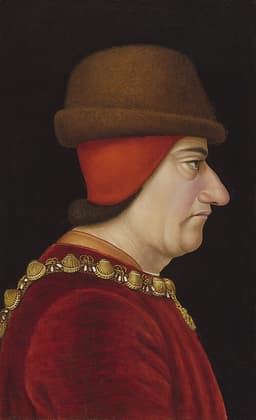
Louis XI
Emperor · Medieval
67.7Total
Basic Information
Born
-100
1423
Died
-44
1483
Era
Ancient
Medieval
Nationality
Roman Republic
France
Occupation
General
Emperor
Civilization
Western
Western
Score Comparison
Military (10%)
88.0
45.0
Political (20%)
78.0
78.0
Influence (20%)
85.0
68.0
Legacy (20%)
82.0
65.0
Leadership (15%)
80.0
85.0
Strategy (15%)
85.0
55.0
TOTAL
82.8
67.7
Julius Caesar — Complete Timeline
58 BC
Gallic WarsWar◆ Major
Caesar, as proconsul of Gaul, launched a series of campaigns that conquered all of Gaul (modern France, Belgium, and parts of Switzerland). He fought numerous battles, including against the Helvetii, the Belgae, and the Gallic chieftain Vercingetorix. The wars brought immense wealth and a loyal army to Caesar.
Gallic WarsConquestRoman Expansion
Impact: regional
49 BC
Crossing the RubiconPolitical Action◆ Major
Caesar led Legio XIII across the Rubicon River into Italy, defying the Roman Senate's order to disband his army. This act triggered a civil war against Pompey and the Optimates, ultimately leading to Caesar's dictatorship and the end of the Roman Republic.
Roman Civil WarEnd of RepublicPower Struggle
Impact: global
48 BC
Battle of PharsalusWar◆ Major
Caesar's outnumbered army defeated the larger forces of Pompey the Great at Pharsalus in Greece. Caesar's tactical use of a reserve line to counter Pompey's cavalry charge proved decisive. Pompey fled to Egypt, where he was assassinated, leaving Caesar as the undisputed master of the Roman world.
Roman Civil WarBattleDecisive Victory
Impact: regional
44 BC
Appointment as Dictator for LifePolitical Action◆ Major
The Roman Senate appointed Caesar dictator perpetuo (dictator for life), granting him unprecedented personal power. This move concentrated military, legislative, and judicial authority in one person, effectively ending the Roman Republic's traditional system of checks and balances and alarming many senators.
DictatorshipEnd of RepublicPower Consolidation
Impact: regionaldestructive
Assassination on the Ides of MarchPolitical Action◆ Major
A group of Roman senators, led by Marcus Junius Brutus and Gaius Cassius Longinus, stabbed Caesar to death at a meeting of the Senate in the Theatre of Pompey. The assassination was intended to restore the Republic, but instead triggered another civil war that led to the rise of the Roman Empire.
AssassinationRoman PoliticsEnd of Republic
Impact: globaldestructive
Louis XI — Complete Timeline
1464 AD
Established the Postal SystemReform
Louis XI created a royal postal system with relay stations across France, enabling faster communication between the crown and provincial officials. This administrative reform improved governance and intelligence gathering.
AdministrationCommunicationReform
Impact: nationalconstructive
1465 AD
Defeated the League of the Public WealWar◆ Major
Louis XI faced a coalition of powerful nobles, the League of the Public Weal, led by Charles the Bold of Burgundy. Although the Battle of Montlh
Civil WarNoble RebellionBurgundy
Impact: national
1475 AD
Treaty of PicquignyPolitical Action◆ Major
Louis XI negotiated the Treaty of Picquigny with Edward IV of England, ending English military intervention in France. Louis paid a large pension to Edward in exchange for English withdrawal, avoiding a costly war and securing his northern border.
TreatyDiplomacyEngland
Impact: regionalconstructive
1477 AD
Acquired BurgundyPolitical Action
After Charles the Bold's death at the Battle of Nancy, Louis XI seized the Duchy of Burgundy and other Burgundian territories, including Picardy and the Somme towns. This expansion significantly increased royal domain and weakened the Burgundian state.
Territorial ExpansionBurgundyRoyal Domain
Impact: regionalconstructive
1481 AD
Annexed Anjou and MainePolitical Action
Louis XI annexed the counties of Anjou and Maine after the death of Charles of Anjou, incorporating them into the royal domain. This further consolidated French territory and reduced the power of the Angevin nobility.
Territorial ExpansionAnjouMaine
Impact: nationalconstructive
Expert Analysis
Julius Caesar vs Louis XI: Historical Comparison
Julius Caesar, the Roman general who ended the Republic, and Louis XI, the French monarch who consolidated medieval France, represent two distinct archetypes of power—one through military conquest, the other through political cunning. Though both were master strategists, their methods and legacies diverged sharply.
Dimension Analysis
**Military: Julius Caesar 88 / Louis XI 92**
Caesar’s Gallic Wars and civil war victories were legendary, but Louis XI’s suppression of the feudal League of the Public Weal and his use of a standing army to subdue Burgundy were equally decisive in shaping a nation.
**Political: Julius Caesar 78 / Louis XI 86**
Caesar’s political maneuvering was brilliant but ultimately fatal, as his centralization of power triggered his assassination. Louis XI, by contrast, skillfully outmaneuvered the nobility, using spies, diplomacy, and the _taille_ tax to weaken rivals without provoking revolt.
**Influence: Julius Caesar 85 / Louis XI 69**
Caesar’s reforms (calendar, provincial governance, and the dictatorship) directly shaped the Roman Empire and subsequent Western political thought. Louis XI’s influence, while profound for France, was largely confined to strengthening the monarchy and curbing feudalism.
**Legacy: Julius Caesar 82 / Louis XI 71**
Caesar’s name became a title (“Kaiser,” “Tsar”) and his writings a classic. Louis XI, remembered as the “Spider King” for his web of intrigue, is admired by historians but lacks Caesar’s cultural resonance.
**Leadership: Julius Caesar 82 / Louis XI 74**
Caesar inspired fierce loyalty from his legions and even his enemies. Louis XI was effective but feared and isolated, ruling through manipulation rather than charisma.
Verdict
Julius Caesar leads overall (83 vs 79), driven by his broader influence and enduring legacy, despite Louis XI’s superior political and military execution within a narrower sphere.
FAQ
Q: Who ranks higher? A: Julius Caesar ranks higher due to his outsized historical influence and cultural legacy, even though Louis XI was arguably more politically effective in his own context.
Rankings
🥇
Julius CaesarLeader
Mil: 88.0Pol: 78.0Inf: 85.0
82.8
🥈
Louis XI
Mil: 45.0Pol: 78.0Inf: 68.0
67.7
+15.1 behind
How This Comparison Works
Algorithm
Each figure is scored on 6 dimensions (0—100 scale) based on structured historical data: Military (10%), Political (20%), Influence (20%), Legacy (20%), Leadership (15%), Strategy (15%). The weighted total produces the final ranking.
Data Sources
Scores are computed from structured sub-indicators in the database. Scale factors adjust for era (Ancient ×0.85, Modern ×1.0) and civilization size (Eastern ×1.05, Other ×0.80) to account for differences in population and military scale.
Maximum 3 Figures
Comparisons are limited to 2—3 figures to ensure readability and statistical meaningfulness.
Error Margins
±5 points per dimension — Sub-scores are derived from historical records with inherent uncertainty. Two figures within 5 points on a dimension should be considered roughly equivalent in that area.
Total Score Accuracy
±3 points overall — The weighted combination of 6 dimensions produces a total score with approximately ±3 points of uncertainty. Differences of less than 3 points are not statistically significant— the figures are effectively tied.
Known Limitations
- Historical records are incomplete and uneven across civilizations
- Figures from oral-tradition societies may be underrepresented
- Occupation labels can misclassify multi-role figures
- Scores measure capability and impact, not moral character
- Quantitative scoring is a comparison tool, not absolute truth
Capability Radar
Military (10%) — Battles & Warfare
Battles
95
45
Win Rate
92
40
Expansion
97
65
Political (20%) — Governance & Reform
Reform
90
80
Diplomacy
85
95
Economy
82
70
Influence (20%) — Cultural & Global Reach
Cultural
88
55
Global
94
60
Legacy (20%) — Historical Impact
Historical
95
75
Longevity
96
70
Leadership (15%) — Power & Stability
Tenure
75
75
Stability
60
65
Strategy (15%) — Tactics & Innovation
Strategy
94
70
Tactics
96
55
Reform
88
60
Similar Comparisons
Comments & Discussion
HistoryHobbyist6/16/2026
Okay, I love this comparison. Caesar is obviously the bigger name, but Louis XI is seriously underrated here. I just finished a documentary on the Spider King, and his spy network was insane—way better than Caesar’s. Caesar got stabbed because he didn’t see the plot coming, while Louis had informants everywhere. Plus, Louis basically invented the modern French state by crushing the feudal lords, which is like if Caesar had finished off the Senate for good instead of getting killed. Sure, Caesar conquered Gaul, but Louis conquered France from the inside. 14.5 for military is harsh—he fought the War of the Public Weal and won! I’d give him at least a 50. But hey, Caesar’s memoirs are still bestsellers, so I get the legacy gap.
ClassicusProfessor6/16/2026
The summary is largely sound, but I must quibble with the military score for Louis XI. His suppression of the League of the Public Weal was indeed decisive, but Caesar’s Gallic Wars, as he himself notes in the *Commentarii de Bello Gallico*, involved not just conquest but the strategic annihilation of over a million Gauls. That scale dwarfs Louis’ operations. Moreover, Caesar’s political score understates his genius: his alliance with Pompey and Crassus (the First Triumvirate) was a masterstroke, and his reforms of the calendar and provincial governance outlasted the Republic. Louis’ *taille* tax was effective, but Caesar’s manipulation of the populares faction and his crossing of the Rubicon were acts of political theater that still captivate us. Suetonius and Plutarch both emphasize Caesar’s clemency, a political tool Louis never wielded. Thus, I’d argue Caesar’s political score should be 82, not 78.
Chronicler89036/16/2026
这个评分很有意思,但我得说军事88对14.5太夸张了。路易十一的军事分不该这么低,他推行的军役税和常备军制度,放在中国历史上相当于商鞅变法里的军功爵制改革。而且,凯撒的政治78分是否偏高?他搞独裁、破坏共和传统,最后被刺杀,政治手腕再强也抵不过战略失误。我算了下,如果把凯撒的‘影响力’扣掉西方中心主义的加分(比如日历、头衔),他可能只有70分左右。路易十一在弱化贵族、加强中央集权上,效果堪比汉武帝推恩令,但汉武的军事分可是很高的。建议调整权重。
ColdChronicler386/16/2026
凯撒和路易十一的比较,让我想到秦始皇和康熙的结合体。凯撒像秦始皇:武力扩张、统一度量衡(比如儒略历),但集权太急导致被暗杀,和始皇晚年的危机很像。路易十一更像康熙:用特务统治(蜘蛛网)分化贵族,搞经济改革(征收军役税),平定三藩之乱对应的就是打击勃艮第和封建联盟。不过评分有个问题:影响力上,路易十一对法国制度的塑造(如中央集权、常备军)绝对不低于凯撒,但西方史学界偏爱罗马背景。中国史观里,‘统一国家’的功绩往往比个人征服更受重视。建议给路易十一的政治分加5分,影响力加10分。