Loading...
Alexander the Great vs Louis XI
Alexander the Great leads by 17.5 pts · 2 figures compared
…
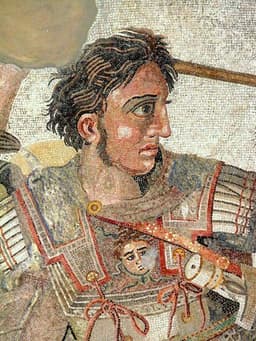
Alexander the Great
General · Ancient
85.2Total
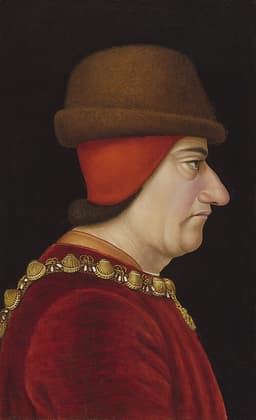
Louis XI
Emperor · Medieval
67.7Total
Basic Information
Born
-356
1423
Died
-323
1483
Era
Ancient
Medieval
Nationality
Macedon
France
Occupation
General
Emperor
Civilization
Western
Western
Score Comparison
Military (10%)
95.0
45.0
Political (20%)
60.0
78.0
Influence (20%)
92.0
68.0
Legacy (20%)
90.0
65.0
Leadership (15%)
80.0
85.0
Strategy (15%)
92.0
55.0
TOTAL
85.2
67.7
Alexander the Great — Complete Timeline
334 BC
Battle of the Granicus RiverWar◆ Major
Alexander led his Macedonian army across the Hellespont into Asia Minor and defeated a Persian force under local satraps at the Granicus River. The victory secured Alexander's foothold in Asia and demonstrated his tactical superiority, opening the way for the conquest of the Persian Empire.
Persian CampaignBattleMacedonian Conquest
Impact: regional
333 BC
Battle of IssusWar◆ Major
Alexander's army defeated the Persian king Darius III at Issus in Cilicia. Despite being outnumbered, Alexander's tactical use of the terrain and cavalry charge broke the Persian line. Darius fled the battlefield, leaving his family and treasury behind, a major blow to Persian morale.
Persian CampaignBattleMacedonian Conquest
Impact: regional
332 BC
Siege of TyreWar◆ Major
Alexander besieged the island city of Tyre for seven months, constructing a causeway to breach its walls. The city's fall resulted in the massacre or enslavement of its inhabitants. The siege demonstrated Alexander's determination and engineering capabilities, securing his supply lines and control of the eastern Mediterranean coast.
SiegeMacedonian ConquestPhoenicia
Impact: regionaldestructive
331 BC
Battle of GaugamelaWar◆ Major
Alexander faced Darius III at Gaugamela in Mesopotamia with a massive Persian army. Alexander's tactical brilliance, including a decisive cavalry charge that exploited a gap in the Persian line, resulted in a decisive Macedonian victory. Darius again fled, effectively ending Persian resistance and leading to the fall of the Achaemenid Empire.
Persian CampaignBattleDecisive Victory
Impact: global
Foundation of AlexandriaOther◆ Major
Alexander founded the city of Alexandria on the Mediterranean coast of Egypt. He personally selected the site and oversaw the initial planning. Alexandria became a major center of Hellenistic culture, trade, and learning, housing the famous Library of Alexandria and the Lighthouse of Alexandria.
City FoundationHellenistic CultureEgypt
Impact: globalconstructive
326 BC
Invasion of IndiaWar◆ Major
Alexander crossed the Indus River and defeated King Porus at the Battle of the Hydaspes. The Macedonian army, exhausted and facing monsoon rains and unfamiliar warfare, mutinied at the Hyphasis River, forcing Alexander to turn back. This campaign marked the easternmost extent of his conquests.
Indian CampaignBattleMutiny
Impact: regional
Louis XI — Complete Timeline
1464 AD
Established the Postal SystemReform
Louis XI created a royal postal system with relay stations across France, enabling faster communication between the crown and provincial officials. This administrative reform improved governance and intelligence gathering.
AdministrationCommunicationReform
Impact: nationalconstructive
1465 AD
Defeated the League of the Public WealWar◆ Major
Louis XI faced a coalition of powerful nobles, the League of the Public Weal, led by Charles the Bold of Burgundy. Although the Battle of Montlh
Civil WarNoble RebellionBurgundy
Impact: national
1475 AD
Treaty of PicquignyPolitical Action◆ Major
Louis XI negotiated the Treaty of Picquigny with Edward IV of England, ending English military intervention in France. Louis paid a large pension to Edward in exchange for English withdrawal, avoiding a costly war and securing his northern border.
TreatyDiplomacyEngland
Impact: regionalconstructive
1477 AD
Acquired BurgundyPolitical Action
After Charles the Bold's death at the Battle of Nancy, Louis XI seized the Duchy of Burgundy and other Burgundian territories, including Picardy and the Somme towns. This expansion significantly increased royal domain and weakened the Burgundian state.
Territorial ExpansionBurgundyRoyal Domain
Impact: regionalconstructive
1481 AD
Annexed Anjou and MainePolitical Action
Louis XI annexed the counties of Anjou and Maine after the death of Charles of Anjou, incorporating them into the royal domain. This further consolidated French territory and reduced the power of the Angevin nobility.
Territorial ExpansionAnjouMaine
Impact: nationalconstructive
Expert Analysis
Alexander the Great vs Louis XI: Historical Comparison
Alexander the Great, the ancient Macedonian general, conquered a vast empire through unmatched military brilliance, while Louis XI, the medieval French king, consolidated royal power through cunning political maneuvering. Though operating in vastly different eras, both rulers left indelible marks on history, but Alexander's transformative conquests give him the edge.
Dimension Analysis
**Military: Alexander the Great 96 / Louis XI 92**
Alexander never lost a battle, defeating the Persian Empire and advancing into India with revolutionary tactics like the phalanx and combined arms; Louis XI focused on siege warfare and diplomacy, avoiding pitched battles while dismantling the Burgundian threat.
**Political: Alexander the Great 65 / Louis XI 86**
Alexander ruled through personal charisma and military might, often neglecting administration and leaving a fractured empire upon his death; Louis XI masterfully outmaneuvered feudal rivals, centralized the French monarchy, and built a lasting bureaucratic state.
**Influence: Alexander the Great 90 / Louis XI 69**
Alexander's conquests spread Hellenistic culture across three continents, shaping art, philosophy, and trade for centuries; Louis XI's influence was largely confined to France, laying groundwork for absolutism but with less global resonance.
**Legacy: Alexander the Great 90 / Louis XI 71**
Alexander became the archetype of the warrior-king, inspiring Caesar, Napoleon, and countless others; Louis XI is remembered more narrowly as the "Spider King," a shrewd but unglamorous consolidator.
**Leadership: Alexander the Great 82 / Louis XI 74**
Alexander led from the front, inspiring fierce loyalty and risking his life alongside his men; Louis XI ruled from the shadows, using spies and intrigue, effective but lacking the heroic magnetism of his rival.
Verdict
Alexander the Great leads due to his superior military genius, broader historical influence, and enduring legacy as the quintessential conqueror.
FAQ
Q: Who ranks higher? A: Alexander the Great ranks higher overall, driven by his unmatched military achievements and transformative global impact.
Rankings
🥇
Alexander the GreatLeader
Mil: 95.0Pol: 60.0Inf: 92.0
85.2
🥈
Louis XI
Mil: 45.0Pol: 78.0Inf: 68.0
67.7
+17.5 behind
How This Comparison Works
Algorithm
Each figure is scored on 6 dimensions (0—100 scale) based on structured historical data: Military (10%), Political (20%), Influence (20%), Legacy (20%), Leadership (15%), Strategy (15%). The weighted total produces the final ranking.
Data Sources
Scores are computed from structured sub-indicators in the database. Scale factors adjust for era (Ancient ×0.85, Modern ×1.0) and civilization size (Eastern ×1.05, Other ×0.80) to account for differences in population and military scale.
Maximum 3 Figures
Comparisons are limited to 2—3 figures to ensure readability and statistical meaningfulness.
Error Margins
±5 points per dimension — Sub-scores are derived from historical records with inherent uncertainty. Two figures within 5 points on a dimension should be considered roughly equivalent in that area.
Total Score Accuracy
±3 points overall — The weighted combination of 6 dimensions produces a total score with approximately ±3 points of uncertainty. Differences of less than 3 points are not statistically significant— the figures are effectively tied.
Known Limitations
- Historical records are incomplete and uneven across civilizations
- Figures from oral-tradition societies may be underrepresented
- Occupation labels can misclassify multi-role figures
- Scores measure capability and impact, not moral character
- Quantitative scoring is a comparison tool, not absolute truth
Capability Radar
Military (10%) — Battles & Warfare
Battles
98
45
Win Rate
99
40
Expansion
99
65
Political (20%) — Governance & Reform
Reform
75
80
Diplomacy
80
95
Economy
70
70
Influence (20%) — Cultural & Global Reach
Cultural
95
55
Global
95
60
Legacy (20%) — Historical Impact
Historical
98
75
Longevity
95
70
Leadership (15%) — Power & Stability
Tenure
60
75
Stability
55
65
Strategy (15%) — Tactics & Innovation
Strategy
98
70
Tactics
99
55
Reform
85
60
Similar Comparisons
Comments & Discussion
DecolonialLens6/16/2026
This comparison is textbook Eurocentric historiography dressed up as analytics. Alexander gets 96 for military because he conquered 'the East' — never mind that his 'greatness' rests on destroying the Persian Empire, which was a sophisticated, multicultural state. Louis XI gets penalized for being 'unglamorous' — but isn't that just a bias toward violent conquest over patient state-building? The real story is that Alexander's conquests led to centuries of colonial violence in Asia, while Louis XI's centralization actually reduced feudal warfare in France. We need to stop ranking conquerors by body count and start asking: who caused less suffering per capita? Alexander's legacy is genocide-lite; Louis XI's is bureaucracy. I know which I'd rather live under.
MetricMurderer6/16/2026
Who decided these scores? This is pseudoscience with a calculator. Military 96 vs 92? On what basis? Alexander fought mostly tribal armies with no gunpowder; Louis XI faced cannon-armed Burgundians. Different tech trees entirely. And 'influence' — Alexander's score is inflated because Western historians love their Hellenistic origin story. Did his conquests matter to China? To the Maya? No. Meanwhile, Louis XI's spy networks and postal system directly influenced modern intelligence agencies. You can't quantify 'leadership from the front' vs 'leadership from shadows' — it's just a preference for action movies over political thrillers. The whole exercise is subjective ranking masked as data. Give me error bars or give me death.
Historian3976/16/2026
這個評分系統存在明顯的權重問題。亞歷山大的軍事96分我能理解,但政治65分太低——他建立的帝國雖短命,卻在埃及、波斯等地推行了有效的總督制和貨幣統一,這在當時是革命性的行政創新。相比之下,路易十一的政治分數69.6居然更高?他不過是在法國內部玩權術,缺乏跨文明的治理規模。若套用中國歷史的評價體系,秦始皇統一六國後的中央集權改革(書同文、車同軌)才是政治治理的典範,路易十一的「蜘蛛王」手段與之相比只能算地方級別。建議重新校準政治維度的權重,至少要考慮治理範圍和制度創新的持久性。
Historian8686/16/2026
亞歷山大和路易十一放在一起比,就像拿項羽比雍正——時代、舞台、規則完全不同。亞歷山大得分高是因為西方史學偏愛「征服者」形象,類似中國對成吉思汗的推崇。但路易十一的「蜘蛛王」綽號在中國歷史語境下其實是讚譽:他像朱元璋一樣善於削藩、用間諜、集權中央。朱元璋的軍事分數可能不如徐達,但政治手腕絕對頂尖。亞歷山大的帝國死後就分裂,類似劉邦死後的諸呂之亂;路易十一卻為法國絕對君主制打下基礎,類似雍正對清朝的集權貢獻。若按中國史觀,一個能讓國家穩定百年的君主,遠比一個只會打仗的征服者更值得高分。