Loading...
Julia Gillard vs Salvador Allende
Julia Gillard leads by 1.2 pts · 2 figures compared
…

Julia Gillard
Politician · Modern
57.1Total
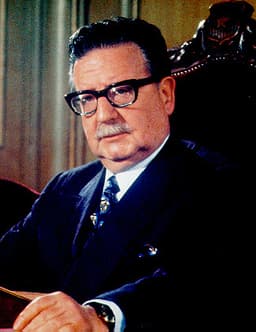
Salvador Allende
Politician · Modern
55.9Total
Basic Information
Born
1961
1908
Died
—
1973
Era
Modern
Modern
Nationality
Australia
Chile
Occupation
Politician
Politician
Civilization
Western
Western
Score Comparison
Military (10%)
50.0
50.0
Political (20%)
62.7
68.0
Influence (20%)
62.0
58.3
Legacy (20%)
47.5
52.0
Leadership (15%)
74.0
58.8
Strategy (15%)
42.3
43.5
TOTAL
57.1
55.9
Julia Gillard — Complete Timeline
2010 AD
Became First Female Prime Minister of AustraliaPolitical Action
Gillard became prime minister after successfully challenging Kevin Rudd for the Labor leadership. She was the first woman to hold the office in Australian history, marking a significant milestone for gender equality in the nation's politics.
Gender EqualityLeadershipLabor Party
Impact: nationalprogressive
2011 AD
Introduced the Carbon PriceReform◆ Major
Gillard's government introduced a carbon pricing mechanism, requiring large emitters to pay for their greenhouse gas emissions. The policy aimed to reduce Australia's carbon footprint and transition to a low-carbon economy, but was highly controversial.
Climate ChangeCarbon TaxEnvironment
Impact: nationalconstructive
2012 AD
Delivered the Misogyny SpeechCultural◆ Major
Gillard delivered a powerful speech in parliament accusing opposition leader Tony Abbott of sexism and misogyny. The speech went viral globally and became a defining moment in discussions about gender and politics in Australia.
GenderSpeechMisogyny
Impact: globalprogressive
2013 AD
Lost Labor Leadership to Kevin RuddPolitical Action◆ Major
Gillard lost a leadership spill to Kevin Rudd, ending her tenure as prime minister. The defeat came after months of poor polling and internal party divisions, and marked the end of her brief but historic time in office.
Leadership SpillRuddLabor Party
Impact: nationaltragic
Salvador Allende — Complete Timeline
1970 AD
Election as PresidentPolitical Action
Allende won the presidential election with a narrow plurality of 36.6%, confirmed by Congress. He became the first democratically elected Marxist president, promising a peaceful transition to socialism.
ElectionSocialismDemocracy
Impact: globalprogressive
1971 AD
Nationalization of CopperReform◆ Major
Allende's government nationalized Chile's copper mines, owned by U.S. companies Anaconda and Kennecott. The move was approved unanimously by Congress and aimed to use copper revenues for social programs.
NationalizationEconomic ReformCopper
Impact: nationalprogressive
Agrarian Reform AccelerationReform◆ Major
Allende accelerated land reform, expropriating large estates and distributing land to peasants. The policy aimed to break up the latifundia system but led to agricultural disruption and opposition from landowners.
Land ReformPeasant RightsSocial Change
Impact: nationalprogressive
1973 AD
1973 Chilean Coup d'ÉtatPolitical Action
Allende was overthrown in a military coup led by General Pinochet. He died in the presidential palace during the attack, ending his socialist experiment and ushering in a 17-year dictatorship.
CoupDeathEnd of Socialism
Impact: globaltragic
Expert Analysis
Origins
Julia Gillard was born in Barry, Wales, in 1961 and migrated to Australia with her family in 1966. Her father worked as a psychiatric nurse. She studied law and arts at the University of Adelaide, then moved to Melbourne, where she became a partner at law firm Slater & Gordon. Her early political work included serving as chief of staff to Victorian opposition leader John Brumby.
Salvador Allende was born in Valparaíso, Chile, in 1908 into a middle-class family with political connections. His father was a lawyer and notary. Allende studied medicine at the University of Chile, graduating in 1932. He was influenced by Marxist ideas and co-founded the Socialist Party of Chile in 1933. He served as a physician in public health before entering politics.
Rise to Power
Gillard entered federal parliament in 1998 as a Labor member for Lalor. She rose through the ranks, becoming shadow minister and then deputy opposition leader under Kevin Rudd in 2006. When Labor won the 2007 election, she became Deputy Prime Minister and Minister for Education. On June 24, 2010, with Rudd's approval ratings falling, Gillard challenged him for the leadership and won, becoming Australia's first female prime minister. Her rise was swift, driven by party pragmatism.
Allende's path to power was long and persistent. He ran for president four times: 1952, 1958, 1964, and finally 1970. In 1970, he won with a narrow plurality of 36.6% of the vote, defeating conservative Jorge Alessandri and Christian Democrat Radomiro Tomic. Because no candidate won a majority, the Chilean Congress confirmed Allende's presidency after he signed a Statute of Constitutional Guarantees, promising not to exceed his constitutional powers. His rise was marked by decades of grassroots organizing and coalition-building with leftist parties.
Leadership & Governance
Gillard's leadership was characterized by minority government and legislative compromise. After the 2010 election, Labor formed a minority government with the support of independents and Greens. She passed significant legislation: the carbon price (2011), which imposed a fixed price on carbon emissions; the National Disability Insurance Scheme (NDIS); and the Gonski school funding reforms. Her style was pragmatic and policy-focused, but she faced relentless opposition from the conservative Liberal Party and internal Labor factionalism. She scored 74.0 in leadership, reflecting her ability to navigate a difficult parliament.
Allende's governance aimed at creating a socialist society through democratic means. He nationalized copper mines (1971) with unanimous congressional approval, accelerated agrarian reform, and expanded state control over banks and key industries. He also froze prices and increased wages, leading to short-term gains but severe inflation and shortages. His government faced opposition from the U.S., which funded strikes and destabilization. Allende's political score is 68.0, but his strategy score is only 43.5, reflecting poor economic management and inability to control the political crisis.
Triumph & Tragedy
Gillard's greatest triumph was her misogyny speech on October 9, 2012, which went viral and highlighted sexism in politics. She also passed the carbon price and NDIS, landmark reforms. Her tragedy was losing the Labor leadership to Kevin Rudd in June 2013 after poor polling and party unrest. She never regained the prime ministership. Her legacy score is 47.5, indicating limited long-term institutional impact beyond the NDIS.
Allende's triumph was the peaceful nationalization of copper and extensive land reform, which redistributed wealth to the poor. His tragedy was the 1973 coup led by General Augusto Pinochet, resulting in his death and the installation of a brutal dictatorship that lasted 17 years. Allende's influence score is 58.3, as his experiment inspired leftist movements globally, but his legacy is overshadowed by the coup's aftermath.
Character & Destiny
Gillard was known for her resilience, sharp intellect, and confrontational style. She often clashed with the media and opposition, but her determination saw her through a hostile environment. Her character shaped her destiny: she was a trailblazer but also a polarizing figure, which contributed to her downfall within her own party. Historians note her as a competent leader undone by political circumstances.
Allende was a committed Marxist idealist, believing in the possibility of a peaceful transition to socialism. He was charismatic and beloved by supporters but indecisive in crisis, refusing to arm workers or take more radical steps against the opposition. His character—principled but hesitant—led to his tragic end. He chose to die in the presidential palace rather than surrender, symbolizing his martyrdom.
Legacy
Gillard's legacy includes being Australia's first female prime minister, but her policy achievements—carbon price, NDIS, Gonski—have been partially dismantled or modified by subsequent governments. The misogyny speech remains a touchstone for feminist discourse. Her total score of 57.1 reflects moderate impact.
Allende's legacy is profound: he is a symbol of democratic socialism and resistance to imperialism. His policies were reversed by Pinochet's regime, but the memory of his experiment influenced later leftist governments in Latin America. His influence score of 58.3 underscores his lasting symbolic power.
Conclusion
While Gillard scored higher overall (57.1 vs 55.9), Allende's impact is greater due to the transformative and tragic nature of his presidency. Gillard's reforms were significant but largely domestic and reversible. Allende's attempt to build socialism through democracy, and its violent overthrow, created a global narrative that shapes political thought to this day. Allende's influence and legacy surpass Gillard's, making him the more consequential figure.
Rankings
🥇
Julia GillardLeader
Mil: 50.0Pol: 62.7Inf: 62.0
57.1
🥈
Salvador Allende
Mil: 50.0Pol: 68.0Inf: 58.3
55.9
+1.2 behind
How This Comparison Works
Algorithm
Each figure is scored on 6 dimensions (0—100 scale) based on structured historical data: Military (10%), Political (20%), Influence (20%), Legacy (20%), Leadership (15%), Strategy (15%). The weighted total produces the final ranking.
Data Sources
Scores are computed from structured sub-indicators in the database. Scale factors adjust for era (Ancient ×0.85, Modern ×1.0) and civilization size (Eastern ×1.05, Other ×0.80) to account for differences in population and military scale.
Maximum 3 Figures
Comparisons are limited to 2—3 figures to ensure readability and statistical meaningfulness.
Error Margins
±5 points per dimension — Sub-scores are derived from historical records with inherent uncertainty. Two figures within 5 points on a dimension should be considered roughly equivalent in that area.
Total Score Accuracy
±3 points overall — The weighted combination of 6 dimensions produces a total score with approximately ±3 points of uncertainty. Differences of less than 3 points are not statistically significant— the figures are effectively tied.
Known Limitations
- Historical records are incomplete and uneven across civilizations
- Figures from oral-tradition societies may be underrepresented
- Occupation labels can misclassify multi-role figures
- Scores measure capability and impact, not moral character
- Quantitative scoring is a comparison tool, not absolute truth
Capability Radar
Military (10%) — Battles & Warfare
Battles
27
28
Win Rate
32
31
Expansion
36
33
Political (20%) — Governance & Reform
Reform
65
60
Diplomacy
55
45
Economy
50
40
Influence (20%) — Cultural & Global Reach
Cultural
60
55
Global
50
55
Legacy (20%) — Historical Impact
Historical
55
60
Longevity
30
50
Leadership (15%) — Power & Stability
Tenure
40
35
Stability
45
20
Strategy (15%) — Tactics & Innovation
Strategy
39
37
Tactics
41
43
Reform
42
45
Similar Comparisons
Comments & Discussion
No comments yet. Be the first to share your thoughts!