Loading...
This comparison has not been analyzed yet.
One-time AI generation (~1 minute). Scores and timeline are already available below.
Joyce Banda vs Muhammad Naji al-Otari
Muhammad Naji al-Otari leads by 3.0 pts · 2 figures compared
…
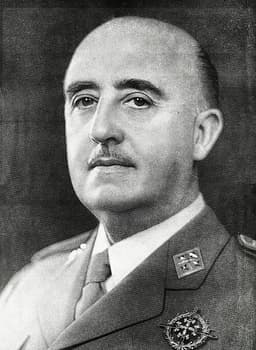
Joyce Banda
Politician · Modern
42.2Total

Muhammad Naji al-Otari
Politician · Modern
45.2Total
Basic Information
Born
1950
1944
Died
—
—
Era
Modern
Modern
Nationality
Malawi
Syria
Occupation
Politician
Politician
Civilization
Other
Middle Eastern
Score Comparison
Military (10%)
12.2
28.3
Political (20%)
39.4
39.4
Influence (20%)
53.3
51.8
Legacy (20%)
42.5
38.3
Leadership (15%)
45.0
53.2
Strategy (15%)
43.4
60.0
TOTAL
42.2
45.2
Joyce Banda — Complete Timeline
2009 AD
Became Vice President of MalawiPolitical Action◆ Major
Joyce Banda was elected Vice President of Malawi as running mate to President Bingu wa Mutharika. She served in this role until Mutharika's death in 2012.
Vice PresidencyElection
Impact: national
2010 AD
Expelled from Democratic Progressive PartyPolitical Action◆ Major
Banda was expelled from the DPP after she refused to support President Mutharika's plan to make his brother Peter Mutharika his successor. She subsequently formed her own party, the People's Party.
Political SplitParty Formation
Impact: national
2012 AD
Became President of MalawiPolitical Action
Following President Bingu wa Mutharika's sudden death, Banda assumed the presidency, becoming Malawi's first female president. Her succession was initially contested by Mutharika's cabinet but ultimately upheld.
PresidencyGenderSuccession
Impact: nationalprogressive
Sold Presidential Jet and Luxury CarsPolitical Action◆ Major
Banda sold the presidential jet and a fleet of luxury cars, using the proceeds to fund development projects. This act was widely praised as a symbol of austerity and anti-corruption.
AusterityAnti-Corruption
Impact: nationalconstructive
2014 AD
Lost Presidential ElectionPolitical Action◆ Major
Banda lost the presidential election to Peter Mutharika, coming third with 20% of the vote. The election was marred by allegations of fraud, and Banda challenged the results in court but was unsuccessful.
ElectionDefeat
Impact: national
Muhammad Naji al-Otari — Complete Timeline
2003 AD
Appointed Prime Minister of SyriaPolitical Action◆ Major
Muhammad Naji al-Otari was appointed Prime Minister of Syria by President Bashar al-Assad on September 10, 2003, replacing Muhammad Mustafa Mero. He served for over seven years, overseeing economic reforms and maintaining the Ba'athist government's control. His tenure was marked by limited liberalization and continued authoritarian rule.
Syrian GovernmentBa'ath PartyPrime Minister
Impact: national
2011 AD
Resigned During Syrian UprisingPolitical Action◆ Major
On April 14, 2011, al-Otari resigned as Prime Minister along with his cabinet, following the outbreak of the Syrian uprising. The resignation was announced by state media as a response to the protests, but it was widely seen as a move by President Assad to reshuffle the government and offer concessions. He was replaced by Adel Safar.
Syrian UprisingGovernment ResignationAssad
Impact: national
This comparison has not been analyzed yet.
One-time AI generation (~1 minute). Scores and timeline are already available below.
Rankings
🥇
Muhammad Naji al-OtariLeader
Mil: 28.3Pol: 39.4Inf: 51.8
45.2
🥈
Joyce Banda
Mil: 12.2Pol: 39.4Inf: 53.3
42.2
+3.0 behind
How This Comparison Works
Algorithm
Each figure is scored on 6 dimensions (0—100 scale) based on structured historical data: Military (10%), Political (20%), Influence (20%), Legacy (20%), Leadership (15%), Strategy (15%). The weighted total produces the final ranking.
Data Sources
Scores are computed from structured sub-indicators in the database. Scale factors adjust for era (Ancient ×0.85, Modern ×1.0) and civilization size (Eastern ×1.05, Other ×0.80) to account for differences in population and military scale.
Maximum 3 Figures
Comparisons are limited to 2—3 figures to ensure readability and statistical meaningfulness.
Error Margins
±5 points per dimension — Sub-scores are derived from historical records with inherent uncertainty. Two figures within 5 points on a dimension should be considered roughly equivalent in that area.
Total Score Accuracy
±3 points overall — The weighted combination of 6 dimensions produces a total score with approximately ±3 points of uncertainty. Differences of less than 3 points are not statistically significant— the figures are effectively tied.
Known Limitations
- Historical records are incomplete and uneven across civilizations
- Figures from oral-tradition societies may be underrepresented
- Occupation labels can misclassify multi-role figures
- Scores measure capability and impact, not moral character
- Quantitative scoring is a comparison tool, not absolute truth
Capability Radar
Military (10%) — Battles & Warfare
Battles
26
40
Win Rate
31
45
Expansion
30
49
Political (20%) — Governance & Reform
Reform
30
20
Diplomacy
35
40
Economy
25
30
Influence (20%) — Cultural & Global Reach
Cultural
30
10
Global
30
10
Legacy (20%) — Historical Impact
Historical
35
10
Longevity
20
10
Leadership (15%) — Power & Stability
Tenure
20
60
Stability
15
40
Strategy (15%) — Tactics & Innovation
Strategy
35
50
Tactics
38
52
Reform
39
58
Similar Comparisons
Comments & Discussion
No comments yet. Be the first to share your thoughts!