Loading...
Joyce Banda vs Rutherford B. Hayes
Rutherford B. Hayes leads by 12.1 pts · 2 figures compared
…
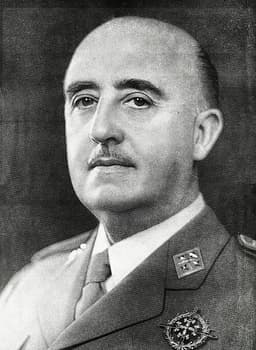
Joyce Banda
Politician · Modern
42.2Total

Rutherford B. Hayes
Politician · Modern
54.3Total
Basic Information
Born
1950
1822
Died
—
1893
Era
Modern
Modern
Nationality
Malawi
United States
Occupation
Politician
Politician
Civilization
Other
Western
Score Comparison
Military (10%)
12.2
36.6
Political (20%)
39.4
62.7
Influence (20%)
53.3
54.9
Legacy (20%)
42.5
49.2
Leadership (15%)
45.0
66.0
Strategy (15%)
43.4
52.8
TOTAL
42.2
54.3
Joyce Banda — Complete Timeline
2009 AD
Became Vice President of MalawiPolitical Action◆ Major
Joyce Banda was elected Vice President of Malawi as running mate to President Bingu wa Mutharika. She served in this role until Mutharika's death in 2012.
Vice PresidencyElection
Impact: national
2010 AD
Expelled from Democratic Progressive PartyPolitical Action◆ Major
Banda was expelled from the DPP after she refused to support President Mutharika's plan to make his brother Peter Mutharika his successor. She subsequently formed her own party, the People's Party.
Political SplitParty Formation
Impact: national
2012 AD
Became President of MalawiPolitical Action
Following President Bingu wa Mutharika's sudden death, Banda assumed the presidency, becoming Malawi's first female president. Her succession was initially contested by Mutharika's cabinet but ultimately upheld.
PresidencyGenderSuccession
Impact: nationalprogressive
Sold Presidential Jet and Luxury CarsPolitical Action◆ Major
Banda sold the presidential jet and a fleet of luxury cars, using the proceeds to fund development projects. This act was widely praised as a symbol of austerity and anti-corruption.
AusterityAnti-Corruption
Impact: nationalconstructive
2014 AD
Lost Presidential ElectionPolitical Action◆ Major
Banda lost the presidential election to Peter Mutharika, coming third with 20% of the vote. The election was marred by allegations of fraud, and Banda challenged the results in court but was unsuccessful.
ElectionDefeat
Impact: national
Rutherford B. Hayes — Complete Timeline
1876 AD
Elected President of the United StatesPolitical Action◆ Major
Hayes won the disputed 1876 presidential election against Democrat Samuel Tilden. The Electoral Commission awarded Hayes all disputed electoral votes, making him president despite Tilden winning the popular vote.
ElectionDisputed ElectionElectoral Commission
Impact: national
1877 AD
Civil Service Reform EffortsReform
Hayes issued an executive order banning federal employees from political activities and requiring merit-based appointments. His efforts faced opposition from Congress and were largely ineffective.
Civil ServiceReformPatronage
Impact: nationalconstructive
Compromise of 1877Political Action◆ Major
Hayes agreed to the Compromise of 1877, which ended Reconstruction in exchange for Democratic acceptance of his presidency. He withdrew federal troops from the South, effectively ending Reconstruction.
Compromise of 1877ReconstructionTroop Withdrawal
Impact: nationaldestructive
Withdrew Federal Troops from the SouthPolitical Action◆ Major
Hayes ordered the removal of federal troops from Louisiana and South Carolina, the last states under military occupation. This ended federal protection for African American civil rights and allowed white supremacist rule.
ReconstructionTroop WithdrawalCivil Rights
Impact: regionaldestructive
Great Railroad Strike of 1877Other◆ Major
Hayes used federal troops to suppress the Great Railroad Strike, which began in West Virginia and spread nationwide. The strike was crushed, resulting in over 100 deaths and widespread property damage.
Labor StrikeRailroadFederal Intervention
Impact: nationaldestructive
1878 AD
Signed the Bland-Allison ActReform
Hayes signed the Bland-Allison Act over his veto, requiring the Treasury to purchase silver and coin it into dollars. The act aimed to inflate the currency and help debtors.
Monetary PolicySilverInflation
Impact: national
Expert Analysis
Origins
Joyce Banda was born on April 12, 1950, in Malemia, Nyasaland (now Malawi), to a family of modest means. She trained as a secretary and later earned a diploma in early childhood development from the University of Malawi. Her early career included working in various NGOs and founding the National Association of Business Women. Banda's entry into politics came in 1999 when she was elected as a Member of Parliament for the United Democratic Front (UDF).
Rutherford B. Hayes was born on October 4, 1822, in Delaware, Ohio, into a prosperous family. He graduated from Kenyon College in 1842 and Harvard Law School in 1845. Hayes practiced law in Cincinnati and served as a city solicitor. His political career began with his election to the U.S. House of Representatives in 1864, though he took his seat after the Civil War ended.
Rise to Power
Banda's political ascent accelerated when she became Vice President in 2009 under President Bingu wa Mutharika, after the two won the election on the Democratic Progressive Party (DPP) ticket. However, she was expelled from the DPP in 2010 for refusing to support Mutharika's plan to make his brother his successor. She then formed the People's Party. When Mutharika died suddenly in April 2012, Banda succeeded him constitutionally, becoming Malawi's first female president.
Hayes rose to national prominence through his military service in the Civil War, where he was wounded multiple times and rose to the rank of brevet major general. He served in Congress from 1865 to 1867 and then as Governor of Ohio from 1868 to 1872 and again 1876-1877. The 1876 presidential election was one of the most disputed in U.S. history. Hayes lost the popular vote to Democrat Samuel Tilden but won the Electoral College after a controversial Electoral Commission awarded him all disputed votes, leading to the Compromise of 1877.
Leadership & Governance
Banda's leadership style was characterized by austerity and anti-corruption measures. She sold the presidential jet and a fleet of luxury cars, using the proceeds for development. She devalued the Malawian kwacha by 49% to secure IMF loans, leading to inflation but also donor resumption. However, her government struggled with a sluggish economy and a scandal involving her former husband's misuse of public funds. Banda scored 45.0 in leadership and 43.4 in strategy.
Hayes's governance focused on civil service reform and ending Reconstruction. He signed the Bland-Allison Act over his veto, which required the Treasury to purchase silver, aiming to inflate the currency. He also used federal troops to suppress the Great Railroad Strike of 1877, a decisive action that restored order but alienated labor. Hayes scored 66.0 in leadership and 52.8 in strategy.
Triumph & Tragedy
Banda's greatest triumph was becoming Malawi's first female president and her symbolic acts of frugality, which earned international praise. She also advocated for women's rights and education. However, her presidency was marred by economic decline and the "Cashgate" scandal, where millions of dollars were looted from government coffers. She lost the 2014 election, finishing third with 20% of the vote, and faced allegations of fraud.
Hayes's triumph was the peaceful resolution of the 1876 election crisis through the Compromise of 1877, which averted potential violence. He also advanced civil service reform by issuing executive orders against political assessments. His tragedy was the end of Reconstruction: by withdrawing federal troops from the South, he effectively allowed the imposition of Jim Crow laws and the disenfranchisement of African Americans. This decision has been heavily criticized by historians.
Character & Destiny
Banda was known for her resilience and determination, but her presidency was overshadowed by the circumstances of her rise and the corruption scandals. Her decision to run for president in 2014 despite low popularity showed ambition but poor strategic judgment. Her total score of 42.2 reflects a leader who had symbolic importance but limited effective governance.
Hayes was a principled but pragmatic leader. He believed in the rule of law and reconciliation, which led him to end Reconstruction despite the costs. His character was shaped by his Civil War service and a commitment to union over racial equality. His total score of 54.3 indicates a more effective leader in terms of political maneuvering and governance.
Legacy
Banda's legacy is mixed: she broke a glass ceiling for women in African politics, but her presidency is often remembered for economic hardship and corruption. She scored 42.5 in legacy, reflecting her limited long-term impact.
Hayes's legacy is dominated by the end of Reconstruction. While he is often ranked as a mediocre president, his decision had profound consequences for American race relations. He scored 49.2 in legacy, and his influence score of 54.9 reflects the ongoing debate about his role in history.
Conclusion
While Joyce Banda's symbolic achievement as Malawi's first female president is notable, Rutherford B. Hayes had a greater impact on history due to his role in ending Reconstruction, which shaped the United States for generations. Hayes's total score of 54.3, compared to Banda's 42.2, reflects his higher political skill and strategic decisions. Banda's presidency was too brief and troubled to match the enduring consequences of Hayes's actions, even if those consequences were tragic.
Rankings
🥇
Rutherford B. HayesLeader
Mil: 36.6Pol: 62.7Inf: 54.9
54.3
🥈
Joyce Banda
Mil: 12.2Pol: 39.4Inf: 53.3
42.2
+12.1 behind
How This Comparison Works
Algorithm
Each figure is scored on 6 dimensions (0—100 scale) based on structured historical data: Military (10%), Political (20%), Influence (20%), Legacy (20%), Leadership (15%), Strategy (15%). The weighted total produces the final ranking.
Data Sources
Scores are computed from structured sub-indicators in the database. Scale factors adjust for era (Ancient ×0.85, Modern ×1.0) and civilization size (Eastern ×1.05, Other ×0.80) to account for differences in population and military scale.
Maximum 3 Figures
Comparisons are limited to 2—3 figures to ensure readability and statistical meaningfulness.
Error Margins
±5 points per dimension — Sub-scores are derived from historical records with inherent uncertainty. Two figures within 5 points on a dimension should be considered roughly equivalent in that area.
Total Score Accuracy
±3 points overall — The weighted combination of 6 dimensions produces a total score with approximately ±3 points of uncertainty. Differences of less than 3 points are not statistically significant— the figures are effectively tied.
Known Limitations
- Historical records are incomplete and uneven across civilizations
- Figures from oral-tradition societies may be underrepresented
- Occupation labels can misclassify multi-role figures
- Scores measure capability and impact, not moral character
- Quantitative scoring is a comparison tool, not absolute truth
Capability Radar
Military (10%) — Battles & Warfare
Battles
26
5
Win Rate
31
5
Expansion
30
5
Political (20%) — Governance & Reform
Reform
30
55
Diplomacy
35
65
Economy
25
50
Influence (20%) — Cultural & Global Reach
Cultural
30
30
Global
30
30
Legacy (20%) — Historical Impact
Historical
35
55
Longevity
20
40
Leadership (15%) — Power & Stability
Tenure
20
60
Stability
15
55
Strategy (15%) — Tactics & Innovation
Strategy
35
5
Tactics
38
5
Reform
39
5
Similar Comparisons
Comments & Discussion
No comments yet. Be the first to share your thoughts!