Loading...
This comparison has not been analyzed yet.
One-time AI generation (~1 minute). Scores and timeline are already available below.
Jovenel Moise vs Sultan bin Abdulaziz
Sultan bin Abdulaziz leads by 12.5 pts · 2 figures compared
…

Jovenel Moise
Politician · Modern
39.1Total
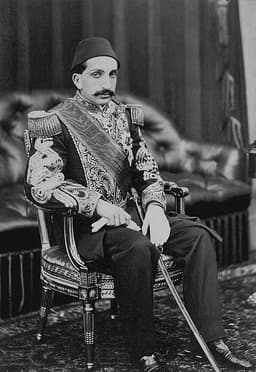
Sultan bin Abdulaziz
Politician · Modern
51.6Total
Basic Information
Born
1968
1928
Died
—
—
Era
Modern
Modern
Nationality
Haiti
Saudi Arabia
Occupation
Politician
Politician
Civilization
Other
Middle Eastern
Score Comparison
Military (10%)
50.0
41.6
Political (20%)
29.3
48.0
Influence (20%)
45.5
53.3
Legacy (20%)
35.0
41.7
Leadership (15%)
34.6
79.8
Strategy (15%)
43.9
45.0
TOTAL
39.1
51.6
Jovenel Moise — Complete Timeline
2011 AD
Election as PresidentPolitical Action◆ Major
Jovenel Moïse was elected President of Haiti in a runoff election, winning 67% of the vote. He was the candidate of the PHTK party, backed by outgoing President Michel Martelly. His election was marred by low turnout and allegations of fraud.
ElectionHaitiPHTK
Impact: national
2018 AD
Fuel Subsidy Removal ProtestsPolitical Action◆ Major
Moïse's government announced a 50% increase in fuel prices as part of IMF-backed reforms, triggering massive protests across Haiti. The protests turned violent, with demands for Moïse's resignation. The government eventually reversed the price hike.
ProtestsFuel PricesIMF
Impact: nationaldestructive
2020 AD
Rule by DecreePolitical Action◆ Major
After legislative elections were not held, Mo
DecreeAuthoritarianismConstitutional Crisis
Impact: nationaldestructive
2021 AD
AssassinationPolitical Action◆ Major
Jovenel Moïse was assassinated at his private residence in Port-au-Prince by a group of armed men. The attack killed him and wounded his wife. The assassination plunged Haiti into a political crisis and power vacuum, with disputed claims to the presidency.
AssassinationCrisisPower Vacuum
Impact: nationaltragic
Sultan bin Abdulaziz — Complete Timeline
1985 AD
Al-Yamamah Arms DealPolitical Action◆ Major
Sultan negotiated the Al-Yamamah arms deal with the United Kingdom, one of the largest arms export agreements in history. The deal involved the sale of Tornado fighter jets and other military equipment to Saudi Arabia, strengthening bilateral ties.
Arms TradeForeign PolicyMilitary
Impact: regional
1990 AD
Defense Minister during Gulf WarWar◆ Major
As Defense Minister, Sultan played a key role in coordinating Saudi military operations during the Gulf War, including the deployment of Saudi forces alongside the US-led coalition to liberate Kuwait. He oversaw the modernization of the Saudi military.
Gulf WarMilitaryCoalition
Impact: regional
2005 AD
Appointment as Crown PrincePolitical Action◆ Major
Sultan bin Abdulaziz was appointed Crown Prince of Saudi Arabia by King Abdullah. As Crown Prince, he held the positions of First Deputy Prime Minister and Minister of Defense and Aviation, overseeing the Saudi military for decades.
SuccessionRoyal Family
Impact: national
This comparison has not been analyzed yet.
One-time AI generation (~1 minute). Scores and timeline are already available below.
Rankings
🥇
Sultan bin AbdulazizLeader
Mil: 41.6Pol: 48.0Inf: 53.3
51.6
🥈
Jovenel Moise
Mil: 50.0Pol: 29.3Inf: 45.5
39.1
+12.5 behind
How This Comparison Works
Algorithm
Each figure is scored on 6 dimensions (0—100 scale) based on structured historical data: Military (10%), Political (20%), Influence (20%), Legacy (20%), Leadership (15%), Strategy (15%). The weighted total produces the final ranking.
Data Sources
Scores are computed from structured sub-indicators in the database. Scale factors adjust for era (Ancient ×0.85, Modern ×1.0) and civilization size (Eastern ×1.05, Other ×0.80) to account for differences in population and military scale.
Maximum 3 Figures
Comparisons are limited to 2—3 figures to ensure readability and statistical meaningfulness.
Error Margins
±5 points per dimension — Sub-scores are derived from historical records with inherent uncertainty. Two figures within 5 points on a dimension should be considered roughly equivalent in that area.
Total Score Accuracy
±3 points overall — The weighted combination of 6 dimensions produces a total score with approximately ±3 points of uncertainty. Differences of less than 3 points are not statistically significant— the figures are effectively tied.
Known Limitations
- Historical records are incomplete and uneven across civilizations
- Figures from oral-tradition societies may be underrepresented
- Occupation labels can misclassify multi-role figures
- Scores measure capability and impact, not moral character
- Quantitative scoring is a comparison tool, not absolute truth
Capability Radar
Military (10%) — Battles & Warfare
Battles
20
10
Win Rate
27
10
Expansion
29
10
Political (20%) — Governance & Reform
Reform
10
40
Diplomacy
10
50
Economy
5
30
Influence (20%) — Cultural & Global Reach
Cultural
5
20
Global
5
30
Legacy (20%) — Historical Impact
Historical
5
30
Longevity
5
20
Leadership (15%) — Power & Stability
Tenure
15
70
Stability
5
60
Strategy (15%) — Tactics & Innovation
Strategy
28
10
Tactics
32
10
Reform
39
40
Similar Comparisons
Comments & Discussion
No comments yet. Be the first to share your thoughts!