Loading...
Ichiro Hatoyama vs Sultan bin Abdulaziz
Ichiro Hatoyama leads by 0.5 pts · 2 figures compared
…

Ichiro Hatoyama
Politician · Modern
52.1Total
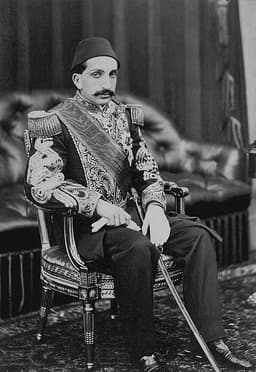
Sultan bin Abdulaziz
Politician · Modern
51.6Total
Basic Information
Born
1883
1928
Died
1959
—
Era
Modern
Modern
Nationality
Japan
Saudi Arabia
Occupation
Politician
Politician
Civilization
Eastern
Middle Eastern
Score Comparison
Military (10%)
48.7
41.6
Political (20%)
45.0
48.0
Influence (20%)
55.7
53.3
Legacy (20%)
47.5
41.7
Leadership (15%)
68.0
79.8
Strategy (15%)
45.0
45.0
TOTAL
52.1
51.6
Ichiro Hatoyama — Complete Timeline
1954 AD
Appointed Prime Minister of JapanPolitical Action◆ Major
Ichiro Hatoyama became Prime Minister of Japan on December 10, 1954, succeeding Shigeru Yoshida. His appointment followed the merger of conservative parties to form the Liberal Democratic Party (LDP) in 1955. Hatoyama's government focused on constitutional revision and normalization of relations with the Soviet Union.
Prime MinisterLDPJapan
Impact: national
1955 AD
Founded the Liberal Democratic PartyPolitical Action
Hatoyama played a key role in merging the Liberal Party and the Japan Democratic Party to form the Liberal Democratic Party (LDP) on November 15, 1955. The LDP dominated Japanese politics for decades. Hatoyama became the first LDP prime minister, consolidating conservative power.
LDP FormationPolitical PartyJapan
Impact: nationalconstructive
1956 AD
Normalized Relations with the Soviet UnionPolitical Action◆ Major
Hatoyama signed the Soviet-Japanese Joint Declaration on October 19, 1956, ending the state of war between Japan and the Soviet Union. The declaration restored diplomatic relations and paved the way for Japan's entry into the United Nations. However, it did not resolve the territorial dispute over the Kuril Islands.
Soviet UnionDiplomacyNormalization
Impact: regionalconstructive
Sultan bin Abdulaziz — Complete Timeline
1985 AD
Al-Yamamah Arms DealPolitical Action◆ Major
Sultan negotiated the Al-Yamamah arms deal with the United Kingdom, one of the largest arms export agreements in history. The deal involved the sale of Tornado fighter jets and other military equipment to Saudi Arabia, strengthening bilateral ties.
Arms TradeForeign PolicyMilitary
Impact: regional
1990 AD
Defense Minister during Gulf WarWar◆ Major
As Defense Minister, Sultan played a key role in coordinating Saudi military operations during the Gulf War, including the deployment of Saudi forces alongside the US-led coalition to liberate Kuwait. He oversaw the modernization of the Saudi military.
Gulf WarMilitaryCoalition
Impact: regional
2005 AD
Appointment as Crown PrincePolitical Action◆ Major
Sultan bin Abdulaziz was appointed Crown Prince of Saudi Arabia by King Abdullah. As Crown Prince, he held the positions of First Deputy Prime Minister and Minister of Defense and Aviation, overseeing the Saudi military for decades.
SuccessionRoyal Family
Impact: national
Expert Analysis
Origins
Ichiro Hatoyama was born on January 1, 1883, in Tokyo, Japan, into a prominent political family. His father, Kazuo Hatoyama, served as Speaker of the House of Representatives. He studied law at Tokyo Imperial University, graduating in 1907, and entered politics as a member of the Seiyukai party in 1915. His early career included stints as Chief Cabinet Secretary and Minister of Education in the 1930s.
Sultan bin Abdulaziz Al Saud was born on January 5, 1931, in Riyadh, Saudi Arabia, as the 15th son of King Abdulaziz. He received a traditional religious and political education under his father's guidance. He served as governor of Riyadh in his youth, gaining administrative experience. His career advanced through family connections and his role in the royal court.
Rise to Power
Hatoyama's rise was marked by his opposition to the wartime militarists. He was purged from public office by the Allied Occupation in 1946 for his prewar support of authoritarian policies, but returned to politics in 1951. He capitalized on dissatisfaction with Prime Minister Yoshida's policies, forming the Japan Democratic Party in 1954. On December 10, 1954, he became prime minister. He then merged his party with the Liberals to form the Liberal Democratic Party (LDP) on November 15, 1955, creating a dominant political force that ruled Japan for decades. His political maneuvering gave him a score of 45.0.
Sultan's ascent was through royal appointments. He became Minister of Agriculture in 1953, then Minister of Communications in 1955. In 1962, he was appointed Minister of Defense, a post he held for nearly 50 years. He modernized the Saudi military and built strong ties with Western powers. He was named Second Deputy Prime Minister in 1982 and Crown Prince in 2005 after King Abdullah's accession. His political score of 48.0 reflects his steady accumulation of power within the royal family.
Leadership & Governance
Hatoyama's leadership style was consensus-building and pragmatic. He prioritized restoring Japan's sovereignty and international standing. Domestically, he focused on economic recovery and political stability through the LDP merger. His signature achievement was normalizing relations with the Soviet Union: he signed the Soviet-Japanese Joint Declaration on October 19, 1956, ending the state of war and paving the way for Japan's UN membership. He scored 68.0 in leadership, reflecting his ability to navigate post-war constraints.
Sultan led with authoritarian decisiveness. As defense minister, he oversaw massive military expansion, including the Al-Yamamah arms deal with the UK, worth over £40 billion. During the Gulf War (1990-1991), he coordinated Saudi forces alongside the US-led coalition. His leadership score of 79.8 indicates his control over the military and security apparatus. However, his governance was opaque, focused on maintaining the Al Saud dynasty's power.
Triumph & Tragedy
Hatoyama's greatest triumph was the Soviet-Japanese Joint Declaration, which normalized relations and secured Japan's return to the international community. He also achieved the merger of conservative parties, creating the LDP. His failures include the inability to resolve the Northern Territories dispute (four islands claimed by Japan and Russia), which remains unresolved. His political score of 45.0 reflects mixed domestic success.
Sultan's triumphs include modernizing the Saudi military and securing massive arms deals. He played a key role in the Gulf War, ensuring Saudi security. His tragedy was his failure to become king; he died as crown prince in 2011, never ascending the throne. His legacy is also tainted by corruption allegations, particularly concerning the Al-Yamamah deal. His legacy score of 41.7 reflects these controversies.
Character & Destiny
Hatoyama was shrewd and resilient, surviving political purges to return to power. He was a pragmatist who prioritized national interests over ideology. His decision to normalize relations with the USSR was controversial but strategically wise. His character shaped his destiny as a post-war architect.
Sultan was ambitious and authoritative, accumulating power over decades. He was a skilled negotiator and manager of the royal family's interests. However, his health declined in his later years, preventing him from becoming king. His character led to immense influence but not the ultimate prize.
Legacy
Hatoyama's legacy is the creation of the LDP, which dominated Japanese politics until 2009 and beyond. His foreign policy reset with the USSR set the stage for Japan's post-war diplomacy. He is remembered as a key figure in Japan's recovery. His total score of 52.1 reflects his moderate but lasting impact.
Sultan's legacy includes a modernized Saudi military and the Al-Yamamah deal, which tied Saudi defense to British industry. He also advanced the Saud dynasty's influence. However, his legacy is less transformative than Hatoyama's, given his failure to change Saudi political structures. His total score of 51.6 is slightly lower.
Conclusion
While Hatoyama scored only 0.5 points higher overall, his impact is more significant. He reshaped Japan's political landscape by founding the LDP and re-established diplomatic ties with the Soviet Union, actions that had enduring consequences for Japan and East Asia. Sultan's influence was confined to Saudi Arabia's military and the royal family's internal dynamics. Hatoyama's achievements in rebuilding a democratic Japan after WWII and integrating it into the international community outweigh Sultan's role as a long-serving but ultimately transitional figure. Hatoyama had greater historical impact.
Rankings
🥇
Ichiro HatoyamaLeader
Mil: 48.7Pol: 45.0Inf: 55.7
52.1
🥈
Sultan bin Abdulaziz
Mil: 41.6Pol: 48.0Inf: 53.3
51.6
+0.5 behind
How This Comparison Works
Algorithm
Each figure is scored on 6 dimensions (0—100 scale) based on structured historical data: Military (10%), Political (20%), Influence (20%), Legacy (20%), Leadership (15%), Strategy (15%). The weighted total produces the final ranking.
Data Sources
Scores are computed from structured sub-indicators in the database. Scale factors adjust for era (Ancient ×0.85, Modern ×1.0) and civilization size (Eastern ×1.05, Other ×0.80) to account for differences in population and military scale.
Maximum 3 Figures
Comparisons are limited to 2—3 figures to ensure readability and statistical meaningfulness.
Error Margins
±5 points per dimension — Sub-scores are derived from historical records with inherent uncertainty. Two figures within 5 points on a dimension should be considered roughly equivalent in that area.
Total Score Accuracy
±3 points overall — The weighted combination of 6 dimensions produces a total score with approximately ±3 points of uncertainty. Differences of less than 3 points are not statistically significant— the figures are effectively tied.
Known Limitations
- Historical records are incomplete and uneven across civilizations
- Figures from oral-tradition societies may be underrepresented
- Occupation labels can misclassify multi-role figures
- Scores measure capability and impact, not moral character
- Quantitative scoring is a comparison tool, not absolute truth
Capability Radar
Military (10%) — Battles & Warfare
Battles
34
10
Win Rate
36
10
Expansion
37
10
Political (20%) — Governance & Reform
Reform
60
40
Diplomacy
65
50
Economy
55
30
Influence (20%) — Cultural & Global Reach
Cultural
30
20
Global
35
30
Legacy (20%) — Historical Impact
Historical
45
30
Longevity
40
20
Leadership (15%) — Power & Stability
Tenure
55
70
Stability
50
60
Strategy (15%) — Tactics & Innovation
Strategy
41
10
Tactics
46
10
Reform
45
40
Similar Comparisons
Comments & Discussion
No comments yet. Be the first to share your thoughts!