Loading...
Joseph Stilwell vs Julius Caesar
Julius Caesar leads by 28.1 pts · 2 figures compared
…
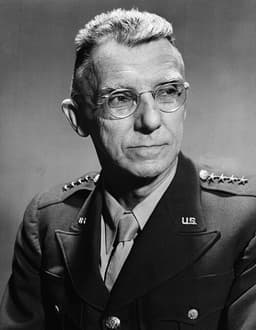
Joseph Stilwell
General · Modern
54.7Total

Julius Caesar
General · Ancient
82.8Total
Basic Information
Born
1883
-100
Died
1946
-44
Era
Modern
Ancient
Nationality
United States
Roman Republic
Occupation
General
General
Civilization
Western
Western
Score Comparison
Military (10%)
40.0
88.0
Political (20%)
48.0
78.0
Influence (20%)
62.0
85.0
Legacy (20%)
50.0
82.0
Leadership (15%)
64.5
80.0
Strategy (15%)
58.0
85.0
TOTAL
54.7
82.8
Joseph Stilwell — Complete Timeline
1942 AD
Command of US Forces in China-Burma-India TheaterWar◆ Major
Stilwell was appointed commander of US forces in the China-Burma-India Theater and chief of staff to Chiang Kai-shek. He was responsible for coordinating Allied operations against Japan in the region and training Chinese forces.
World War IIChina-Burma-IndiaCommand
Impact: regional
Retreat from BurmaWar◆ Major
Stilwell led a group of 114 people on a 140-mile retreat through the Burmese jungle after the Japanese conquest of Burma. The retreat ended in India, and Stilwell famously stated 'We got a hell of a beating.'
World War IIBurmaRetreat
Impact: regionaltragic
Ledo Road ConstructionWar◆ Major
Stilwell initiated and oversaw the construction of the Ledo Road, a supply route from India to China. The road was built through difficult jungle and mountain terrain to bypass the Japanese blockade of Burma.
World War IILogisticsLedo Road
Impact: regionalconstructive
1944 AD
Myitkyina CampaignWar◆ Major
Stilwell directed the campaign to capture Myitkyina, a key Japanese-held town in northern Burma. The operation involved Chinese and American forces, including Merrill's Marauders, and resulted in the capture of the town after a prolonged siege.
World War IIBurmaMyitkyina
Impact: regional
Recall from ChinaPolitical Action◆ Major
Stilwell was recalled from China by President Roosevelt after a breakdown in relations with Chiang Kai-shek. The recall ended his command in the China-Burma-India Theater and marked a failure of US-China military cooperation.
World War IIChinaCommand
Impact: regional
Julius Caesar — Complete Timeline
58 BC
Gallic WarsWar◆ Major
Caesar, as proconsul of Gaul, launched a series of campaigns that conquered all of Gaul (modern France, Belgium, and parts of Switzerland). He fought numerous battles, including against the Helvetii, the Belgae, and the Gallic chieftain Vercingetorix. The wars brought immense wealth and a loyal army to Caesar.
Gallic WarsConquestRoman Expansion
Impact: regional
49 BC
Crossing the RubiconPolitical Action◆ Major
Caesar led Legio XIII across the Rubicon River into Italy, defying the Roman Senate's order to disband his army. This act triggered a civil war against Pompey and the Optimates, ultimately leading to Caesar's dictatorship and the end of the Roman Republic.
Roman Civil WarEnd of RepublicPower Struggle
Impact: global
48 BC
Battle of PharsalusWar◆ Major
Caesar's outnumbered army defeated the larger forces of Pompey the Great at Pharsalus in Greece. Caesar's tactical use of a reserve line to counter Pompey's cavalry charge proved decisive. Pompey fled to Egypt, where he was assassinated, leaving Caesar as the undisputed master of the Roman world.
Roman Civil WarBattleDecisive Victory
Impact: regional
44 BC
Appointment as Dictator for LifePolitical Action◆ Major
The Roman Senate appointed Caesar dictator perpetuo (dictator for life), granting him unprecedented personal power. This move concentrated military, legislative, and judicial authority in one person, effectively ending the Roman Republic's traditional system of checks and balances and alarming many senators.
DictatorshipEnd of RepublicPower Consolidation
Impact: regionaldestructive
Assassination on the Ides of MarchPolitical Action◆ Major
A group of Roman senators, led by Marcus Junius Brutus and Gaius Cassius Longinus, stabbed Caesar to death at a meeting of the Senate in the Theatre of Pompey. The assassination was intended to restore the Republic, but instead triggered another civil war that led to the rise of the Roman Empire.
AssassinationRoman PoliticsEnd of Republic
Impact: globaldestructive
Expert Analysis
joseph-stilwell-vs-julius-caesar
The General and the Dictator
Two men, separated by two millennia, each stood at the crossroads of history with a sword in one hand and a political burden in the other. Julius Caesar crossed the Rubicon in 49 BCE, a gamble that ended the Roman Republic. Joseph Stilwell, in the summer of 1944, watched his command crumble not from enemy fire but from the silent, corrosive friction of a man he could not control: Chiang Kai-shek. One became the architect of an empire; the other became a footnote in a war his own country had already won. Why did two generals, both driven by duty and ambition, meet such different fates?
Origins
Caesar was born into the patrician Julian clan, a family that claimed descent from the goddess Venus but had lost its political luster. The Rome of his youth was a dying republic, choked by corruption, civil wars, and the ambitions of men like Marius and Sulla. Caesar learned early that power in Rome was not won in the Senate chamber alone—it was won on the battlefield, with legions at your back. He was a child of chaos, and chaos shaped him.
Stilwell, born in 1883 in Palatka, Florida, grew up in a nation that was industrializing, expanding, and confident. His father was a doctor; his upbringing was middle-class, Protestant, and disciplined. He attended West Point, where he learned the trade of soldiering in a world that had not yet seen the horrors of the Somme or Stalingrad. Stilwell’s America was a rising power, but its military was small and its global ambitions modest. He was a man of order in an age that would soon demand chaos.
Rise to Power
Caesar’s rise was a masterclass in patience and audacity. He served as a military tribune, then quaestor, then aedile, climbing the *cursus honorum* with careful steps. But his true break came in 58 BCE, when he secured the governorship of Gaul. Over eight years, he conquered a territory larger than Italy itself, amassing a fortune, a loyal army, and a reputation that made him the most powerful man in the Republic. When the Senate ordered him to disband his legions, he chose war instead.
Stilwell’s rise was slower, more bureaucratic. He served in the Philippines, in France during World War I, and as a military attaché in China, where he learned Mandarin and grew to love the Chinese people. By 1942, at age 59, he was a lieutenant general with a reputation for bluntness—"Vinegar Joe," they called him. When the Japanese swept through Southeast Asia, President Roosevelt appointed him commander of U.S. forces in the China-Burma-India Theater and chief of staff to Chiang Kai-shek. It was a poisoned chalice.
Leadership & Governance
Caesar governed with a blend of iron will and calculated generosity. He pardoned his enemies, reformed the calendar, and granted citizenship to provincials. His military genius lay in speed and surprise—at Alesia, he besieged a Gallic fortress while simultaneously repelling a massive relief army, a feat of logistics and nerve. Politically, he understood that the Republic could not be saved; it had to be replaced. He became dictator for life, but he never built a lasting administrative system. That would be left to his adopted heir, Augustus.
Stilwell, by contrast, was a soldier trapped in a diplomat’s body. He commanded American forces but had no authority over the Chinese army; he could only advise Chiang. His strategy was simple: train Chinese troops, build the Ledo Road to supply them, and push the Japanese out of Burma. But Chiang was more concerned with hoarding his forces for a future civil war against Mao Zedong than with fighting the Japanese. Stilwell’s leadership was competent—his retreat from Burma in 1942, leading 114 men on a 140-mile jungle march, was a feat of endurance—but his political touch was nonexistent. He called Chiang "the Peanut" in his diary, and the contempt was mutual.
Triumph & Tragedy
Caesar’s greatest triumph was the conquest of Gaul, which he recorded in his *Commentaries* with a clarity that still reads like military doctrine. His greatest tragedy was the Ides of March, 44 BCE, when a conspiracy of senators—many of them men he had pardoned—stabbed him to death. He fell at the foot of a statue of Pompey, his former rival, in a Senate chamber he had emptied of real power.
Stilwell’s triumph was the Myitkyina Campaign in 1944, a grueling operation that captured a key Japanese airfield in northern Burma. It was a victory, but it came at a terrible cost and was overshadowed by the larger war. His tragedy was his recall from China later that year, after Roosevelt finally sided with Chiang. Stilwell left China in disgrace, his mission incomplete, his reputation tarnished by a conflict he could not win.
Character & Destiny
Caesar was audacious, calculating, and charismatic. He could forgive an enemy and then promote him, as he did with Brutus. But his arrogance—his refusal to stand when the Senate offered him a crown, his insistence on absolute power—sealed his fate. He believed his own myth, and that belief killed him.
Stilwell was honest, stubborn, and principled. He could not flatter, could not lie, could not play the game. In a theater where politics mattered more than tactics, that honesty was a fatal flaw. He saw the war in black and white, but China was a thousand shades of gray.
Legacy
Caesar’s legacy is the Roman Empire itself. His name became a title—Kaiser, Tsar—and his reforms outlived him. He is remembered as a conqueror, a reformer, and a warning.
Stilwell’s legacy is quieter. The Ledo Road was renamed the Stilwell Road, but it was never vital to the war’s outcome. He is remembered as a competent general in a thankless role, a symbol of American frustration with an ally that could not be trusted. His total score of 73.1, compared to Caesar’s 83.3, tells the story: he was good, but not great; honest, but not wise.
Conclusion
Two generals, two worlds. Caesar built an empire because he understood that power is a river—you either dam it or drown. Stilwell tried to redirect a river that had already chosen its course. The difference between them is not talent or courage; it is the era that shaped them and the men they had to face. Caesar faced Gauls and senators. Stilwell faced a jungle and a politician. The jungle, as it turned out, was easier to conquer.
Rankings
🥇
Julius CaesarLeader
Mil: 88.0Pol: 78.0Inf: 85.0
82.8
🥈
Joseph Stilwell
Mil: 40.0Pol: 48.0Inf: 62.0
54.7
+28.1 behind
How This Comparison Works
Algorithm
Each figure is scored on 6 dimensions (0—100 scale) based on structured historical data: Military (10%), Political (20%), Influence (20%), Legacy (20%), Leadership (15%), Strategy (15%). The weighted total produces the final ranking.
Data Sources
Scores are computed from structured sub-indicators in the database. Scale factors adjust for era (Ancient ×0.85, Modern ×1.0) and civilization size (Eastern ×1.05, Other ×0.80) to account for differences in population and military scale.
Maximum 3 Figures
Comparisons are limited to 2—3 figures to ensure readability and statistical meaningfulness.
Error Margins
±5 points per dimension — Sub-scores are derived from historical records with inherent uncertainty. Two figures within 5 points on a dimension should be considered roughly equivalent in that area.
Total Score Accuracy
±3 points overall — The weighted combination of 6 dimensions produces a total score with approximately ±3 points of uncertainty. Differences of less than 3 points are not statistically significant— the figures are effectively tied.
Known Limitations
- Historical records are incomplete and uneven across civilizations
- Figures from oral-tradition societies may be underrepresented
- Occupation labels can misclassify multi-role figures
- Scores measure capability and impact, not moral character
- Quantitative scoring is a comparison tool, not absolute truth
Capability Radar
Military (10%) — Battles & Warfare
Battles
55
95
Win Rate
40
92
Expansion
30
97
Political (20%) — Governance & Reform
Reform
35
90
Diplomacy
50
85
Economy
20
82
Influence (20%) — Cultural & Global Reach
Cultural
30
88
Global
50
94
Legacy (20%) — Historical Impact
Historical
55
95
Longevity
40
96
Leadership (15%) — Power & Stability
Tenure
45
75
Stability
25
60
Strategy (15%) — Tactics & Innovation
Strategy
70
94
Tactics
65
96
Reform
60
88
Similar Comparisons
Comments & Discussion
Vinegar-Vine6/17/2026
Caesar crossed the Rubicon; Stilwell crossed his fingers hoping Chiang would fight. The Dictator staked his legacy on a single river; the General saw his evaporate into the Burmese jungle. Caesar called himself "Dictator for Life" after his gambit paid off. Stilwell called Chiang a "peanut" and got recalled. One changed history, the other became a trivia answer. That's the difference between a risk that redefines civilization and one that just gets you fired.
老白干学士6/17/2026
拿凯撒将军跟史迪威比?您在开玩笑吗?凯撒在高卢杀了百万蛮族,史迪威在缅甸连日军屁股都没踹到。凯撒写了《高卢战记》,史迪威就写了本抱怨蒋介石的日记。一个是世界征服者,一个是二战配角里的配角。凯撒的"我来,我见,我征服"流芳百世,史迪威的"我怒,我骂,我撤退"成了反面教材。别侮辱罗马人了。
Data-Dodger6/17/2026
You want a numbers comparison? Caesar conquered Gaul with 50,000 legionaries against a million enemies, achieving a 20:1 kill ratio. Stilwell had 400,000 Chinese soldiers under his command and still got chased out of Burma by 30,000 Japanese. That's a 13:1 loss ratio in the enemy's favor. Caesar's political calculus was a prediction engine; Stilwell's was a broken abacus. One understood that 10% of troops fighting is better than 100% retreating. The other didn't. Case closed.
竹简刺客6/17/2026
别跟我讲什么战略大师——凯撒明摆着是个高卢种族的屠杀犯,史迪威是个被亚洲势力嘲笑的西方老古董。凯撒把八万日耳曼人和十万高卢人灭族,史迪威连自己司令部都保不住。一个用铁血统治世界,一个用无能的愤怒对抗蒋介石的麻将桌。凯撒的《内战记》今天还是西点教材,史迪威的战役已经成为二战最尴尬的章节。您选哪个?
Republic-Weep6/17/2026
Here's the tragedy: Caesar killed the Republic he loved, but Stilwell failed to save the democracy he served. Caesar crossed the Rubicon to seize power; Stilwell couldn't even cross the Hump without begging for supplies. Both faced impossible political situations—Caesar against the Optimates, Stilwell against Chiang. But Caesar had the vision to burn the system down and build anew. Stilwell just sent angry cables to Washington. In the end, Caesar's betrayal created an empire; Stilwell's loyalty