Loading...
Joseph Stalin vs Qin Shi Huang
Qin Shi Huang leads by 16.4 pts · 2 figures compared
…
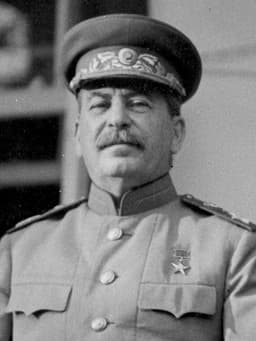
Joseph Stalin
Politician · Modern
68.8Total
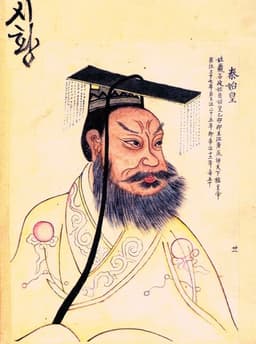
Qin Shi Huang
Emperor · Ancient
85.2Total
Basic Information
Born
1878
-259
Died
1953
-210
Era
Modern
Ancient
Nationality
Russia
China
Occupation
Politician
Emperor
Civilization
Western
Eastern
Score Comparison
Military (10%)
75.0
80.0
Political (20%)
70.0
90.0
Influence (20%)
72.0
85.0
Legacy (20%)
55.0
90.0
Leadership (15%)
80.0
78.0
Strategy (15%)
70.0
82.0
TOTAL
68.8
85.2
Joseph Stalin — Complete Timeline
1928 AD
Launched the First Five-Year PlanReform
Stalin initiated a series of centralized economic plans aimed at rapid industrialization and collectivization of agriculture. The First Five-Year Plan set ambitious targets for heavy industry, leading to significant growth but also severe shortages and human cost.
Impact: global
1929 AD
Implemented forced collectivization of agricultureReform
Stalin ordered the consolidation of individual peasant farms into collective farms (kolkhozy). This was met with resistance, leading to the liquidation of kulaks (wealthy peasants) as a class. The policy caused a catastrophic famine, particularly in Ukraine (Holodomor), resulting in millions of deaths.
Impact: nationaldestructive
1937 AD
Conducted the Great Purge (Great Terror)Political Action
Stalin orchestrated a campaign of political repression against alleged enemies of the state. Millions were arrested, executed, or sent to the Gulag labor camps. The purges targeted the Communist Party, military leadership, intellectuals, and ordinary citizens, consolidating Stalin's absolute power.
Impact: nationaldestructive
1945 AD
Led the Soviet Union to victory in World War IIWar
Stalin served as Supreme Commander of the Soviet armed forces. The Soviet Union bore the brunt of the war against Nazi Germany, suffering immense casualties. The Red Army's victory at Stalingrad and the capture of Berlin were key turning points. The war ended with Soviet domination of Eastern Europe.
Impact: global
Established the Eastern Bloc and the Iron CurtainPolitical Action◆ Major
After WWII, Stalin imposed communist governments in Eastern European countries occupied by the Red Army, creating a buffer zone against the West. This division of Europe into Soviet and Western spheres of influence marked the beginning of the Cold War.
Impact: globaldestructive
Qin Shi Huang — Complete Timeline
246 BC
Construction of the Mausoleum and Terracotta ArmyOther◆ Major
Qin Shi Huang commissioned a vast mausoleum complex near Xi'an, guarded by thousands of life-sized terracotta soldiers, horses, and chariots. The project employed hundreds of thousands of workers and reflected his obsession with immortality and imperial power.
Impact: global
230 BC
Conquest of the Six Warring StatesWar
From 230 to 221 BCE, Ying Zheng led the Qin state in a series of campaigns that conquered the Han, Zhao, Wei, Chu, Yan, and Qi states. This unified China under a single ruler for the first time, ending the Warring States period.
Impact: global
221 BC
Standardization of Writing, Currency, and MeasurementsReform◆ Major
Qin Shi Huang ordered the standardization of Chinese script, currency, and weights and measures across the unified empire. This facilitated administration, trade, and cultural integration, laying a foundation for future dynasties.
Impact: globalconstructive
Proclamation of the Qin DynastyPolitical Action
After conquering the last independent state, Ying Zheng declared himself Shi Huangdi (First Emperor), founding the Qin Dynasty. He adopted a new title to signify his supreme authority and initiated centralized imperial rule.
Impact: global
214 BC
Initiation of the Great Wall ConstructionOther◆ Major
Qin Shi Huang ordered the connection and extension of existing northern fortifications to create a unified defensive wall against nomadic Xiongnu raids. This project involved massive conscripted labor and became the precursor to the later Great Wall.
Impact: regional
213 BC
Burning of Books and Burying of ScholarsPolitical Action◆ Major
On the advice of Li Si, Qin Shi Huang ordered the burning of historical records and philosophical texts not aligned with Legalist doctrine. He also had 460 Confucian scholars buried alive to suppress dissent and consolidate ideological control.
Impact: nationaldestructive
Expert Analysis
joseph-stalin-vs-qin-shi-huang
# The First Emperor and the Iron Dictator
On a spring morning in 221 BC, Ying Zheng stood before his assembled generals in the city of Xianyang, the air heavy with incense and ambition. He had just accomplished what no Chinese ruler had done before: the complete conquest of the six warring states. Declaring himself *Shi Huangdi*—the First Emperor—he believed his dynasty would last ten thousand generations. Two thousand years later, in a cramped Kremlin office in December 1929, Joseph Stalin stared at maps of the Soviet Union, preparing to force twenty million peasants into collective farms. Both men sought to reshape entire civilizations in a single lifetime. Both succeeded at a cost that still haunts the world.
Origins
Qin Shi Huang was born in 259 BC into a world of chaos. The Warring States period had torn China apart for centuries, with seven kingdoms locked in endless conflict. His father was a minor king, his mother a former concubine. Young Ying Zheng grew up in a court rife with intrigue—his mother’s lover plotted to seize power, and assassins stalked the palace corridors. This taught him one lesson: trust nothing, control everything.
Stalin emerged from an entirely different crucible. Born Ioseb Dzhugashvili in 1878 in Gori, Georgia, he was the son of a violent, alcoholic shoemaker. A seminary student turned revolutionary, he adopted the name “Stalin”—man of steel—as a badge of ruthlessness. Unlike the emperor, who inherited a throne, Stalin clawed his way up from obscurity through the underground world of Marxist conspiracy. His era was modern, industrial, and ideological. The emperor faced swords and chariots; Stalin faced telephones and filing cabinets.
Rise to Power
Qin Shi Huang’s path was direct. At thirteen, he became king of Qin, a peripheral state with a brutal legalist philosophy. By twenty-two, he had crushed a rebellion by his mother’s lover and purged the court. Then came the campaigns: from 230 to 221 BC, his armies swept through Han, Zhao, Wei, Chu, Yan, and Qi—one state per year. Each victory was absolute. He did not negotiate; he annihilated.
Stalin’s rise was more labyrinthine. After the 1917 Bolshevik Revolution, he held minor posts until Lenin’s death in 1924. Using his role as General Secretary, he quietly placed loyalists in every party position. By 1928, he had outmaneuvered Trotsky, Zinoviev, and Bukharin—not through battlefield genius, but through bureaucratic manipulation. Where the emperor conquered provinces, Stalin conquered committees.
Leadership & Governance
Both rulers governed through terror, but their methods reflected their times. Qin Shi Huang imposed unity through standardization: one script, one currency, one axle length for carts. He built roads, canals, and the first Great Wall—a defensive line connecting existing fortifications. His legalist philosophy, guided by minister Li Si, reduced all knowledge to state-approved texts. In 213 BC, he ordered the burning of books on history and philosophy, and the burial of 460 scholars alive. For him, knowledge was a threat.
Stalin’s governance was industrial and ideological. His First Five-Year Plan (1928–1932) transformed a peasant nation into a steel-and-concrete superpower. But collectivization triggered a famine that killed millions in Ukraine and Kazakhstan. The Great Purge of 1937–1938 saw over a million people executed or sent to gulags—including most of the Red Army’s officer corps. Stalin did not burn books; he burned people’s lives. Yet his leadership during World War II was undeniably effective. As Supreme Commander, he directed the defense of Stalingrad and the push to Berlin, accepting staggering losses as necessary.
Triumph & Tragedy
Qin Shi Huang’s greatest triumph was the unification itself—a feat that defined China for two millennia. His standardization created a cultural DNA that outlasted his dynasty. Yet his tragedy was the fragility of his achievement. He died in 210 BC while searching for an elixir of immortality. Within three years, his dynasty collapsed in rebellion. His mausoleum, guarded by thousands of terracotta soldiers, remained hidden for two thousand years—a silent monument to a ruler who wanted to live forever.
Stalin’s triumph was victory in World War II. The Soviet Union lost twenty-seven million people but emerged as a global superpower, with an Eastern Bloc stretching from Berlin to Vladivostok. His tragedy was the cost of that victory: a society hollowed by paranoia, a countryside starved, and a legacy so toxic that even his own successors buried his body and erased his name from cities.
Character & Destiny
Both men were shaped by paranoia, but expressed it differently. Qin Shi Huang’s fear was of chaos—the disorder he had conquered. He built walls, standardized everything, and sought immortality because he believed unity was fragile. Stalin’s fear was of betrayal. He saw enemies everywhere: in the party, in the army, in his own family. His daughter Svetlana recalled that he trusted no one, not even his closest comrades.
The emperor died of natural causes, possibly mercury poisoning from his immortality elixirs. Stalin died in 1953 after a stroke, lying on his bedroom floor for hours while his terrified guards hesitated to enter. Both ended alone.
Legacy
Qin Shi Huang’s legacy is ambiguous but immense. China’s very name derives from Qin. His standardization of script and currency made unified China possible. Yet he is remembered as a tyrant who burned books and buried scholars. The terracotta army, discovered in 1974, made him a global icon—but also a warning.
Stalin’s legacy is darker. He industrialized a backward nation and defeated Nazism, but at a cost of millions of lives. In modern Russia, opinion is split: some see him as a strong leader, others as a mass murderer. His name is absent from official holidays, but his statue still stands in some cities, a ghost that refuses to disappear.
Conclusion
The First Emperor and the Iron Dictator never met, but they understood each other. Both believed that history was a force to be commanded, not endured. Qin Shi Huang tried to freeze time through standardization and immortality; Stalin tried to accelerate it through industry and terror. One built a wall to keep the world out; the other built an iron curtain to keep his people in. Their methods were brutal, their ambitions vast, and their failures as instructive as their successes. In the end, they remind us that power, when absolute, does not create paradise—it creates monuments. And monuments, however grand, are only stone.
Rankings
🥇
Qin Shi HuangLeader
Mil: 80.0Pol: 90.0Inf: 85.0
85.2
🥈
Joseph Stalin
Mil: 75.0Pol: 70.0Inf: 72.0
68.8
+16.4 behind
How This Comparison Works
Algorithm
Each figure is scored on 6 dimensions (0—100 scale) based on structured historical data: Military (10%), Political (20%), Influence (20%), Legacy (20%), Leadership (15%), Strategy (15%). The weighted total produces the final ranking.
Data Sources
Scores are computed from structured sub-indicators in the database. Scale factors adjust for era (Ancient ×0.85, Modern ×1.0) and civilization size (Eastern ×1.05, Other ×0.80) to account for differences in population and military scale.
Maximum 3 Figures
Comparisons are limited to 2—3 figures to ensure readability and statistical meaningfulness.
Error Margins
±5 points per dimension — Sub-scores are derived from historical records with inherent uncertainty. Two figures within 5 points on a dimension should be considered roughly equivalent in that area.
Total Score Accuracy
±3 points overall — The weighted combination of 6 dimensions produces a total score with approximately ±3 points of uncertainty. Differences of less than 3 points are not statistically significant— the figures are effectively tied.
Known Limitations
- Historical records are incomplete and uneven across civilizations
- Figures from oral-tradition societies may be underrepresented
- Occupation labels can misclassify multi-role figures
- Scores measure capability and impact, not moral character
- Quantitative scoring is a comparison tool, not absolute truth
Capability Radar
Military (10%) — Battles & Warfare
Battles
85
85
Win Rate
80
90
Expansion
85
90
Political (20%) — Governance & Reform
Reform
90
95
Diplomacy
70
75
Economy
85
90
Influence (20%) — Cultural & Global Reach
Cultural
70
95
Global
95
85
Legacy (20%) — Historical Impact
Historical
95
95
Longevity
80
95
Leadership (15%) — Power & Stability
Tenure
95
70
Stability
60
65
Strategy (15%) — Tactics & Innovation
Strategy
85
85
Tactics
60
80
Reform
90
95
Similar Comparisons
Comments & Discussion
CrimsonCensor6/17/2026
The comparison misses key context: Qin Shi Huang’s centralization—standardizing script, weights, and axle lengths—actually reduced bureaucratic chaos and forged a unified cultural identity that lasted millennia. Stalin’s forced collectivization and purges created deliberate famine and institutional terror without such lasting positive infrastructure. One built a highway; the other just ran over people. Don’t conflate authoritarianism with state-building genius.
铁史摊主6/17/2026
别拿焚书坑儒洗白斯大林。秦朝统一文字度量衡是历史必然,可坑儒杀了多少方士?数得清吗?斯大林那叫工业奇迹吗?那是农业大饥荒换来的铁肺机器。两人都是拧螺丝的暴君,但一个拧出了长城,一个拧出了古拉格——螺丝刀一样狠,产品质量不一样。
NumismaticNerd6/17/2026
The “dynasty lasting ten thousand generations” line is propaganda gold, but Qin’s actually imploded within 15 years of his death—three generations tops. Stalin’s USSR outlived him by 40 years but collapsed under its own weight. Both built systems that seemed eternal on paper but were fragile as sandcastles. Let’s not pretend either regime had staying power beyond terror’s memory.
古典破壁6/17/2026
看时间尺度:秦始皇用青铜剑统一了中国,斯大林用拖拉机型号挤压了乌克兰。可别忘了,秦律里连盗牛都要斩脚,斯大林的法律执行者连罪名都可以现编。两个都是“法家”噩梦的异时空版本,只不过一个焚书,一个禁书。平等点骂,别厚此薄彼。
GulagGrandpa6/17/2026
I’ve got a bone to pick: Stalin’s collectivization killed at least 5 million Ukrainians in the Holodomor alone—a deliberate famine engineered to break resistance. Qin’s forced labor on the Great Wall and his tomb? Brutal, yes, but on a smaller scale per capita and not aimed at ethnic cleansing. Both were monsters, but Stalin’s industrial scale of starvation redefines malice.