Loading...
Jose Mujica vs Yoshihide Suga
Jose Mujica leads by 13.5 pts · 2 figures compared
…
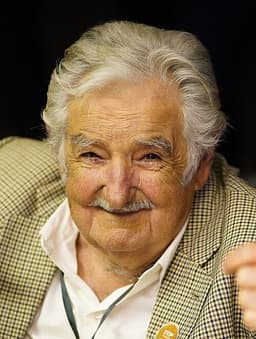
Jose Mujica
Politician · Modern
52.3Total
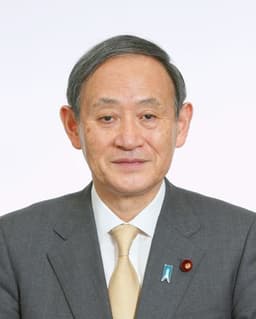
Yoshihide Suga
Politician · Modern
38.8Total
Basic Information
Born
1935
1948
Died
—
—
Era
Modern
Modern
Nationality
Uruguay
Japan
Occupation
Politician
Politician
Civilization
Western
Eastern
Score Comparison
Military (10%)
41.6
15.2
Political (20%)
45.0
35.1
Influence (20%)
58.0
49.4
Legacy (20%)
45.0
37.5
Leadership (15%)
68.0
45.0
Strategy (15%)
54.8
35.9
TOTAL
52.3
38.8
Jose Mujica — Complete Timeline
1960 AD
Joined the Tupamaro guerrilla movementPolitical Action◆ Major
Mujica joined the Movimiento de Liberaci
GuerrillaUruguayTupamaros
Impact: nationaldestructive
1972 AD
Imprisonment during the dictatorshipPolitical Action◆ Major
Mujica was captured by Uruguayan security forces and imprisoned for 14 years, including 7 years in solitary confinement. He was held in military barracks and subjected to harsh conditions, emerging as a symbol of resistance.
ImprisonmentDictatorshipHuman Rights
Impact: nationaltragic
2009 AD
Elected President of UruguayPolitical Action
Mujica won the 2009 presidential election as the candidate of the Broad Front coalition, defeating former President Luis Alberto Lacalle. He took office in 2010, becoming known as the 'world's poorest president' for donating most of his salary.
ElectionPresidencyUruguay
Impact: nationalconstructive
2013 AD
Legalized same-sex marriage in UruguayReform◆ Major
Mujica signed the Equal Marriage Law, making Uruguay the 12th country in the world to legalize same-sex marriage. The law granted same-sex couples the same rights as heterosexual couples, including adoption and inheritance.
LGBT RightsMarriage EqualitySocial Reform
Impact: nationalprogressive
Legalized cannabis regulationReform◆ Major
Mujica's government passed a law legalizing the production, sale, and consumption of cannabis under state regulation. Uruguay became the first country in the world to fully legalize cannabis for recreational use, aiming to combat drug trafficking.
Drug PolicyCannabisInnovation
Impact: globalprogressive
Yoshihide Suga — Complete Timeline
2012 AD
Appointed Chief Cabinet SecretaryPolitical Action◆ Major
Suga was appointed Chief Cabinet Secretary under Prime Minister Shinzo Abe. He served in this role from 2012 to 2020, becoming the longest-serving Chief Cabinet Secretary in Japanese history, managing daily government operations and press briefings.
JapanGovernmentAbe Administration
Impact: national
2020 AD
Elected Prime Minister of JapanPolitical Action◆ Major
Suga was elected as Prime Minister of Japan by the National Diet, succeeding Shinzo Abe who resigned due to health issues. He won the Liberal Democratic Party leadership election with overwhelming support from party factions.
JapanPrime MinisterLDP
Impact: national
2021 AD
Announced resignation as Prime MinisterPolitical Action◆ Major
Suga announced he would not seek re-election as LDP president, effectively resigning as prime minister. His decision came after declining approval ratings due to his handling of the COVID-19 pandemic and the Tokyo Olympics.
JapanResignationCOVID-19
Impact: nationaltragic
Expert Analysis
Origins
Jose Mujica was born on May 20, 1935, in Montevideo, Uruguay, into a modest farming family. His father died when he was young, and his mother struggled to support the family. He attended a public school but left early to work. In the 1960s, inspired by leftist ideologies, he joined the Movimiento de Liberación Nacional-Tupamaros, a guerrilla group that engaged in armed robberies and kidnappings. His early life was shaped by poverty and radical politics.
Yoshihide Suga was born on December 6, 1948, in Akinomiya, a rural town in Akita Prefecture, Japan. His parents were strawberry farmers. He moved to Tokyo after high school, working odd jobs before attending Hosei University, where he studied law. After graduation, he worked in the private sector before entering politics as a secretary to a Diet member. His humble origins contrasted with the elite backgrounds of many Japanese politicians.
Rise to Power
Mujica's rise came through his involvement in the Tupamaro movement. After being captured in 1972, he spent 14 years in prison, including 7 in solitary confinement, under Uruguay's military dictatorship. Upon release in 1985, he transitioned to democratic politics, co-founding the Movimiento de Participación Popular (MPP). He was elected to Congress in 1994, then to the Senate in 1999. In 2009, he won the presidency as the Broad Front candidate, defeating Luis Alberto Lacalle. His victory was a triumph for the left and a personal redemption after decades of imprisonment.
Suga's rise was more gradual, rooted in bureaucracy. He served as a local assemblyman in Yokohama from 1987 to 1996, then won a seat in the House of Representatives in 1996. He became known as a loyalist to Shinzo Abe, serving as Chief Cabinet Secretary from 2012 to 2020, the longest tenure in that role. When Abe resigned in 2020 due to health issues, Suga was elected Prime Minister by the Diet, winning the LDP presidency with overwhelming support. His rise was a result of party insider maneuvering rather than popular appeal.
Leadership & Governance
Mujica's leadership was defined by austerity and progressive reforms. He lived on a modest farm, donated 90% of his salary to charity, and rejected presidential perks. His government legalized same-sex marriage (2013) and cannabis regulation (2013), making Uruguay a global pioneer. He also expanded social programs, reducing poverty from 20.9% to 11.5% during his term. However, his economic policies were criticized for sluggish growth.
Suga's leadership was technocratic and continuity-focused. He aimed to continue Abe's 'Abenomics' policies and pushed for digital transformation, including the creation of a Digital Agency. He handled the COVID-19 pandemic with cautious measures, but his approval rating plummeted due to a perceived lack of charisma and communication. He scored 45.0 in leadership compared to Mujica's 68.0. His tenure lasted only one year, marked by limited achievements.
Triumph & Tragedy
Mujica's greatest successes were his social reforms: legalizing same-sex marriage and cannabis, which enhanced Uruguay's global image. His personal humility made him an international icon. However, his presidency saw economic stagnation, with GDP growth averaging 3.5% (below regional peers). Critics noted his failure to address crime and inequality effectively.
Suga's triumph was his role in Abe's long-term stability and his own rapid ascent. He successfully launched the Digital Agency and managed the early pandemic response. His tragedy was his short, unpopular tenure: he resigned after only 13 months, with approval ratings below 30%. His lack of political vision and charisma cost him support.
Character & Destiny
Mujica's character—austere, principled, and defiant—shaped his destiny. His guerrilla past gave him credibility with the left, but his pragmatic governance won centrist support. He was often called 'the world's poorest president,' a title he embraced. His fate was to be a symbol of alternative politics, even if his domestic impact was mixed.
Suga was dutiful, hardworking, and unassuming, but lacked the political instincts of his predecessor. His destiny was to be a caretaker prime minister, overshadowed by Abe's legacy. His decision to resign rather than face a likely election defeat showed his realism, but also his limited ambition.
Legacy
Mujica's legacy is global: he remains a symbol of frugal leadership and progressive reform. Uruguay's cannabis law influenced other countries. His influence score of 58.0 reflects his international recognition. Domestically, his social policies have endured, but his economic record is debated.
Suga's legacy is modest: he is remembered as Abe's loyal chief cabinet secretary and a brief prime minister. The Digital Agency may be his lasting institutional contribution. His influence score of 49.4 is lower, and his total score of 38.8 trails Mujica's 52.3 by 13.5 points.
Conclusion
Jose Mujica had greater impact than Yoshihide Suga. Despite a lower political score (45.0 vs 35.1), Mujica's leadership (68.0) and strategic vision (54.8) enabled transformative reforms that resonated globally. Suga's tenure was too brief and derivative to leave a comparable mark. While both were shaped by their contexts, Mujica's journey from guerrilla to president and his enduring symbol of humility give him a clear advantage in historical significance.
Rankings
🥇
Jose MujicaLeader
Mil: 41.6Pol: 45.0Inf: 58.0
52.3
🥈
Yoshihide Suga
Mil: 15.2Pol: 35.1Inf: 49.4
38.8
+13.5 behind
How This Comparison Works
Algorithm
Each figure is scored on 6 dimensions (0—100 scale) based on structured historical data: Military (10%), Political (20%), Influence (20%), Legacy (20%), Leadership (15%), Strategy (15%). The weighted total produces the final ranking.
Data Sources
Scores are computed from structured sub-indicators in the database. Scale factors adjust for era (Ancient ×0.85, Modern ×1.0) and civilization size (Eastern ×1.05, Other ×0.80) to account for differences in population and military scale.
Maximum 3 Figures
Comparisons are limited to 2—3 figures to ensure readability and statistical meaningfulness.
Error Margins
±5 points per dimension — Sub-scores are derived from historical records with inherent uncertainty. Two figures within 5 points on a dimension should be considered roughly equivalent in that area.
Total Score Accuracy
±3 points overall — The weighted combination of 6 dimensions produces a total score with approximately ±3 points of uncertainty. Differences of less than 3 points are not statistically significant— the figures are effectively tied.
Known Limitations
- Historical records are incomplete and uneven across civilizations
- Figures from oral-tradition societies may be underrepresented
- Occupation labels can misclassify multi-role figures
- Scores measure capability and impact, not moral character
- Quantitative scoring is a comparison tool, not absolute truth
Capability Radar
Military (10%) — Battles & Warfare
Battles
15
12
Win Rate
10
18
Expansion
5
19
Political (20%) — Governance & Reform
Reform
60
20
Diplomacy
65
25
Economy
55
30
Influence (20%) — Cultural & Global Reach
Cultural
45
10
Global
45
15
Legacy (20%) — Historical Impact
Historical
40
15
Longevity
30
10
Leadership (15%) — Power & Stability
Tenure
55
15
Stability
50
20
Strategy (15%) — Tactics & Innovation
Strategy
15
21
Tactics
20
25
Reform
5
31
Similar Comparisons
Comments & Discussion
No comments yet. Be the first to share your thoughts!