Loading...
Georgy Malenkov vs Yoshihide Suga
Georgy Malenkov leads by 2.9 pts · 2 figures compared
…

Georgy Malenkov
Politician · Modern
41.7Total
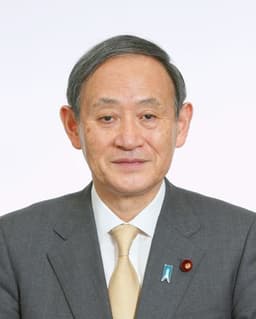
Yoshihide Suga
Politician · Modern
38.8Total
Basic Information
Born
1902
1948
Died
1988
—
Era
Modern
Modern
Nationality
Russia
Japan
Occupation
Politician
Politician
Civilization
Western
Eastern
Score Comparison
Military (10%)
47.4
15.2
Political (20%)
33.6
35.1
Influence (20%)
47.9
49.4
Legacy (20%)
38.3
37.5
Leadership (15%)
41.5
45.0
Strategy (15%)
41.0
35.9
TOTAL
41.7
38.8
Georgy Malenkov — Complete Timeline
1953 AD
Advocacy for Consumer Goods and Peaceful CoexistenceReform◆ Major
As Premier, Malenkov advocated for a shift in Soviet economic priorities toward consumer goods and light industry, and promoted peaceful coexistence with the West. This 'New Course' was a departure from Stalinist heavy industry focus, but was abandoned after his fall.
Economic ReformCold WarPolicy
Impact: nationalprogressive
Appointment as Premier after Stalin's DeathPolitical Action◆ Major
Following Stalin's death on March 5, 1953, Malenkov became Chairman of the Council of Ministers (Premier) of the Soviet Union. He initially held power alongside Khrushchev and Beria, but was soon outmaneuvered and forced to share leadership.
Soviet LeadershipSuccessionPower Struggle
Impact: national
1955 AD
Removal from PremiershipPolitical Action◆ Major
Malenkov was removed from the premiership in February 1955, replaced by Bulganin. He was demoted to Minister of Electric Power Stations, losing his position as the top Soviet leader after Khrushchev consolidated power and criticized his policies.
Power StruggleKhrushchevDemotion
Impact: nationaldestructive
1961 AD
Expulsion from the Communist PartyPolitical Action◆ Major
Malenkov was expelled from the Communist Party in 1961 for his involvement in the 'Anti-Party Group' that attempted to remove Khrushchev in 1957. He was sent into internal exile, ending his political career permanently.
PurgeKhrushchevExpulsion
Impact: nationaldestructive
Yoshihide Suga — Complete Timeline
2012 AD
Appointed Chief Cabinet SecretaryPolitical Action◆ Major
Suga was appointed Chief Cabinet Secretary under Prime Minister Shinzo Abe. He served in this role from 2012 to 2020, becoming the longest-serving Chief Cabinet Secretary in Japanese history, managing daily government operations and press briefings.
JapanGovernmentAbe Administration
Impact: national
2020 AD
Elected Prime Minister of JapanPolitical Action◆ Major
Suga was elected as Prime Minister of Japan by the National Diet, succeeding Shinzo Abe who resigned due to health issues. He won the Liberal Democratic Party leadership election with overwhelming support from party factions.
JapanPrime MinisterLDP
Impact: national
2021 AD
Announced resignation as Prime MinisterPolitical Action◆ Major
Suga announced he would not seek re-election as LDP president, effectively resigning as prime minister. His decision came after declining approval ratings due to his handling of the COVID-19 pandemic and the Tokyo Olympics.
JapanResignationCOVID-19
Impact: nationaltragic
Expert Analysis
Origins
Georgy Malenkov was born on January 8, 1902, in Orenburg, Russia, into a middle-class family. His father was a railway clerk. Malenkov joined the Red Army in 1919 and the Communist Party in 1920, rising through administrative roles. He lacked a formal higher education but gained experience in party bureaucracy.
Yoshihide Suga was born on December 6, 1948, in Ogachi, Akita Prefecture, Japan, to a farming family. He worked his way through Hosei University, graduating in 1973. Suga entered politics as a secretary to a Diet member, later winning a seat in the Yokohama City Assembly in 1987.
Rise to Power
Malenkov's rise came through Stalin's inner circle. He became a Central Committee member in 1939 and oversaw the Soviet nuclear project. After Stalin's death on March 5, 1953, Malenkov became Premier, initially holding significant power. He consolidated control by merging ministries and positioning himself as the top leader, but faced challenges from Khrushchev.
Suga rose through the Liberal Democratic Party (LDP) ranks. He was appointed Chief Cabinet Secretary in 2012 under Prime Minister Shinzo Abe, serving until 2020—the longest tenure in that role. He managed Abe's daily operations and communications, earning a reputation as a behind-the-scenes fixer. In September 2020, Suga succeeded Abe after his resignation, winning the LDP leadership election with 377 out of 534 votes.
Leadership & Governance
Malenkov advocated for a shift from heavy industry to consumer goods and promoted peaceful coexistence with the West. He reduced military spending and increased investment in housing and agriculture. However, his reforms were limited by party opposition and his own lack of a power base. He scored 41.5 in leadership, reflecting his brief tenure and inability to consolidate authority.
Suga focused on continuing Abe's policies, including Abenomics and digital transformation. He promoted administrative reforms, such as reducing mobile phone fees and creating a Digital Agency. However, his leadership was hampered by a perceived lack of charisma and poor communication during the COVID-19 pandemic. His approval rating fell from 74% in September 2020 to 34% by June 2021.
Triumph & Tragedy
Malenkov's greatest success was advocating for consumer goods and peaceful coexistence, which offered a brief thaw in Cold War tensions. His failure was his inability to maintain power; he was removed as Premier in February 1955 after Khrushchev outmaneuvered him. In 1957, he was labeled part of the 'Anti-Party Group' and expelled from the Central Committee, and later from the Party in 1961.
Suga's triumph was successfully managing the 2020 Tokyo Olympics, held in 2021, despite pandemic challenges. His tragedy was his short-lived premiership—just over a year—marred by declining approval due to his COVID-19 response and perceived lack of vision. He announced his resignation in September 2021, not seeking reelection.
Character & Destiny
Malenkov was a cautious bureaucrat, skilled in administration but lacking the ruthlessness of Stalin or the dynamism of Khrushchev. His preference for collective leadership and reform made him vulnerable in a system that rewarded cunning. His destiny was to be a transitional figure, overshadowed by more aggressive rivals.
Suga was described as a pragmatic workhorse, loyal to Abe and effective in the shadows. As prime minister, he struggled to project authority or articulate a distinct vision. His fate was sealed by public dissatisfaction and internal party pressure, leading to his quick exit.
Legacy
Malenkov's legacy is minor; he is remembered as a brief caretaker who attempted de-Stalinization but failed. His consumer goods push was reversed, but his ideas foreshadowed later reforms. He scored 38.3 in legacy.
Suga's legacy includes the Digital Agency and administrative reforms, but his tenure was too short for major change. He scored 37.5 in legacy. Both are overshadowed by their predecessors.
Conclusion
Malenkov had a marginally greater impact than Suga. Despite a short rule, Malenkov's advocacy for consumer goods and peaceful coexistence represented a distinct policy shift within the Soviet Union, even if short-lived. Suga, by contrast, largely continued Abe's policies without significant innovation. Malenkov's total score of 41.7 edges Suga's 38.8, reflecting his slightly higher influence in a more consequential global role. However, neither figure ranks among history's greats.
Rankings
🥇
Georgy MalenkovLeader
Mil: 47.4Pol: 33.6Inf: 47.9
41.7
🥈
Yoshihide Suga
Mil: 15.2Pol: 35.1Inf: 49.4
38.8
+2.9 behind
How This Comparison Works
Algorithm
Each figure is scored on 6 dimensions (0—100 scale) based on structured historical data: Military (10%), Political (20%), Influence (20%), Legacy (20%), Leadership (15%), Strategy (15%). The weighted total produces the final ranking.
Data Sources
Scores are computed from structured sub-indicators in the database. Scale factors adjust for era (Ancient ×0.85, Modern ×1.0) and civilization size (Eastern ×1.05, Other ×0.80) to account for differences in population and military scale.
Maximum 3 Figures
Comparisons are limited to 2—3 figures to ensure readability and statistical meaningfulness.
Error Margins
±5 points per dimension — Sub-scores are derived from historical records with inherent uncertainty. Two figures within 5 points on a dimension should be considered roughly equivalent in that area.
Total Score Accuracy
±3 points overall — The weighted combination of 6 dimensions produces a total score with approximately ±3 points of uncertainty. Differences of less than 3 points are not statistically significant— the figures are effectively tied.
Known Limitations
- Historical records are incomplete and uneven across civilizations
- Figures from oral-tradition societies may be underrepresented
- Occupation labels can misclassify multi-role figures
- Scores measure capability and impact, not moral character
- Quantitative scoring is a comparison tool, not absolute truth
Capability Radar
Military (10%) — Battles & Warfare
Battles
31
12
Win Rate
33
18
Expansion
37
19
Political (20%) — Governance & Reform
Reform
15
20
Diplomacy
25
25
Economy
30
30
Influence (20%) — Cultural & Global Reach
Cultural
10
10
Global
15
15
Legacy (20%) — Historical Impact
Historical
20
15
Longevity
10
10
Leadership (15%) — Power & Stability
Tenure
20
15
Stability
10
20
Strategy (15%) — Tactics & Innovation
Strategy
38
21
Tactics
38
25
Reform
42
31
Similar Comparisons
Comments & Discussion
No comments yet. Be the first to share your thoughts!