Loading...
This comparison has not been analyzed yet.
One-time AI generation (~1 minute). Scores and timeline are already available below.
Jose Luis Bustamante y Rivero vs Mark Carney
Mark Carney leads by 0.3 pts · 2 figures compared
…

Jose Luis Bustamante y Rivero
Politician · Modern
45.2Total
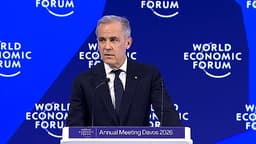
Mark Carney
Politician · Modern
45.5Total
Basic Information
Born
1894
1965
Died
1989
—
Era
Modern
Modern
Nationality
Peru
Canada
Occupation
Politician
Politician
Civilization
Western
Western
Score Comparison
Military (10%)
49.0
50.0
Political (20%)
40.8
48.0
Influence (20%)
47.9
50.2
Legacy (20%)
36.7
36.7
Leadership (15%)
58.8
48.4
Strategy (15%)
41.6
42.9
TOTAL
45.2
45.5
Jose Luis Bustamante y Rivero — Complete Timeline
1945 AD
Elected President of PeruPolitical Action◆ Major
Bustamante y Rivero won the 1945 presidential election as the candidate of the National Democratic Front, a coalition that included the reformist APRA party. His victory marked a return to civilian rule after years of military government.
ElectionCivilian Rule
Impact: nationalconstructive
1948 AD
Overthrown by Manuel OdriaPolitical Action
General Manuel Odria led a military coup that overthrew President Bustamante y Rivero. The coup was triggered by Bustamante's inability to control inflation and his conflict with the APRA party, which led to a naval mutiny and political crisis.
CoupOverthrowMilitary
Impact: nationaldestructive
Exiled to ArgentinaPolitical Action
After being overthrown, Bustamante y Rivero was exiled to Argentina. He lived there for several years, writing and reflecting on his presidency and the state of Peruvian democracy.
ExilePersonal
Impact: nationaltragic
1967 AD
Served as President of the International Court of JusticePolitical Action◆ Major
Bustamante y Rivero was elected President of the International Court of Justice (ICJ) in The Hague. He served in this role until 1970, presiding over several important international disputes and contributing to the development of international law.
International LawICJDiplomacy
Impact: globalconstructive
Mark Carney — Complete Timeline
2008 AD
Appointed Governor of the Bank of CanadaPolitical Action◆ Major
Carney was appointed as the 8th Governor of the Bank of Canada, taking office during the global financial crisis. He led the bank's response, including cutting interest rates to historic lows and implementing unconventional monetary policies to stabilize the Canadian economy.
Canadian PoliticsMonetary PolicyFinancial Crisis
Impact: nationalconstructive
2013 AD
Appointed Governor of the Bank of EnglandPolitical Action◆ Major
Carney became the 120th Governor of the Bank of England, the first non-British citizen to hold the post. He oversaw the bank's response to the aftermath of the financial crisis and the Brexit referendum, including forward guidance and quantitative easing.
UK PoliticsMonetary PolicyFinancial Crisis
Impact: globalconstructive
2016 AD
Led the Bank of England's Response to BrexitPolitical Action◆ Major
Following the Brexit referendum, Carney led the Bank of England's immediate response, cutting interest rates and launching a new round of quantitative easing to support the UK economy. His actions were credited with preventing a financial panic.
UK PoliticsMonetary PolicyBrexit
Impact: globalconstructive
2019 AD
Appointed UN Special Envoy for Climate Action and FinancePolitical Action◆ Major
Carney was appointed as the UN Special Envoy for Climate Action and Finance, focusing on mobilizing private finance for the transition to a net-zero economy. He advocated for climate-related financial disclosures and green investment.
Climate ChangeFinanceUN
Impact: globalconstructive
2025 AD
Elected Leader of the Liberal Party of CanadaPolitical Action◆ Major
Carney was elected as the leader of the Liberal Party of Canada, succeeding Justin Trudeau. His election marked a shift from central banking to political leadership, with a focus on economic and climate policy.
Canadian PoliticsLeadershipElection
Impact: nationalconstructive
This comparison has not been analyzed yet.
One-time AI generation (~1 minute). Scores and timeline are already available below.
Rankings
🥇
Mark CarneyLeader
Mil: 50.0Pol: 48.0Inf: 50.2
45.5
🥈
Jose Luis Bustamante y Rivero
Mil: 49.0Pol: 40.8Inf: 47.9
45.2
+0.3 behind
How This Comparison Works
Algorithm
Each figure is scored on 6 dimensions (0—100 scale) based on structured historical data: Military (10%), Political (20%), Influence (20%), Legacy (20%), Leadership (15%), Strategy (15%). The weighted total produces the final ranking.
Data Sources
Scores are computed from structured sub-indicators in the database. Scale factors adjust for era (Ancient ×0.85, Modern ×1.0) and civilization size (Eastern ×1.05, Other ×0.80) to account for differences in population and military scale.
Maximum 3 Figures
Comparisons are limited to 2—3 figures to ensure readability and statistical meaningfulness.
Error Margins
±5 points per dimension — Sub-scores are derived from historical records with inherent uncertainty. Two figures within 5 points on a dimension should be considered roughly equivalent in that area.
Total Score Accuracy
±3 points overall — The weighted combination of 6 dimensions produces a total score with approximately ±3 points of uncertainty. Differences of less than 3 points are not statistically significant— the figures are effectively tied.
Known Limitations
- Historical records are incomplete and uneven across civilizations
- Figures from oral-tradition societies may be underrepresented
- Occupation labels can misclassify multi-role figures
- Scores measure capability and impact, not moral character
- Quantitative scoring is a comparison tool, not absolute truth
Capability Radar
Military (10%) — Battles & Warfare
Battles
31
29
Win Rate
33
31
Expansion
34
35
Political (20%) — Governance & Reform
Reform
40
20
Diplomacy
30
30
Economy
25
70
Influence (20%) — Cultural & Global Reach
Cultural
15
10
Global
10
30
Legacy (20%) — Historical Impact
Historical
20
10
Longevity
10
10
Leadership (15%) — Power & Stability
Tenure
35
10
Stability
20
30
Strategy (15%) — Tactics & Innovation
Strategy
36
40
Tactics
43
43
Reform
41
41
Similar Comparisons
Comments & Discussion
No comments yet. Be the first to share your thoughts!