Loading...
Jose Felix Estigarribia vs Zhu De
Zhu De leads by 3.7 pts · 2 figures compared
…

Jose Felix Estigarribia
General · Modern
61.0Total
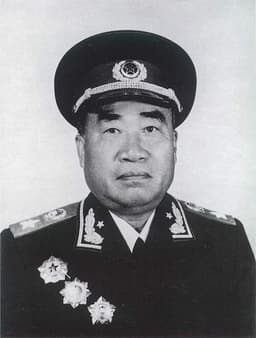
Zhu De
General · Modern
64.7Total
Basic Information
Born
1888
1886
Died
1940
1976
Era
Modern
Modern
Nationality
Paraguay
China
Occupation
General
General
Civilization
Western
Eastern
Score Comparison
Military (10%)
74.7
78.0
Political (20%)
68.0
70.0
Influence (20%)
56.4
40.0
Legacy (20%)
50.0
70.0
Leadership (15%)
68.0
78.0
Strategy (15%)
65.4
72.0
TOTAL
61.0
64.7
Jose Felix Estigarribia — Complete Timeline
1932 AD
Commander of Paraguayan forces in Chaco WarWar◆ Major
Estigarribia was appointed commander-in-chief of the Paraguayan army in the Chaco War against Bolivia. He developed a strategy of defensive warfare and counterattacks that led to decisive victories at Boquer
Chaco WarMilitary CommandVictory
Impact: regionalconstructive
Victory at the Battle of BoquerónWar◆ Major
Estigarribia's forces besieged and captured the Bolivian fort of Boquer
Chaco WarBattleVictory
Impact: regionalconstructive
1939 AD
Became President of ParaguayPolitical Action◆ Major
Estigarribia was elected President of Paraguay in 1939 as the candidate of the Liberal Party. He took office on August 15, 1939, promising national unity and reconstruction after the Chaco War.
ElectionPresidencyPost-War
Impact: nationalconstructive
1940 AD
Dissolved Congress and assumed dictatorial powersPolitical Action◆ Major
In February 1940, Estigarribia dissolved Congress and suspended the constitution, assuming dictatorial powers. He justified this as necessary to implement reforms and stabilize the country, but it ended Paraguay's democratic experiment.
CoupDictatorshipConstitutional Crisis
Impact: nationaldestructive
Died in a plane crashOther◆ Major
On September 7, 1940, Estigarribia died when the military aircraft he was piloting crashed near Altos, Paraguay. His death cut short his dictatorship and led to a power struggle that brought Higinio Mor
DeathPlane CrashEnd of Regime
Impact: nationaltragic
Zhu De — Complete Timeline
1927 AD
Led the Nanchang UprisingWar
Zhu De was a key commander in the Nanchang Uprising, the first major armed revolt by the Communist Party against the Nationalists. Though defeated, it marked the founding of the Red Army.
Chinese Civil WarRed Army Founding
Impact: national
1928 AD
Jinggangshan Reunion with Mao ZedongWar◆ Major
Zhu De led his surviving forces to Jinggangshan to join Mao Zedong's base. This merger created the Fourth Red Army, with Zhu as commander and Mao as political commissar, forming a long-term partnership.
Red ArmyBase Area
Impact: nationalconstructive
1946 AD
Appointed Commander-in-Chief of the People's Liberation ArmyPolitical Action◆ Major
Zhu De was named Commander-in-Chief of the PLA during the Chinese Civil War. He directed military strategy that led to the defeat of the Nationalists and the establishment of the People's Republic.
Chinese Civil WarMilitary Leadership
Impact: nationalconstructive
1967 AD
Purged During the Cultural RevolutionPolitical Action◆ Major
Zhu De was criticized and marginalized by Red Guards during the Cultural Revolution. He was accused of being a 'capitalist roader' and stripped of effective power, though he retained his titles.
Cultural RevolutionPurge
Impact: nationaldestructive
Expert Analysis
Origins
Jose Felix Estigarribia was born on February 21, 1888, in Caraguatay, Paraguay, into a modest family. He studied at the National College of the Capital and later entered the military academy, graduating as a second lieutenant in 1910. His early career involved staff roles and training in Chile and France, shaping his strategic thinking.
Zhu De was born on December 1, 1886, in Yilong, Sichuan, China, into a poor peasant family. He received a classical education and later attended the Yunnan Military Academy, graduating in 1911. He joined the Nationalist cause but was drawn to communism after the May Fourth Movement.
Rise to Power
Estigarribia's rise came during the Chaco War (1932-1935) against Bolivia. Appointed commander-in-chief in 1932, he orchestrated the capture of Fort Boquerón in September 1932, a major victory. His defensive tactics and counteroffensives led to Paraguayan success, making him a national hero. After the war, he entered politics and was elected president in 1939.
Zhu De's rise began with the Nanchang Uprising on August 1, 1927, a communist revolt against the Nationalists. Although defeated, Zhu led remnants to Jinggangshan in April 1928, merging with Mao Zedong to form the Fourth Red Army. As commander, he developed guerrilla warfare tactics, surviving the Long March (1934-1935) and becoming commander-in-chief of the People's Liberation Army in 1946.
Leadership & Governance
Estigarribia's leadership was pragmatic and authoritarian. As president, he pursued land reform and infrastructure projects but dissolved Congress in February 1940, citing need for strong rule. His governance scored 68.0 in political leadership, reflecting his ability to centralize power but lack of democratic legitimacy.
Zhu De's leadership was collaborative and ideological. He emphasized party control over the military, implementing the "Three Rules of Discipline" and "Eight Points of Attention" to win peasant support. His political score of 70.0 reflects his role in building the Red Army as a revolutionary force, though he deferred to Mao on policy.
Triumph & Tragedy
Estigarribia's greatest triumph was winning the Chaco War, securing 75% of the disputed territory. His military score of 74.7 reflects his strategic acumen. His tragedy was his short-lived dictatorship: he died in a plane crash on September 7, 1940, after only a year in power, leaving Paraguay without stable institutions.
Zhu De's triumph was leading the PLA to victory in the Chinese Civil War (1945-1949), founding the People's Republic. His military score of 78.0 reflects his role in shaping the PLA. His tragedy came during the Cultural Revolution (1966-1976), when he was purged and marginalized by Red Guards, dying in 1976 with his reputation partially restored.
Character & Destiny
Estigarribia was methodical and disciplined, traits honed in the Chaco War. His decision to seize dictatorial powers was a gamble that ended abruptly with his death. Historians note that his authoritarian turn undermined his democratic legacy.
Zhu De was humble and resilient, known as "Old Zhu," a unifying figure in the Communist Party. His loyalty to Mao ensured his rise but also his vulnerability during purges. His character allowed him to survive political storms, though he never achieved top political power.
Legacy
Estigarribia's legacy is mixed: he is celebrated as a military hero in Paraguay, with streets and a town named after him, but his dictatorship is criticized. His military innovations influenced later Paraguayan strategy, but his political legacy faded. His influence score of 56.4 reflects limited global impact.
Zhu De's legacy is profound: he is revered as a founding father of the People's Liberation Army and a key architect of communist victory. His emphasis on guerrilla warfare and peasant-based armies influenced revolutionary movements worldwide. His legacy score of 70.0 reflects enduring impact on Chinese military doctrine and state-building.
Conclusion
While Estigarribia excelled in the Chaco War, his political career was abortive. Zhu De, with a total score of 64.7 to Estigarribia's 61.0, had greater impact due to his role in founding a major world power and shaping modern Chinese military. Zhu De's legacy transcends national borders, whereas Estigarribia's influence remains confined to Paraguay. The 3.7-point gap understates Zhu's broader historical significance.
Rankings
🥇
Zhu DeLeader
Mil: 78.0Pol: 70.0Inf: 40.0
64.7
🥈
Jose Felix Estigarribia
Mil: 74.7Pol: 68.0Inf: 56.4
61.0
+3.7 behind
How This Comparison Works
Algorithm
Each figure is scored on 6 dimensions (0—100 scale) based on structured historical data: Military (10%), Political (20%), Influence (20%), Legacy (20%), Leadership (15%), Strategy (15%). The weighted total produces the final ranking.
Data Sources
Scores are computed from structured sub-indicators in the database. Scale factors adjust for era (Ancient ×0.85, Modern ×1.0) and civilization size (Eastern ×1.05, Other ×0.80) to account for differences in population and military scale.
Maximum 3 Figures
Comparisons are limited to 2—3 figures to ensure readability and statistical meaningfulness.
Error Margins
±5 points per dimension — Sub-scores are derived from historical records with inherent uncertainty. Two figures within 5 points on a dimension should be considered roughly equivalent in that area.
Total Score Accuracy
±3 points overall — The weighted combination of 6 dimensions produces a total score with approximately ±3 points of uncertainty. Differences of less than 3 points are not statistically significant— the figures are effectively tied.
Known Limitations
- Historical records are incomplete and uneven across civilizations
- Figures from oral-tradition societies may be underrepresented
- Occupation labels can misclassify multi-role figures
- Scores measure capability and impact, not moral character
- Quantitative scoring is a comparison tool, not absolute truth
Capability Radar
Military (10%) — Battles & Warfare
Battles
75
85
Win Rate
80
80
Expansion
55
85
Political (20%) — Governance & Reform
Reform
40
75
Diplomacy
50
70
Economy
35
60
Influence (20%) — Cultural & Global Reach
Cultural
40
70
Global
30
75
Legacy (20%) — Historical Impact
Historical
55
85
Longevity
35
75
Leadership (15%) — Power & Stability
Tenure
45
80
Stability
30
75
Strategy (15%) — Tactics & Innovation
Strategy
72
85
Tactics
78
75
Reform
60
90
Similar Comparisons
Comments & Discussion
No comments yet. Be the first to share your thoughts!