Loading...
This comparison has not been analyzed yet.
One-time AI generation (~1 minute). Scores and timeline are already available below.
Jose de San Martin vs Paul Hausser
Paul Hausser leads by 3.1 pts · 2 figures compared
…

Jose de San Martin
General · Modern
59.1Total
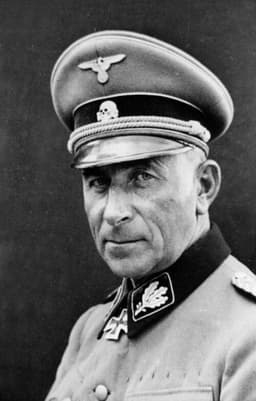
Paul Hausser
General · Modern
62.2Total
Basic Information
Born
1778
1880
Died
1850
1972
Era
Modern
Modern
Nationality
Argentina
Germany
Occupation
General
General
Civilization
Western
Western
Score Comparison
Military (10%)
85.0
82.0
Political (20%)
45.0
46.6
Influence (20%)
65.0
72.0
Legacy (20%)
40.0
52.0
Leadership (15%)
72.0
61.1
Strategy (15%)
68.0
68.0
TOTAL
59.1
62.2
Jose de San Martin — Complete Timeline
1813 AD
Battle of San LorenzoWar◆ Major
San Martín led the Granaderos a Caballo regiment to victory against Spanish forces at San Lorenzo, Argentina. This was his first major action in the Argentine War of Independence, securing the Paraná River region and establishing his reputation as a military commander.
Argentine War of IndependenceBattleCavalry
Impact: regionalconstructive
1814 AD
Governorship of CuyoPolitical Action◆ Major
San Martín was appointed governor of Cuyo Province in western Argentina. He organized the Army of the Andes, secured local support, and prepared for the liberation of Chile, using Mendoza as his base for the trans-Andean campaign.
AdministrationMilitary PreparationIndependence
Impact: regionalconstructive
1817 AD
Crossing of the AndesWar
San Martín led the Army of the Andes across the Andes Mountains from Argentina into Chile, a 21-day march over high passes. The surprise crossing enabled the liberation of Chile from Spanish rule, culminating in the Battle of Chacabuco.
Military CampaignAndesChilean Independence
Impact: regionalconstructive
Battle of ChacabucoWar◆ Major
San Martín's forces defeated the Spanish royalist army at Chacabuco, Chile. The victory allowed the patriots to enter Santiago and declare Chilean independence, though Spanish resistance continued in the south.
Chilean IndependenceBattleDecisive Victory
Impact: regionalconstructive
1818 AD
Battle of MaipúWar
San Martín decisively defeated the Spanish army at Maipú, Chile, securing Chilean independence. The battle ended major Spanish military operations in Chile and allowed San Martín to focus on the liberation of Peru.
Chilean IndependenceBattleDecisive Victory
Impact: regionalconstructive
1820 AD
Expedition to PeruWar◆ Major
San Martín led a naval and land expedition from Chile to Peru, landing at Paracas. He employed a strategy of blockading Lima and negotiating with royalists, avoiding a major battle, which led to the Spanish evacuation of Lima in 1821.
Peruvian IndependenceMilitary CampaignNaval
Impact: regionalconstructive
1821 AD
Proclamation of Peruvian IndependencePolitical Action◆ Major
San Martín proclaimed the independence of Peru from Spanish rule in Lima. He assumed the title of Protector of Peru, but his government faced internal divisions and economic challenges, leading to his resignation in 1822.
IndependencePeruProclamation
Impact: regionalconstructive
1822 AD
Meeting with Simón Bolívar at GuayaquilPolitical Action
San Martín met Simón Bolívar in Guayaquil to discuss the future of South American independence. The meeting resulted in San Martín's decision to resign and leave Bolívar in charge of completing the liberation of Peru, as they disagreed on governance and strategy.
LeadershipIndependenceDiplomacy
Impact: regional
Paul Hausser — Complete Timeline
1932 AD
Retirement from the ReichswehrPolitical Action◆ Major
Hausser retired from the Reichswehr as a lieutenant general. He then joined the SS and became a key figure in transforming the SS-Verf
Nazi GermanySSMilitary Career
Impact: national
1943 AD
Command of the II SS Panzer Corps at KurskWar◆ Major
Hausser commanded the II SS Panzer Corps during the Battle of Kursk. His corps fought in the southern pincer of the offensive, suffering heavy losses in the largest tank battle in history.
World War IIEastern FrontKursk
Impact: regional
1945 AD
Surrender to American ForcesPolitical Action
Hausser surrendered to American troops in May 1945. He was held as a prisoner of war and later testified at the Nuremberg trials, but was never convicted of war crimes.
World War IISurrenderPost-War
This comparison has not been analyzed yet.
One-time AI generation (~1 minute). Scores and timeline are already available below.
Rankings
🥇
Paul HausserLeader
Mil: 82.0Pol: 46.6Inf: 72.0
62.2
🥈
Jose de San Martin
Mil: 85.0Pol: 45.0Inf: 65.0
59.1
+3.1 behind
How This Comparison Works
Algorithm
Each figure is scored on 6 dimensions (0—100 scale) based on structured historical data: Military (10%), Political (20%), Influence (20%), Legacy (20%), Leadership (15%), Strategy (15%). The weighted total produces the final ranking.
Data Sources
Scores are computed from structured sub-indicators in the database. Scale factors adjust for era (Ancient ×0.85, Modern ×1.0) and civilization size (Eastern ×1.05, Other ×0.80) to account for differences in population and military scale.
Maximum 3 Figures
Comparisons are limited to 2—3 figures to ensure readability and statistical meaningfulness.
Error Margins
±5 points per dimension — Sub-scores are derived from historical records with inherent uncertainty. Two figures within 5 points on a dimension should be considered roughly equivalent in that area.
Total Score Accuracy
±3 points overall — The weighted combination of 6 dimensions produces a total score with approximately ±3 points of uncertainty. Differences of less than 3 points are not statistically significant— the figures are effectively tied.
Known Limitations
- Historical records are incomplete and uneven across civilizations
- Figures from oral-tradition societies may be underrepresented
- Occupation labels can misclassify multi-role figures
- Scores measure capability and impact, not moral character
- Quantitative scoring is a comparison tool, not absolute truth
Capability Radar
Military (10%) — Battles & Warfare
Battles
75
75
Win Rate
85
70
Expansion
85
70
Political (20%) — Governance & Reform
Reform
60
50
Diplomacy
80
30
Economy
40
20
Influence (20%) — Cultural & Global Reach
Cultural
70
50
Global
70
55
Legacy (20%) — Historical Impact
Historical
80
60
Longevity
75
40
Leadership (15%) — Power & Stability
Tenure
55
40
Stability
45
25
Strategy (15%) — Tactics & Innovation
Strategy
90
75
Tactics
80
80
Reform
70
85
Similar Comparisons
Comments & Discussion
No comments yet. Be the first to share your thoughts!