Loading...
Jose de San Martin vs Ludvik Svoboda
Jose de San Martin leads by 6.4 pts · 2 figures compared
…

Jose de San Martin
General · Modern
59.1Total
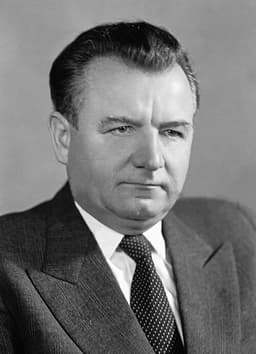
Ludvik Svoboda
General · Modern
52.7Total
Basic Information
Born
1778
1895
Died
1850
1979
Era
Modern
Modern
Nationality
Argentina
Czechoslovakia
Occupation
General
General
Civilization
Western
Western
Score Comparison
Military (10%)
85.0
40.0
Political (20%)
45.0
46.6
Influence (20%)
65.0
57.2
Legacy (20%)
40.0
46.7
Leadership (15%)
72.0
65.0
Strategy (15%)
68.0
60.0
TOTAL
59.1
52.7
Jose de San Martin — Complete Timeline
1813 AD
Battle of San LorenzoWar◆ Major
San Martín led the Granaderos a Caballo regiment to victory against Spanish forces at San Lorenzo, Argentina. This was his first major action in the Argentine War of Independence, securing the Paraná River region and establishing his reputation as a military commander.
Argentine War of IndependenceBattleCavalry
Impact: regionalconstructive
1814 AD
Governorship of CuyoPolitical Action◆ Major
San Martín was appointed governor of Cuyo Province in western Argentina. He organized the Army of the Andes, secured local support, and prepared for the liberation of Chile, using Mendoza as his base for the trans-Andean campaign.
AdministrationMilitary PreparationIndependence
Impact: regionalconstructive
1817 AD
Crossing of the AndesWar
San Martín led the Army of the Andes across the Andes Mountains from Argentina into Chile, a 21-day march over high passes. The surprise crossing enabled the liberation of Chile from Spanish rule, culminating in the Battle of Chacabuco.
Military CampaignAndesChilean Independence
Impact: regionalconstructive
Battle of ChacabucoWar◆ Major
San Martín's forces defeated the Spanish royalist army at Chacabuco, Chile. The victory allowed the patriots to enter Santiago and declare Chilean independence, though Spanish resistance continued in the south.
Chilean IndependenceBattleDecisive Victory
Impact: regionalconstructive
1818 AD
Battle of MaipúWar
San Martín decisively defeated the Spanish army at Maipú, Chile, securing Chilean independence. The battle ended major Spanish military operations in Chile and allowed San Martín to focus on the liberation of Peru.
Chilean IndependenceBattleDecisive Victory
Impact: regionalconstructive
1820 AD
Expedition to PeruWar◆ Major
San Martín led a naval and land expedition from Chile to Peru, landing at Paracas. He employed a strategy of blockading Lima and negotiating with royalists, avoiding a major battle, which led to the Spanish evacuation of Lima in 1821.
Peruvian IndependenceMilitary CampaignNaval
Impact: regionalconstructive
1821 AD
Proclamation of Peruvian IndependencePolitical Action◆ Major
San Martín proclaimed the independence of Peru from Spanish rule in Lima. He assumed the title of Protector of Peru, but his government faced internal divisions and economic challenges, leading to his resignation in 1822.
IndependencePeruProclamation
Impact: regionalconstructive
1822 AD
Meeting with Simón Bolívar at GuayaquilPolitical Action
San Martín met Simón Bolívar in Guayaquil to discuss the future of South American independence. The meeting resulted in San Martín's decision to resign and leave Bolívar in charge of completing the liberation of Peru, as they disagreed on governance and strategy.
LeadershipIndependenceDiplomacy
Impact: regional
Ludvik Svoboda — Complete Timeline
1943 AD
Led Czechoslovak Forces at the Battle of SokolovoWar◆ Major
Ludvik Svoboda commanded the 1st Czechoslovak Independent Field Battalion at the Battle of Sokolovo in Ukraine. The unit fought alongside Soviet forces against the German army. The battle was a significant moment for Czechoslovak resistance, though it resulted in heavy casualties.
Battle of SokolovoWorld War IICzechoslovak Resistance
Impact: regional
1945 AD
Appointed Minister of National DefensePolitical Action◆ Major
Svoboda was appointed Minister of National Defense in the post-war Czechoslovak government. He oversaw the rebuilding of the Czechoslovak army and the integration of Soviet military doctrine. He served until 1950, when he was purged by the Communist regime.
Minister of DefensePost-War ReconstructionCommunist Regime
Impact: nationalconstructive
1951 AD
Imprisoned by the Communist RegimePolitical Action◆ Major
Svoboda was arrested and imprisoned by the Stalinist regime in Czechoslovakia. He was accused of treason and espionage, but was released in 1953 after Stalin's death. His imprisonment was part of a broader purge of former wartime heroes.
ImprisonmentStalinist PurgePolitical Prisoner
Impact: nationaltragic
1968 AD
Elected President of CzechoslovakiaPolitical Action◆ Major
Svoboda was elected President of Czechoslovakia during the Prague Spring. He replaced Antonin Novotny and initially supported the liberal reforms of Alexander Dubcek. His election was seen as a compromise between reformists and conservatives.
Presidential ElectionPrague SpringDubcek
Impact: nationalconstructive
Negotiated After the Warsaw Pact InvasionPolitical Action◆ Major
After the Warsaw Pact invasion of Czechoslovakia, Svoboda traveled to Moscow and negotiated with Soviet leaders. He secured the release of Dubcek and other reformist leaders, but was forced to accept the normalization of the regime under Soviet control.
Warsaw Pact InvasionMoscow NegotiationsNormalization
Impact: regionaltragic
1975 AD
Resigned as PresidentPolitical Action◆ Major
Svoboda resigned as President of Czechoslovakia due to ill health. He was succeeded by Gustav Husak. His resignation marked the end of his political career, and he died four years later.
ResignationEnd of PresidencyHusak
Impact: nationaltragic
Expert Analysis
Origins
José de San Martín was born on February 25, 1778, in Yapeyú, Argentina, then part of the Spanish Viceroyalty of the Río de la Plata. His father was a Spanish military officer, and his mother came from a wealthy Creole family. At age 7, he moved to Spain for education, attending the Royal Seminary of Nobles and later the Military Academy in Málaga. He served in the Spanish army for 22 years, fighting in North Africa and against the French during the Peninsular War, rising to the rank of lieutenant colonel. His experiences in Europe exposed him to Enlightenment ideas and the independence movements sweeping the continent.
Ludvík Svoboda was born on November 25, 1895, in Hroznatín, Moravia, then part of Austria-Hungary. His father was a farmer, and he grew up in a modest rural environment. After completing primary school, he attended a trade school and worked as a clerk. In 1915, he was conscripted into the Austro-Hungarian army and fought on the Eastern Front during World War I. In 1916, he defected to the Russian side and joined the Czechoslovak Legions, fighting for an independent Czechoslovakia. After the war, he remained in the military, rising through the ranks of the Czechoslovak army.
Rise to Power
San Martín's rise began in 1812 when he returned to Buenos Aires and offered his services to the revolutionary government. He was tasked with training a new army and created the Granaderos a Caballo regiment. His first major action was the Battle of San Lorenzo on February 3, 1813, where he defeated a Spanish landing force. In 1814, he was appointed governor of Cuyo province, where he prepared the Army of the Andes for the liberation of Chile. His masterstroke was the Crossing of the Andes in January 1817, a 21-day march over 4,000-meter passes, which allowed him to surprise the Spanish. He defeated the royalists at the Battle of Chacabuco on February 12, 1817, and decisively at the Battle of Maipú on April 5, 1818, securing Chilean independence. He then turned to Peru, launching a seaborne invasion in 1820 and entering Lima in July 1821, proclaiming Peru's independence.
Svoboda's rise was shaped by World War II. After the German occupation of Czechoslovakia in 1939, he fled to Poland and then the Soviet Union, where he organized Czechoslovak military units. He commanded the 1st Czechoslovak Independent Field Battalion at the Battle of Sokolovo in March 1943, a costly but symbolic engagement. He later led the 1st Czechoslovak Army Corps in the Battle of the Dukla Pass in 1944, which suffered heavy casualties but contributed to the liberation of Czechoslovakia. After the war, he was appointed Minister of National Defense in 1945, overseeing the rebuilding of the army. However, he fell out of favor with the communist regime, was arrested in 1951, and imprisoned until 1953. After his release, he worked in relative obscurity until the Prague Spring in 1968, when he was elected President on March 30, 1968, as a compromise candidate.
Leadership & Governance
San Martín's leadership was characterized by meticulous planning and strategic patience. He built the Army of the Andes from scratch, training recruits, securing funding, and forging weapons. His crossing of the Andes was a logistical triumph, moving 5,000 men, 10,000 mules, and 1,200 horses over treacherous terrain. He believed in decisive battles but also used diplomacy, offering amnesty to Spanish troops and protecting royalist property. As Protector of Peru, he introduced reforms: abolished forced labor, freed indigenous people from tribute, and established a national library. However, he was less adept at political governance, struggling to form a stable government and facing opposition from local elites. He scored 72.0 in leadership and 68.0 in strategy.
Svoboda's leadership was more about symbolic unity and political navigation. As a military commander, he was known for his personal bravery and concern for his troops, but his strategic decisions were often dictated by Soviet interests. As president during the Prague Spring, he initially supported Alexander Dubček's liberalization reforms, but after the Warsaw Pact invasion on August 21, 1968, he was forced to negotiate. He traveled to Moscow and, under pressure, accepted the normalization that reversed reforms, securing the release of Dubček and other leaders. His leadership score of 65.0 reflects his role as a figurehead rather than an independent decision-maker.
Triumph & Tragedy
San Martín's greatest triumph was the liberation of southern South America. He defeated Spanish forces in Argentina, Chile, and Peru, effectively ending Spanish rule in the region. His Crossing of the Andes is considered one of the great military feats of the 19th century. However, his greatest failure was the meeting with Simón Bolívar at Guayaquil on July 26, 1822. After a private discussion, San Martín decided to resign his command and leave Peru, allowing Bolívar to complete the liberation. The reasons remain debated—some say he sought to avoid conflict, others that he was outmaneuvered. He then went into exile in Europe, dying in poverty in France in 1850.
Svoboda's triumph was his role in World War II and the post-war rebuilding. He helped create a Czechoslovak army in exile and contributed to the liberation of his country. His election as president during the Prague Spring was a moment of hope. However, his tragedy was his inability to resist Soviet domination. After the invasion, he presided over the end of the Prague Spring and the restoration of hardline communist rule. He signed the Moscow Protocol, which legitimized the invasion, and remained president until 1975, overseeing a period of repression. His legacy is tarnished by his compliance with the Soviet Union.
Character & Destiny
San Martín was disciplined, stoic, and principled. He refused power, declining offers to become dictator or king. His decision to step down at Guayaquil showed his commitment to the cause over personal ambition. Historian John Lynch notes that 'San Martín's character was marked by modesty and a sense of duty.' His fate was to be overshadowed by Bolívar, but his military achievements remain foundational for Argentina, Chile, and Peru. He scored 85.0 in military, reflecting his tactical brilliance, and 40.0 in legacy, as his name is less globally recognized than Bolívar's.
Svoboda was pragmatic and resilient, surviving imprisonment and political upheaval. He was not a visionary leader but a soldier who followed orders. His decision to cooperate with the Soviets after the invasion was driven by a desire to prevent bloodshed and preserve some national autonomy. However, this made him a controversial figure—seen as a patriot by some and a collaborator by others. His destiny was to be a symbol of Czechoslovakia's tragic fate under communism. He scored 46.6 in political, reflecting his limited influence, and 46.7 in legacy.
Legacy
San Martín's legacy is profound in South America. He is revered as the 'Father of the Fatherland' in Argentina, and his birthday is a national holiday. His military campaigns established the modern borders of Argentina, Chile, and Peru. The Order of the Liberator General San Martín is Argentina's highest honor. However, his influence outside the region is limited, scoring 65.0.
Svoboda's legacy is more ambiguous. He is remembered as a WWII hero and a symbol of Czechoslovak resistance, but also as a president who failed to stand up to Soviet pressure. His name is less known internationally. The Ludvík Svoboda Order is a Czech military decoration. His political score of 46.6 reflects his constrained role.
Conclusion
José de San Martín had a greater impact than Ludvík Svoboda. San Martín's military score of 85.0 dwarfs Svoboda's 40.0, and his strategic achievements—the liberation of three countries—are more significant than Svoboda's role in WWII and the Prague Spring. San Martín's total score of 59.1 is higher than Svoboda's 52.7, but the gap in military and strategic scores is decisive. While Svoboda faced more constrained circumstances, San Martín's independent decision-making and lasting territorial legacy give him the edge. The data supports San Martín as the more consequential figure.
Rankings
🥇
Jose de San MartinLeader
Mil: 85.0Pol: 45.0Inf: 65.0
59.1
🥈
Ludvik Svoboda
Mil: 40.0Pol: 46.6Inf: 57.2
52.7
+6.4 behind
How This Comparison Works
Algorithm
Each figure is scored on 6 dimensions (0—100 scale) based on structured historical data: Military (10%), Political (20%), Influence (20%), Legacy (20%), Leadership (15%), Strategy (15%). The weighted total produces the final ranking.
Data Sources
Scores are computed from structured sub-indicators in the database. Scale factors adjust for era (Ancient ×0.85, Modern ×1.0) and civilization size (Eastern ×1.05, Other ×0.80) to account for differences in population and military scale.
Maximum 3 Figures
Comparisons are limited to 2—3 figures to ensure readability and statistical meaningfulness.
Error Margins
±5 points per dimension — Sub-scores are derived from historical records with inherent uncertainty. Two figures within 5 points on a dimension should be considered roughly equivalent in that area.
Total Score Accuracy
±3 points overall — The weighted combination of 6 dimensions produces a total score with approximately ±3 points of uncertainty. Differences of less than 3 points are not statistically significant— the figures are effectively tied.
Known Limitations
- Historical records are incomplete and uneven across civilizations
- Figures from oral-tradition societies may be underrepresented
- Occupation labels can misclassify multi-role figures
- Scores measure capability and impact, not moral character
- Quantitative scoring is a comparison tool, not absolute truth
Capability Radar
Military (10%) — Battles & Warfare
Battles
75
55
Win Rate
85
60
Expansion
85
10
Political (20%) — Governance & Reform
Reform
60
30
Diplomacy
80
50
Economy
40
20
Influence (20%) — Cultural & Global Reach
Cultural
70
30
Global
70
25
Legacy (20%) — Historical Impact
Historical
80
40
Longevity
75
30
Leadership (15%) — Power & Stability
Tenure
55
45
Stability
45
35
Strategy (15%) — Tactics & Innovation
Strategy
90
55
Tactics
80
50
Reform
70
30
Similar Comparisons
Comments & Discussion
No comments yet. Be the first to share your thoughts!