Loading...
Jose Batlle y Ordonez vs Nguyen Van Linh
Jose Batlle y Ordonez leads by 0.6 pts · 2 figures compared
…

Jose Batlle y Ordonez
Politician · Modern
61.7Total
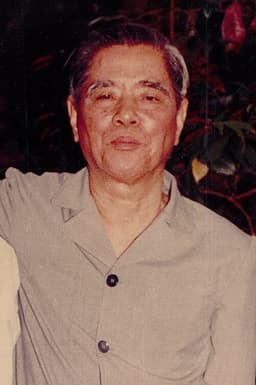
Nguyen Van Linh
Politician · Modern
61.1Total
Basic Information
Born
1856
1915
Died
1929
1998
Era
Modern
Modern
Nationality
Uruguay
Vietnam
Occupation
Politician
Politician
Civilization
Western
Eastern
Score Comparison
Military (10%)
50.0
47.6
Political (20%)
88.0
82.0
Influence (20%)
55.0
59.0
Legacy (20%)
55.0
56.0
Leadership (15%)
78.0
72.0
Strategy (15%)
43.3
45.3
TOTAL
61.7
61.1
Jose Batlle y Ordonez — Complete Timeline
1903 AD
Batlle y Ordóñez's first presidency and welfare reformsReform◆ Major
José Batlle y Ordóñez began his first term as President of Uruguay, initiating a series of progressive reforms. He established state-owned enterprises, introduced labor protections, and expanded public education, laying the foundation for a welfare state.
Welfare StateReformUruguay
Impact: nationalprogressive
1911 AD
Batlle y Ordóñez's second presidency and social legislationReform◆ Major
During his second term, Batlle y Ord
Social ReformLabor RightsWomen's Suffrage
Impact: regionalprogressive
1912 AD
Batlle y Ordóñez establishes state monopoliesReform◆ Major
Batlle y Ord
NationalizationState ControlEconomic Policy
Impact: nationalconstructive
1919 AD
Batlle y Ordóñez's role in creating the Uruguayan welfare stateReform
After his presidency, Batlle y Ord
Welfare StateConstitutionLegacy
Impact: regionalprogressive
Nguyen Van Linh — Complete Timeline
1986 AD
Launched Doi Moi ReformsReform
Linh launched the Doi Moi reforms at the 6th National Party Congress, introducing market mechanisms, private enterprise, and foreign investment while maintaining communist party control. The reforms spurred economic growth, reduced poverty, and integrated Vietnam into the global economy.
Doi MoiEconomic ReformVietnam
Impact: globalconstructive
Appointed General Secretary of the Communist Party of VietnamPolitical Action
Nguyen Van Linh was appointed General Secretary of the Communist Party of Vietnam in December 1986, succeeding Truong Chinh. He became the leading reformer, initiating the Doi Moi (Renovation) policy to transition Vietnam from a centrally planned economy to a socialist-oriented market economy.
General SecretaryDoi MoiReform
Impact: globalconstructive
1989 AD
Oversaw Withdrawal from CambodiaPolitical Action◆ Major
Under Linh's leadership, Vietnam completed the withdrawal of its troops from Cambodia in September 1989, ending a decade-long occupation. The move improved Vietnam's international relations and facilitated normalization with China and ASEAN countries.
CambodiaWithdrawalForeign Policy
Impact: regionalconstructive
1991 AD
Normalized Relations with ChinaPolitical Action◆ Major
Linh's government normalized diplomatic relations with China in November 1991, ending a decade of hostility following the Sino-Vietnamese War. The normalization opened trade and reduced tensions, though border disputes remained unresolved.
ChinaNormalizationDiplomacy
Impact: regionalconstructive
Expert Analysis
Origins
Jose Batlle y Ordonez was born on May 21, 1856, in Montevideo, Uruguay, into a politically active family. His father, Lorenzo Batlle, served as President of Uruguay from 1868 to 1872. Batlle studied law but left university to pursue journalism, founding the newspaper *El Dia* in 1886, which became a platform for his progressive ideas. His early career included serving as a deputy and senator, where he advocated for social and political reforms.
Nguyen Van Linh was born on July 1, 1915, in Hanoi, Vietnam, into a patriotic family. He joined the Communist Party of Vietnam (CPV) at age 15 and was imprisoned by the French colonial authorities from 1930 to 1936. After release, he became a key organizer in the southern region, rising through the party ranks. His early experiences in the resistance against French rule shaped his pragmatic approach to governance.
Rise to Power
Batlle's rise to power began with his election as President of Uruguay in 1903, after a period of political instability. He faced a civil war in 1904, which he suppressed militarily, consolidating his authority. His first term (1903-1907) focused on establishing state enterprises and social reforms. After a hiatus, he was re-elected for a second term (1911-1915), during which he enacted the most transformative legislation. His influence extended beyond his presidencies; he continued to shape politics until his death in 1929.
Linh's rise was gradual within the CPV. He served as a party official in South Vietnam during the Vietnam War, earning a reputation for practical decision-making. After the war, he held key posts in Ho Chi Minh City, where he experimented with market-oriented policies. In December 1986, at the 6th National Party Congress, he was appointed General Secretary, succeeding Truong Chinh. This occurred against a backdrop of economic crisis, with inflation exceeding 700% and widespread famine.
Leadership & Governance
Batlle's leadership was characterized by state intervention and social welfare. He nationalized banks, insurance, and utilities, creating state monopolies to reduce foreign influence. His reforms included the eight-hour workday (1915), women's suffrage (1917), divorce laws, and free secondary education. He also established a welfare state with pensions and accident compensation. His governance scored 78.0 in leadership, reflecting his ability to push through ambitious reforms despite opposition from conservative elites.
Linh's governance focused on economic liberalization while maintaining political control. His Doi Moi reforms, launched in 1986, dismantled collective farms, allowed private enterprise, and opened Vietnam to foreign investment. He also decentralized economic decision-making and legalized small-scale capitalism. However, he kept the CPV's monopoly on power, suppressing political dissent. His leadership score of 72.0 reflects his pragmatic but authoritarian approach.
Triumph & Tragedy
Batlle's greatest triumph was creating Latin America's first welfare state, which reduced poverty and inequality. Uruguay became known as the "Switzerland of America" for its stability and social progress. However, his policies also led to economic inefficiencies: state monopolies bred corruption, and generous benefits strained public finances. By the 1950s, Uruguay's economy stagnated, partly due to the welfare state's costs.
Linh's Doi Moi reforms transformed Vietnam from a famine-stricken, isolated country into a rapidly growing economy. By 1990, rice exports resumed, and foreign investment poured in. His normalized relations with China (1991) and withdrawal from Cambodia (1989) improved Vietnam's international standing. However, the reforms also created income inequality and environmental degradation. Politically, Linh's failure to democratize meant that the CPV remained authoritarian, limiting freedoms.
Character & Destiny
Batlle was an idealist and reformer, driven by a vision of social justice. He was stubborn and willing to use state power to implement his agenda, often bypassing traditional elites. His character shaped Uruguay's destiny as a progressive beacon, but also sowed the seeds of fiscal unsustainability. Historians note his score of 88.0 in political skill, but his military score of 50.0 reflects his reliance on force during the 1904 civil war.
Linh was a pragmatist and survivor, having endured imprisonment and war. He was cautious yet bold in economic reforms, but remained loyal to the CPV's core tenets. His destiny was to navigate Vietnam through a transition from war economy to market socialism. His influence score of 59.0 is lower than Batlle's 55.0, but his legacy is more globally recognized due to Vietnam's later economic success.
Legacy
Batlle's legacy is the Uruguayan welfare state, which continues today with universal healthcare and education. His reforms inspired later social democratic movements in Latin America. However, his economic model faced challenges, and Uruguay later adopted more market-oriented policies. His total score of 61.7 reflects a mixed legacy: transformative social reforms but questionable economic sustainability.
Linh's legacy is Doi Moi, which lifted millions out of poverty and integrated Vietnam into the global economy. Vietnam's GDP per capita grew from $100 in 1986 to over $3,000 by 2020. His reforms are credited with saving the CPV from collapse. His total score of 61.1 is slightly lower than Batlle's, but his impact on Vietnam's development is undeniable.
Conclusion
While Batlle y Ordonez scored higher in total (61.7 vs 61.1), Nguyen Van Linh had a greater impact on a larger scale. Batlle's reforms affected a small country of 1 million people, whereas Linh's Doi Moi transformed a nation of 60 million and served as a model for other socialist economies. Batlle created the first welfare state in Latin America, but his economic model proved unsustainable. Linh's market reforms were more durable and generated rapid growth. Therefore, Nguyen Van Linh's legacy is more significant in terms of historical impact, despite his slightly lower score.
Rankings
🥇
Jose Batlle y OrdonezLeader
Mil: 50.0Pol: 88.0Inf: 55.0
61.7
🥈
Nguyen Van Linh
Mil: 47.6Pol: 82.0Inf: 59.0
61.1
+0.6 behind
How This Comparison Works
Algorithm
Each figure is scored on 6 dimensions (0—100 scale) based on structured historical data: Military (10%), Political (20%), Influence (20%), Legacy (20%), Leadership (15%), Strategy (15%). The weighted total produces the final ranking.
Data Sources
Scores are computed from structured sub-indicators in the database. Scale factors adjust for era (Ancient ×0.85, Modern ×1.0) and civilization size (Eastern ×1.05, Other ×0.80) to account for differences in population and military scale.
Maximum 3 Figures
Comparisons are limited to 2—3 figures to ensure readability and statistical meaningfulness.
Error Margins
±5 points per dimension — Sub-scores are derived from historical records with inherent uncertainty. Two figures within 5 points on a dimension should be considered roughly equivalent in that area.
Total Score Accuracy
±3 points overall — The weighted combination of 6 dimensions produces a total score with approximately ±3 points of uncertainty. Differences of less than 3 points are not statistically significant— the figures are effectively tied.
Known Limitations
- Historical records are incomplete and uneven across civilizations
- Figures from oral-tradition societies may be underrepresented
- Occupation labels can misclassify multi-role figures
- Scores measure capability and impact, not moral character
- Quantitative scoring is a comparison tool, not absolute truth
Capability Radar
Military (10%) — Battles & Warfare
Battles
27
33
Win Rate
30
36
Expansion
33
41
Political (20%) — Governance & Reform
Reform
90
85
Diplomacy
70
70
Economy
85
80
Influence (20%) — Cultural & Global Reach
Cultural
55
40
Global
50
55
Legacy (20%) — Historical Impact
Historical
70
65
Longevity
60
55
Leadership (15%) — Power & Stability
Tenure
65
60
Stability
60
65
Strategy (15%) — Tactics & Innovation
Strategy
40
42
Tactics
41
44
Reform
43
49
Similar Comparisons
Comments & Discussion
No comments yet. Be the first to share your thoughts!