Loading...
Jorge Ubico vs Porfirio Diaz
Porfirio Diaz leads by 16.4 pts · 2 figures compared
…
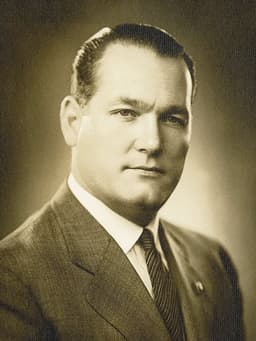
Jorge Ubico
General · Modern
45.5Total
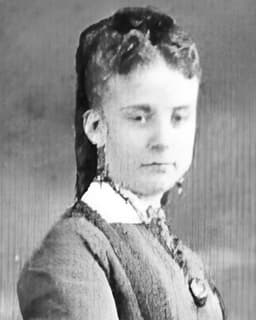
Porfirio Diaz
General · Modern
61.9Total
Basic Information
Born
1878
1830
Died
1946
1915
Era
Modern
Modern
Nationality
Guatemala
Mexico
Occupation
General
General
Civilization
Western
Western
Score Comparison
Military (10%)
25.9
65.0
Political (20%)
39.4
55.0
Influence (20%)
49.4
58.3
Legacy (20%)
40.0
58.0
Leadership (15%)
72.0
80.0
Strategy (15%)
38.6
60.7
TOTAL
45.5
61.9
Jorge Ubico — Complete Timeline
1931 AD
Assumed the Presidency in 1931Political Action◆ Major
Jorge Ubico became president of Guatemala after winning a rigged election. He quickly established a dictatorship, suspending civil liberties, and centralizing power.
GuatemalaDictatorship1930s
Impact: nationaldestructive
Granted Extensive Concessions to the United Fruit CompanyPolitical Action◆ Major
Ubico continued and expanded the policies of Estrada Cabrera, granting the United Fruit Company vast land holdings, tax exemptions, and control over infrastructure. This deepened U.S. corporate influence in Guatemala.
GuatemalaUnited Fruit CompanyEconomic Imperialism
Impact: nationaldestructive
1934 AD
Enacted the Vagrancy LawReform◆ Major
Ubico enacted a vagrancy law requiring all landless peasants to work a certain number of days per year on coffee plantations or public works. This effectively created a system of forced labor that benefited large landowners.
GuatemalaLaborForced Labor
Impact: nationaldestructive
1944 AD
Resigned Under Pressure in 1944Political Action
Ubico resigned the presidency in June 1944 after widespread protests and a general strike. His resignation ended 13 years of dictatorship and paved the way for the Guatemalan Revolution.
GuatemalaResignation1944 Revolution
Impact: nationalprogressive
Porfirio Diaz — Complete Timeline
1876 AD
Plan of TuxtepecPolitical Action
Diaz issued the Plan of Tuxtepec, rebelling against President Sebastian Lerdo de Tejada's re-election. He defeated government forces and assumed the presidency, beginning a 35-year dictatorship.
CoupDictatorshipPorfiriato
Impact: nationaldestructive
1884 AD
Porfiriato Economic ModernizationReform◆ Major
Diaz implemented policies attracting foreign investment, building railroads, and expanding mining and agriculture. Mexico experienced economic growth but with increased foreign control and wealth inequality.
Economic GrowthForeign InvestmentInfrastructure
Impact: national
1910 AD
Centennial of IndependenceCultural◆ Major
Diaz celebrated Mexico's centennial with grand festivities, showcasing modernization. The event masked growing discontent, as Francisco I. Madero's anti-re-election movement gained momentum, leading to the Mexican Revolution.
CelebrationRevolution PrecursorPolitical Tension
Impact: national
1911 AD
Resignation and ExilePolitical Action
After the Treaty of Ciudad Juarez, Diaz resigned the presidency and went into exile in France. His departure ended the Porfiriato and allowed Madero to assume power, though it did not end the revolution.
End of DictatorshipExileRevolution
Impact: national
Expert Analysis
Origins
Jorge Ubico Castañeda was born on November 10, 1878, in Guatemala City into a wealthy landowning family. His father, Arturo Ubico, served as a judge and supported Guatemala's liberal reforms. Ubico studied law and military tactics, graduating from the Escuela Politécnica in 1897. He quickly rose through the military ranks, becoming a colonel by age 29. His early career was shaped by service under dictators Manuel Estrada Cabrera and José María Orellana, learning their authoritarian methods.
Porfirio Díaz Mori was born on September 15, 1830, in Oaxaca City to a humble mestizo family. His father, a blacksmith, died early, and Díaz was raised by his mother. He initially studied for the priesthood but switched to law and military training. Díaz fought in the Mexican-American War (1846-1848) and later supported the liberal Reform War (1857-1861). His military prowess earned him rank of general, and he became a key figure in the struggle against French intervention (1861-1867).
Rise to Power
Ubico's rise began as a provincial governor under President Orellana. In 1931, he ran for president in a rigged election, winning with 99% of the vote. He immediately suspended civil liberties, banned opposition parties, and centralized power. Ubico used his military background to enforce order, personally leading troops against peasant uprisings. His regime was marked by efficient but brutal control, with a network of spies and informants.
Díaz's path to power was more complex. After defeating the French at the Battle of Puebla (1862), he became a national hero. In 1876, he issued the Plan of Tuxtepec, rebelling against President Sebastián Lerdo de Tejada's re-election. Díaz defeated government forces and assumed the presidency in 1877. He maintained power through controlled elections and alliances with regional caudillos, ruling directly or through proxies until 1911.
Leadership & Governance
Ubico ruled Guatemala from 1931 to 1944 with a personalistic style. He micromanaged government, traveling extensively to inspect infrastructure projects and enforce his vagrancy law (1934), which forced landless peasants to work 100-150 days per year on coffee plantations or public works. This law effectively enslaved indigenous communities. Ubico also granted the United Fruit Company vast concessions, including tax exemptions and control over railroads and ports. His regime was stable but repressive, with no press freedom and systematic torture of dissidents.
Díaz's Porfiriato (1876-1911) modernized Mexico through foreign investment. His slogan "order and progress" guided policies: he built 19,000 km of railroads, expanded mining exports, and attracted $2 billion in foreign capital. However, this came at a cost: land was consolidated into haciendas, indigenous communities lost communal lands, and wealth inequality soared. Díaz's political control relied on co-opting elites and suppressing dissent through the Rurales, a mounted police force. Unlike Ubico, Díaz allowed limited political opposition during his later years, but rigged elections ensured his continued rule.
Triumph & Tragedy
Ubico's greatest success was economic stabilization after the Great Depression. He balanced the budget and reduced foreign debt by 1935. However, his vagrancy law and brutal labor practices led to widespread resentment. His biggest failure was his inability to adapt to democratic pressures; in June 1944, a general strike forced his resignation. Ubico scored 25.9 in military, reflecting his limited battlefield experience, but his political score of 39.4 indicates some administrative efficiency.
Díaz's triumph was modernizing Mexico: foreign trade tripled, and GDP grew 2.8% annually. He scored 65.0 in military and 55.0 in political, reflecting his skill in balancing factions. Yet his tragedy was the Mexican Revolution, sparked by his fraudulent 1910 re-election. The revolution cost over 1 million lives and destroyed much of his economic progress. Díaz died in exile in 1915, his legacy tarnished by the violence his policies had triggered.
Character & Destiny
Ubico was cold, efficient, and paranoid. He claimed to be a "Caesar" and admired Napoleon, but lacked the strategic vision of either. His micromanagement and refusal to delegate created a brittle regime that collapsed under moderate pressure. His leadership score of 72.0 reflects his ability to maintain order, but his strategy score of 38.6 shows poor long-term planning.
Díaz was pragmatic and flexible. He surrounded himself with cientificos (technocrats) who advised on economic policy. His leadership score of 80.0 indicates strong organizational skills, but his strategy score of 60.7 suggests he miscalculated the pent-up demand for democracy. Díaz's belief that Mexico was not ready for democracy led him to suppress opposition, ultimately causing his downfall.
Legacy
Ubico's legacy is largely negative in Guatemala. His vagrancy law created a model of forced labor that persisted in various forms. The United Fruit Company's dominance, which he enabled, led to the 1954 CIA-backed coup. His influence score of 49.4 and legacy score of 40.0 indicate limited lasting impact outside Guatemala. Today, he is remembered as a brutal dictator who resisted change.
Díaz's legacy is more complex. He is credited with creating modern Mexico's infrastructure and integrating it into the global economy. However, his authoritarianism and inequality laid the groundwork for the revolution. His influence score of 58.3 and legacy score of 58.0 reflect his lasting mark on Mexican politics and identity. Statues of Díaz remain controversial, with some viewing him as a modernizer and others as a tyrant.
Conclusion
Porfirio Díaz had a greater impact than Jorge Ubico, as shown by his higher total score (61.9 vs 45.5). Díaz's modernization of Mexico transformed a nation, while Ubico's rule mainly entrenched Guatemala's oligarchic structure. Díaz's military (65.0) and political (55.0) scores surpass Ubico's (25.9 and 39.4), reflecting his more complex governance and longer rule. Although both were dictators, Díaz's economic achievements and role in sparking the Mexican Revolution have broader historical significance. Ubico's legacy is more localized and negative. Thus, Díaz stands as a more consequential figure, for better and worse, in Latin American history.
Rankings
🥇
Porfirio DiazLeader
Mil: 65.0Pol: 55.0Inf: 58.3
61.9
🥈
Jorge Ubico
Mil: 25.9Pol: 39.4Inf: 49.4
45.5
+16.4 behind
How This Comparison Works
Algorithm
Each figure is scored on 6 dimensions (0—100 scale) based on structured historical data: Military (10%), Political (20%), Influence (20%), Legacy (20%), Leadership (15%), Strategy (15%). The weighted total produces the final ranking.
Data Sources
Scores are computed from structured sub-indicators in the database. Scale factors adjust for era (Ancient ×0.85, Modern ×1.0) and civilization size (Eastern ×1.05, Other ×0.80) to account for differences in population and military scale.
Maximum 3 Figures
Comparisons are limited to 2—3 figures to ensure readability and statistical meaningfulness.
Error Margins
±5 points per dimension — Sub-scores are derived from historical records with inherent uncertainty. Two figures within 5 points on a dimension should be considered roughly equivalent in that area.
Total Score Accuracy
±3 points overall — The weighted combination of 6 dimensions produces a total score with approximately ±3 points of uncertainty. Differences of less than 3 points are not statistically significant— the figures are effectively tied.
Known Limitations
- Historical records are incomplete and uneven across civilizations
- Figures from oral-tradition societies may be underrepresented
- Occupation labels can misclassify multi-role figures
- Scores measure capability and impact, not moral character
- Quantitative scoring is a comparison tool, not absolute truth
Capability Radar
Military (10%) — Battles & Warfare
Battles
10
65
Win Rate
15
70
Expansion
5
50
Political (20%) — Governance & Reform
Reform
20
60
Diplomacy
30
65
Economy
25
60
Influence (20%) — Cultural & Global Reach
Cultural
15
55
Global
10
55
Legacy (20%) — Historical Impact
Historical
20
65
Longevity
10
60
Leadership (15%) — Power & Stability
Tenure
60
85
Stability
40
70
Strategy (15%) — Tactics & Innovation
Strategy
15
65
Tactics
20
60
Reform
25
55
Similar Comparisons
Comments & Discussion
No comments yet. Be the first to share your thoughts!