Loading...
Jorge Ubico vs Napoleon Bonaparte
Napoleon Bonaparte leads by 25.4 pts · 2 figures compared
…
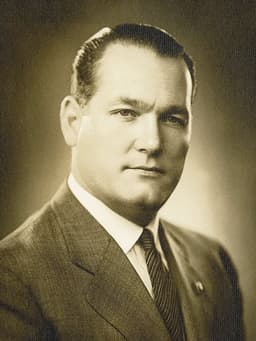
Jorge Ubico
General · Modern
45.5Total

Napoleon Bonaparte
General · Modern
70.9Total
Basic Information
Born
1878
1769
Died
1946
1821
Era
Modern
Modern
Nationality
Guatemala
France
Occupation
General
General
Civilization
Western
Western
Score Comparison
Military (10%)
25.9
94.0
Political (20%)
39.4
72.0
Influence (20%)
49.4
40.0
Legacy (20%)
40.0
80.0
Leadership (15%)
72.0
78.0
Strategy (15%)
38.6
90.0
TOTAL
45.5
70.9
Jorge Ubico — Complete Timeline
1931 AD
Assumed the Presidency in 1931Political Action◆ Major
Jorge Ubico became president of Guatemala after winning a rigged election. He quickly established a dictatorship, suspending civil liberties, and centralizing power.
GuatemalaDictatorship1930s
Impact: nationaldestructive
Granted Extensive Concessions to the United Fruit CompanyPolitical Action◆ Major
Ubico continued and expanded the policies of Estrada Cabrera, granting the United Fruit Company vast land holdings, tax exemptions, and control over infrastructure. This deepened U.S. corporate influence in Guatemala.
GuatemalaUnited Fruit CompanyEconomic Imperialism
Impact: nationaldestructive
1934 AD
Enacted the Vagrancy LawReform◆ Major
Ubico enacted a vagrancy law requiring all landless peasants to work a certain number of days per year on coffee plantations or public works. This effectively created a system of forced labor that benefited large landowners.
GuatemalaLaborForced Labor
Impact: nationaldestructive
1944 AD
Resigned Under Pressure in 1944Political Action
Ubico resigned the presidency in June 1944 after widespread protests and a general strike. His resignation ended 13 years of dictatorship and paved the way for the Guatemalan Revolution.
GuatemalaResignation1944 Revolution
Impact: nationalprogressive
Napoleon Bonaparte — Complete Timeline
1799 AD
Coup of 18 BrumaireOther◆ Major
Napoleon Bonaparte, with support from his brother Lucien and key political figures, overthrew the Directory in a bloodless coup. He established the Consulate with himself as First Consul, effectively becoming the ruler of France. This event ended the French Revolution's most unstable period.
French RevolutionCoupRise to Power
Impact: regional
1804 AD
Promulgation of the Napoleonic CodeOther◆ Major
Napoleon enacted the Civil Code of the French, known as the Napoleonic Code, a comprehensive set of laws that replaced the fragmented feudal legal systems. The code established legal equality, protected property rights, and secularized law. It became the basis for legal systems in many European and world countries.
Legal ReformNapoleonic CodeCivil Law
Impact: globalconstructive
1805 AD
Battle of AusterlitzWar◆ Major
Napoleon's Grande Arm
Napoleonic WarsBattleDecisive Victory
Impact: global
1812 AD
Invasion of RussiaWar◆ Major
Napoleon led the Grande Arm
Napoleonic WarsInvasionDisaster
Impact: globaldestructive
1815 AD
Battle of WaterlooWar◆ Major
Napoleon's French army was defeated by the combined forces of the Duke of Wellington's Anglo-Allied army and Gebhard Leberecht von Bl
Napoleonic WarsBattleFinal Defeat
Impact: globaldestructive
Expert Analysis
jorge-ubico-vs-napoleon-bonaparte
### The Corsican and the Cacique
In the spring of 1815, as Napoleon Bonaparte marched from exile on Elba to reclaim his empire, his path seemed a force of nature—a gale of ambition that would shake the thrones of Europe. Just over a century later, in 1931, Jorge Ubico rode into Guatemala City, a different kind of storm, one that promised order but delivered a suffocating stillness. Both were generals who seized supreme power. Both ruled with iron hands. Yet one remade the map of the world while the other merely froze his small corner of it. Why did Napoleon, the son of minor Corsican nobility, become a colossus of history, while Ubico, the scion of a Guatemalan elite, became a footnote? The answer lies not in their similar ambitions, but in the radically different worlds they sought to command.
### Origins
Napoleon was born in 1769 on the island of Corsica, freshly annexed by France. His family was impoverished gentry, and he spoke Italian-accented French as a boy—an outsider in a nation he would one day rule. The French Revolution, erupting when he was twenty, shattered the old order and created a vacuum of opportunity. In this chaos, talent was the only currency that mattered. Ubico, born in 1878, was the opposite: a child of Guatemala’s landed aristocracy. His father was a president, his uncle a general. He inherited power as naturally as a prince inherits a throne. The world he entered was not being remade; it was being preserved. The difference was foundational: Napoleon was forged in a revolution that demanded transformation; Ubico was groomed for a system that demanded stasis.
### Rise to Power
Napoleon’s ascent was a masterpiece of speed and audacity. At twenty-four, he drove the British from Toulon; at twenty-six, he suppressed a royalist uprising with a “whiff of grapeshot”; at thirty, he was First Consul of France. Each step was earned on a battlefield or in a council chamber where his brilliance outshone rivals. Ubico’s path was quieter, more deliberate. He served as a provincial governor and war minister, building a reputation for efficiency and cruelty. In 1931, with Guatemala reeling from the Great Depression, he won a rigged election and took the presidency. Where Napoleon seized power through dazzling military campaigns, Ubico simply walked into a door already opened for him—by a corrupt elite and a fearful populace.
### Leadership & Governance
As a ruler, Napoleon was a hurricane of reform. He centralized the state, created the Napoleonic Code, standardized education, and built roads and canals. He governed with a combination of meritocracy and authoritarianism, promoting men based on ability while crushing dissent. His military genius—scoring 94.0 in strategy—was matched by a political mind that understood how to institutionalize his power. Ubico, by contrast, was a manager of decay. His Vagrancy Law of 1934 forced landless peasants to work on coffee plantations, effectively creating a system of debt peonage that benefited the United Fruit Company. He granted that company vast tax exemptions and land holdings, turning Guatemala into a corporate fiefdom. His military score of 39.6 reflects a man who never fought a major war; his leadership score of 81.5 suggests he was skilled at maintaining control, but only through surveillance and fear. Napoleon built an empire; Ubico built a plantation.
### Triumph & Tragedy
Napoleon’s triumphs are legendary: Austerlitz in 1805, where he crushed the Austrians and Russians; the creation of the Confederation of the Rhine; the spread of the Napoleonic Code across Europe. His tragedy is equally epic: the disastrous invasion of Russia in 1812, the loss of 500,000 men, and the final defeat at Waterloo in 1815. He died in exile on Saint Helena, a prisoner of the British. Ubico’s triumphs were smaller. He balanced Guatemala’s budget and paid off foreign debt—achievements that pleased Washington and the coffee barons. His tragedy came in 1944, when a general strike of teachers, students, and workers forced him to resign. He fled into exile, died in New Orleans in 1946, and was later returned to Guatemala for burial in secret. One man’s fall shook the world; the other’s was barely noticed beyond his borders.
### Character & Destiny
Napoleon was driven by an insatiable hunger for glory. “I live only for posterity,” he once said. His personality—restless, brilliant, egomaniacal—pushed him to conquer, reform, and ultimately overreach. He could not stop. Ubico was driven by fear—fear of losing control, fear of the masses. He modeled himself after Napoleon, even keeping a portrait of the emperor in his office. But where Napoleon saw the world as a chessboard, Ubico saw Guatemala as a prison that must be locked tight. His character was that of a caretaker, not a creator. He preserved the system of his predecessor, Manuel Estrada Cabrera, rather than transforming it. Destiny, then, was not a matter of luck but of scale. Napoleon’s ambition matched the size of his stage; Ubico’s caution matched the smallness of his.
### Legacy
Napoleon’s legacy is global. The Napoleonic Code underpins legal systems from France to Louisiana to Japan. His military tactics are still studied. His name is synonymous with genius and tyranny. Ubico’s legacy is local and dark. He is remembered as the last of the old-style dictators, a figure who froze Guatemala in a feudal past. His policies created the conditions for the civil war that would tear the country apart decades later. Where Napoleon is a monument, Ubico is a warning.
### Conclusion
Standing at the end of their stories, one sees two generals who shared a title but lived in different universes. Napoleon Bonaparte remade history because he rode the wave of a revolution that demanded a new world. Jorge Ubico merely clung to the wreckage of an old one. Their fates were not written in their stars but in the scale of their ambition and the shape of their times. Napoleon’s tragedy was that he could not stop; Ubico’s was that he never truly started. In the end, the difference between the man who changes the world and the man who only rules it is not just talent or will—it is the courage to imagine something greater than oneself.
Rankings
🥇
Napoleon BonaparteLeader
Mil: 94.0Pol: 72.0Inf: 40.0
70.9
🥈
Jorge Ubico
Mil: 25.9Pol: 39.4Inf: 49.4
45.5
+25.4 behind
How This Comparison Works
Algorithm
Each figure is scored on 6 dimensions (0—100 scale) based on structured historical data: Military (10%), Political (20%), Influence (20%), Legacy (20%), Leadership (15%), Strategy (15%). The weighted total produces the final ranking.
Data Sources
Scores are computed from structured sub-indicators in the database. Scale factors adjust for era (Ancient ×0.85, Modern ×1.0) and civilization size (Eastern ×1.05, Other ×0.80) to account for differences in population and military scale.
Maximum 3 Figures
Comparisons are limited to 2—3 figures to ensure readability and statistical meaningfulness.
Error Margins
±5 points per dimension — Sub-scores are derived from historical records with inherent uncertainty. Two figures within 5 points on a dimension should be considered roughly equivalent in that area.
Total Score Accuracy
±3 points overall — The weighted combination of 6 dimensions produces a total score with approximately ±3 points of uncertainty. Differences of less than 3 points are not statistically significant— the figures are effectively tied.
Known Limitations
- Historical records are incomplete and uneven across civilizations
- Figures from oral-tradition societies may be underrepresented
- Occupation labels can misclassify multi-role figures
- Scores measure capability and impact, not moral character
- Quantitative scoring is a comparison tool, not absolute truth
Capability Radar
Military (10%) — Battles & Warfare
Battles
10
95
Win Rate
15
90
Expansion
5
95
Political (20%) — Governance & Reform
Reform
20
95
Diplomacy
30
80
Economy
25
85
Influence (20%) — Cultural & Global Reach
Cultural
15
85
Global
10
90
Legacy (20%) — Historical Impact
Historical
20
95
Longevity
10
90
Leadership (15%) — Power & Stability
Tenure
60
85
Stability
40
70
Strategy (15%) — Tactics & Innovation
Strategy
15
95
Tactics
20
98
Reform
25
92
Similar Comparisons
Comments & Discussion
BlackSwanStrategist6/17/2026
Comparing Napoleon’s 1815 return from Elba to Ubico’s 1931 seizure of Guatemala City ignores the real hinge: Napoleon inherited a revolutionary engine—mass conscription, meritocracy, and a bankrupt old regime—while Ubico commanded a feudal estate with no industrial base. Bonaparte lost at Waterloo because Britain had coal and capital; Ubico “succeeded” only because Guatemala had coffee and debt. Different scales, but the same lesson: ambition without infrastructure is just theater.
帝国铁靴6/17/2026
拿破仑用《拿破仑法典》横扫欧洲封建余孽时,Ubico却用《流浪法》把印第安人圈进 plantations。前者在滑铁卢输给了威灵顿的方阵,后者在1944年被学生和咖啡农赶下台。军事家看的是战术,历史学家看的是制度遗产:一个留下现代欧洲,另一个只留下警察国家的标本——连他的雕像是1980年代才被推倒的,多么讽刺的延迟。