Loading...
This comparison has not been analyzed yet.
One-time AI generation (~1 minute). Scores and timeline are already available below.
John VIII Palaiologos vs Myeongjong of Joseon
John VIII Palaiologos leads by 2.1 pts · 2 figures compared
…
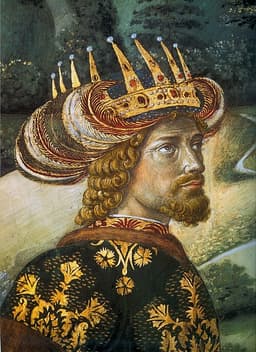
John VIII Palaiologos
Emperor · Medieval
41.3Total
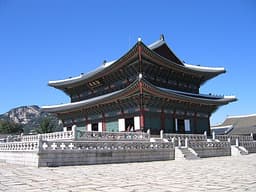
Myeongjong of Joseon
Emperor · Medieval
39.2Total
Basic Information
Born
1392
1534
Died
1448
1567
Era
Medieval
Medieval
Nationality
Byzantine Empire
Korea
Occupation
Emperor
Emperor
Civilization
Western
Eastern
Score Comparison
Military (10%)
10.2
20.0
Political (20%)
36.5
26.4
Influence (20%)
53.3
48.6
Legacy (20%)
45.0
39.2
Leadership (15%)
41.5
45.0
Strategy (15%)
39.6
45.0
TOTAL
41.3
39.2
John VIII Palaiologos — Complete Timeline
1438 AD
Travel to Italy for the Council of FlorencePolitical Action◆ Major
John VIII traveled to Italy with a large delegation of Orthodox clergy to participate in the Council of Florence, which aimed to negotiate church union. His presence underscored the Byzantine Empire's desperation for Western aid.
CouncilDiplomacyByzantine Empire
Impact: regional
1439 AD
Acceptance of the Union of FlorencePolitical Action◆ Major
John VIII Palaiologos, as Byzantine emperor, agreed to the Union of Florence, which temporarily reunited the Eastern Orthodox Church with the Roman Catholic Church under papal authority. This was done to secure Western military aid against the Ottoman Empire, but the union was widely rejected by the Byzantine populace and clergy.
Church UnionDiplomacyOttoman Wars
Impact: regionaldestructive
1448 AD
Death embittered after failed union and Ottoman advancesOther
John VIII died embittered, having failed to secure effective Western military support despite the Union of Florence. The Ottoman Empire continued its conquests, and the union deepened internal divisions within Byzantium.
DeathByzantine EmpireOttoman Wars
Impact: nationaltragic
Myeongjong of Joseon — Complete Timeline
1545 AD
Accession to the thronePolitical Action◆ Major
Myeongjong became king of Joseon at age 11 following the death of his half-brother Injong. Due to his youth, his mother Queen Munjeong ruled as regent, controlling the government.
SuccessionRegencyJoseon Dynasty
Impact: national
Fourth Literati Purge (Eulsa Sahwa)Political Action◆ Major
Queen Munjeong, acting as regent, ordered the Fourth Literati Purge, executing Sarim scholars who opposed her rule. This purge eliminated many reform-minded officials and consolidated her power.
PurgeRegencyJoseon Dynasty
Impact: nationaldestructive
1565 AD
End of Queen Munjeong's regencyPolitical Action◆ Major
Myeongjong began his personal rule after his mother Queen Munjeong's death. His reign was marked by continued factional conflict and a decline in royal authority.
RegencyPersonal RuleJoseon Dynasty
Impact: national
This comparison has not been analyzed yet.
One-time AI generation (~1 minute). Scores and timeline are already available below.
Rankings
🥇
John VIII PalaiologosLeader
Mil: 10.2Pol: 36.5Inf: 53.3
41.3
🥈
Myeongjong of Joseon
Mil: 20.0Pol: 26.4Inf: 48.6
39.2
+2.1 behind
How This Comparison Works
Algorithm
Each figure is scored on 6 dimensions (0—100 scale) based on structured historical data: Military (10%), Political (20%), Influence (20%), Legacy (20%), Leadership (15%), Strategy (15%). The weighted total produces the final ranking.
Data Sources
Scores are computed from structured sub-indicators in the database. Scale factors adjust for era (Ancient ×0.85, Modern ×1.0) and civilization size (Eastern ×1.05, Other ×0.80) to account for differences in population and military scale.
Maximum 3 Figures
Comparisons are limited to 2—3 figures to ensure readability and statistical meaningfulness.
Error Margins
±5 points per dimension — Sub-scores are derived from historical records with inherent uncertainty. Two figures within 5 points on a dimension should be considered roughly equivalent in that area.
Total Score Accuracy
±3 points overall — The weighted combination of 6 dimensions produces a total score with approximately ±3 points of uncertainty. Differences of less than 3 points are not statistically significant— the figures are effectively tied.
Known Limitations
- Historical records are incomplete and uneven across civilizations
- Figures from oral-tradition societies may be underrepresented
- Occupation labels can misclassify multi-role figures
- Scores measure capability and impact, not moral character
- Quantitative scoring is a comparison tool, not absolute truth
Capability Radar
Military (10%) — Battles & Warfare
Battles
10
5
Win Rate
10
5
Expansion
5
5
Political (20%) — Governance & Reform
Reform
20
20
Diplomacy
60
20
Economy
15
20
Influence (20%) — Cultural & Global Reach
Cultural
30
20
Global
30
10
Legacy (20%) — Historical Impact
Historical
40
20
Longevity
30
15
Leadership (15%) — Power & Stability
Tenure
40
30
Stability
10
25
Strategy (15%) — Tactics & Innovation
Strategy
10
5
Tactics
10
5
Reform
5
5
Similar Comparisons
Comments & Discussion
No comments yet. Be the first to share your thoughts!