Loading...
This comparison has not been analyzed yet.
One-time AI generation (~1 minute). Scores and timeline are already available below.
John McEwen vs Tommy Remengesau
Tommy Remengesau leads by 11.0 pts · 2 figures compared
…
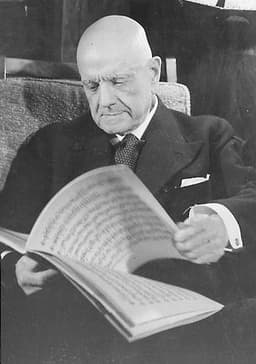
John McEwen
Politician · Modern
39.1Total

Tommy Remengesau
Politician · Modern
50.1Total
Basic Information
Born
1900
1956
Died
1980
—
Era
Modern
Modern
Nationality
Australia
Palau
Occupation
Politician
Politician
Civilization
Western
Other
Score Comparison
Military (10%)
49.0
10.5
Political (20%)
26.4
68.0
Influence (20%)
45.5
53.3
Legacy (20%)
35.8
43.3
Leadership (15%)
38.1
72.0
Strategy (15%)
42.0
39.5
TOTAL
39.1
50.1
John McEwen — Complete Timeline
1949 AD
Appointed Minister for Trade and IndustryPolitical Action◆ Major
McEwen was appointed Minister for Trade and Industry in the Menzies government. He held this position for over two decades, shaping Australia's trade policies and protectionist economic strategies.
Trade PolicyEconomic Protectionism
Impact: nationalconstructive
1958 AD
Leader of the Country PartyPolitical Action◆ Major
McEwen became leader of the Country Party in 1958. He led the party for 13 years, maintaining its influence in coalition governments and advocating for rural and agricultural interests.
Party LeadershipRural Advocacy
Impact: national
1967 AD
Became Prime Minister of AustraliaPolitical Action◆ Major
McEwen became Prime Minister on 19 December 1967 after the disappearance of Harold Holt. He served as interim leader for 23 days until John Gorton was elected Liberal Party leader.
Prime MinisterInterim Government
Impact: national
Tommy Remengesau — Complete Timeline
2001 AD
Elected President of PalauPolitical Action◆ Major
Tommy Remengesau was elected President of Palau, beginning his first term. He focused on economic development, environmental conservation, and strengthening ties with the United States under the Compact of Free Association.
ElectionLeadershipPalau
Impact: nationalconstructive
2013 AD
Re-elected for non-consecutive termsPolitical Action◆ Major
Remengesau was re-elected as President after a gap, serving non-consecutive terms. His return to office continued his environmental policies and strengthened Palau's role in Pacific regional affairs.
ElectionRe-electionPalau
Impact: national
2014 AD
Advocated for climate action at UNPolitical Action◆ Major
Remengesau addressed the UN General Assembly, urging global action on climate change. He highlighted Palau's vulnerability to rising sea levels and called for binding emissions reductions, positioning Palau as a leader in climate diplomacy.
Climate AdvocacyUNDiplomacy
Impact: globalconstructive
2015 AD
Established Palau National Marine SanctuaryReform◆ Major
Remengesau established the Palau National Marine Sanctuary, a fully protected marine reserve covering 80% of Palau's exclusive economic zone. The sanctuary banned commercial fishing and extractive activities, promoting biodiversity and sustainable tourism.
ConservationMarine ReserveEnvironment
Impact: globalconstructive
2020 AD
Banned commercial fishing in Palau's watersReform◆ Major
Remengesau implemented a ban on commercial fishing in Palau's waters, enforcing the National Marine Sanctuary. The policy aimed to protect fish stocks and marine ecosystems, though it faced challenges from illegal fishing and economic impacts.
Fishing BanConservationPolicy
Impact: regionalconstructive
This comparison has not been analyzed yet.
One-time AI generation (~1 minute). Scores and timeline are already available below.
Rankings
🥇
Tommy RemengesauLeader
Mil: 10.5Pol: 68.0Inf: 53.3
50.1
🥈
John McEwen
Mil: 49.0Pol: 26.4Inf: 45.5
39.1
+11.0 behind
How This Comparison Works
Algorithm
Each figure is scored on 6 dimensions (0—100 scale) based on structured historical data: Military (10%), Political (20%), Influence (20%), Legacy (20%), Leadership (15%), Strategy (15%). The weighted total produces the final ranking.
Data Sources
Scores are computed from structured sub-indicators in the database. Scale factors adjust for era (Ancient ×0.85, Modern ×1.0) and civilization size (Eastern ×1.05, Other ×0.80) to account for differences in population and military scale.
Maximum 3 Figures
Comparisons are limited to 2—3 figures to ensure readability and statistical meaningfulness.
Error Margins
±5 points per dimension — Sub-scores are derived from historical records with inherent uncertainty. Two figures within 5 points on a dimension should be considered roughly equivalent in that area.
Total Score Accuracy
±3 points overall — The weighted combination of 6 dimensions produces a total score with approximately ±3 points of uncertainty. Differences of less than 3 points are not statistically significant— the figures are effectively tied.
Known Limitations
- Historical records are incomplete and uneven across civilizations
- Figures from oral-tradition societies may be underrepresented
- Occupation labels can misclassify multi-role figures
- Scores measure capability and impact, not moral character
- Quantitative scoring is a comparison tool, not absolute truth
Capability Radar
Military (10%) — Battles & Warfare
Battles
30
27
Win Rate
33
30
Expansion
34
29
Political (20%) — Governance & Reform
Reform
10
55
Diplomacy
15
60
Economy
10
50
Influence (20%) — Cultural & Global Reach
Cultural
5
30
Global
5
30
Legacy (20%) — Historical Impact
Historical
10
30
Longevity
5
30
Leadership (15%) — Power & Stability
Tenure
10
65
Stability
15
60
Strategy (15%) — Tactics & Innovation
Strategy
37
35
Tactics
40
36
Reform
44
39
Similar Comparisons
Comments & Discussion
No comments yet. Be the first to share your thoughts!