Loading...
Donald Tusk vs John McEwen
Donald Tusk leads by 17.7 pts · 2 figures compared
…

Donald Tusk
Politician · Modern
56.8Total
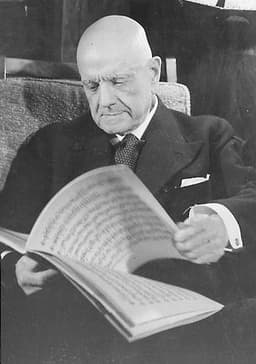
John McEwen
Politician · Modern
39.1Total
Basic Information
Born
1957
1900
Died
—
1980
Era
Modern
Modern
Nationality
Poland
Australia
Occupation
Politician
Politician
Civilization
Western
Western
Score Comparison
Military (10%)
47.8
49.0
Political (20%)
62.7
26.4
Influence (20%)
55.0
45.5
Legacy (20%)
52.0
35.8
Leadership (15%)
78.0
38.1
Strategy (15%)
42.1
42.0
TOTAL
56.8
39.1
Donald Tusk — Complete Timeline
2007 AD
Tusk becomes Prime Minister of PolandPolitical Action◆ Major
Donald Tusk became Prime Minister of Poland after his Civic Platform party won the parliamentary election. He formed a coalition government, succeeding Jaros
Polish PoliticsCivic Platform2007 Election
Impact: national
2008 AD
Tusk's government during the 2008 financial crisisPolitical Action◆ Major
Tusk's government managed Poland's economy through the global financial crisis, avoiding recession through stimulus measures and a flexible currency. Poland was the only EU country to post positive GDP growth in 2009.
Economic PolicyFinancial CrisisEU
Impact: nationalconstructive
2014 AD
Tusk elected President of the European CouncilPolitical Action◆ Major
Donald Tusk was elected President of the European Council, becoming the first Eastern European to hold the post. He served two terms until 2019, overseeing EU responses to the migration crisis and Brexit negotiations.
EU LeadershipEuropean CouncilInternational Politics
Impact: global
2023 AD
Tusk returns as Polish Prime MinisterPolitical Action◆ Major
After eight years in opposition, Tusk led the Civic Coalition to victory in the 2023 parliamentary election. He formed a pro-European coalition government, ending the rule of the Law and Justice party and restoring democratic norms.
Polish Politics2023 ElectionDemocracy
Impact: nationalconstructive
John McEwen — Complete Timeline
1949 AD
Appointed Minister for Trade and IndustryPolitical Action◆ Major
McEwen was appointed Minister for Trade and Industry in the Menzies government. He held this position for over two decades, shaping Australia's trade policies and protectionist economic strategies.
Trade PolicyEconomic Protectionism
Impact: nationalconstructive
1958 AD
Leader of the Country PartyPolitical Action◆ Major
McEwen became leader of the Country Party in 1958. He led the party for 13 years, maintaining its influence in coalition governments and advocating for rural and agricultural interests.
Party LeadershipRural Advocacy
Impact: national
1967 AD
Became Prime Minister of AustraliaPolitical Action◆ Major
McEwen became Prime Minister on 19 December 1967 after the disappearance of Harold Holt. He served as interim leader for 23 days until John Gorton was elected Liberal Party leader.
Prime MinisterInterim Government
Impact: national
Expert Analysis
Origins
Donald Tusk was born on 22 April 1957 in Gdańsk, Poland, to a family with Kashubian heritage. His father was a carpenter and his mother a nurse. Tusk studied history at the University of Gdańsk, where he became involved in the anti-communist Solidarity movement. John McEwen was born on 29 March 1900 in Chiltern, Victoria, Australia, to a farming family. He left school at 13 to work on the family farm, later becoming a dairy farmer. McEwen entered politics at 23, winning a seat in the Australian House of Representatives in 1934. Both men came from modest backgrounds, but Tusk's formative experiences were shaped by Cold War repression, while McEwen's by rural Australian conservatism.
Rise to Power
Tusk co-founded the Civic Platform party in 2001 and became Prime Minister of Poland on 16 November 2007 after his party won the parliamentary election. He formed a coalition with the Polish People's Party, succeeding Jarosław Kaczyński. McEwen rose through the Country Party, becoming its leader in 1958 and serving as Minister for Trade and Industry from 1949 to 1967. He became Prime Minister on 19 December 1967 after Harold Holt's disappearance, serving only 23 days until John Gorton was elected. Tusk's rise was based on popular support and electoral victory, scoring 62.7 in political acumen, while McEwen's was a caretaker appointment, scoring 26.4.
Leadership & Governance
Tusk's leadership style was pragmatic and pro-European. As PM, he pushed for fiscal discipline, privatization, and EU integration. During the 2008 financial crisis, his government avoided recession through stimulus measures and a flexible currency, maintaining GDP growth of 1.6% in 2009. As European Council president (2014-2019), he managed the Eurozone crisis and Brexit negotiations. McEwen's leadership was defined by his role in the coalition government. He championed protectionist trade policies, known as 'McEwenism', which shielded Australian manufacturing and agriculture. His interim prime ministership was too brief to implement policies, but his earlier influence as trade minister shaped Australian economic strategy for decades. Tusk's leadership score of 78.0 reflects his sustained impact, while McEwen's 38.1 shows limited executive authority.
Triumph & Tragedy
Tusk's greatest triumph was steering Poland through the financial crisis and becoming the first Eastern European president of the European Council. His tragedy was the erosion of democratic norms in Poland under the subsequent Law and Justice party, which he could not prevent. McEwen's triumph was his long tenure as trade minister, where he negotiated favorable agreements and built the Country Party's influence. His tragedy was his brief, almost forgotten prime ministership, overshadowed by Holt's disappearance and Gorton's election. Tusk scored 55.0 in influence and 52.0 in legacy, while McEwen scored 45.5 and 35.8 respectively. Both faced limitations: Tusk's influence waned after leaving EU office, while McEwen's legacy is tied to a single policy approach.
Character & Destiny
Tusk is known for his calm, strategic demeanor, often described as a 'master of compromise'. His ability to navigate Polish and EU politics kept him in power for over a decade. McEwen was a tough negotiator, fiercely loyal to rural interests, but his narrow focus limited his broader appeal. Tusk's character led him to become a key EU figure, while McEwen's destiny was to remain a kingmaker rather than a king. Historical assessments note Tusk as a stabilizing force, while McEwen is remembered as a competent minister but forgettable PM. Their military scores (47.8 vs 49.0) are similar, reflecting no direct military involvement.
Legacy
Tusk's legacy includes Poland's economic stability during the 2008 crisis and his role in EU leadership. He remains active in Polish politics, returning as PM in 2023. McEwen's legacy is 'McEwenism', a protectionist trade policy that lasted until the 1980s. He also influenced the Country Party's evolution into the National Party. Tusk's impact is more enduring and broad, with a legacy score of 52.0 versus McEwen's 35.8. Tusk's total score of 56.8 surpasses McEwen's 39.1 by 17.7 points.
Conclusion
Donald Tusk had a greater impact than John McEwen. Tusk's handling of the 2008 crisis, his role in the EU, and his return to Polish leadership demonstrate sustained influence. McEwen's 23-day PM term and protectionist policies, while significant in Australian history, lack the breadth and depth of Tusk's achievements. The 17.7-point score gap reflects this: Tusk's political acumen (62.7) and leadership (78.0) contrast with McEwen's lower scores. Tusk's ability to shape both national and continental politics gives him a clearer claim to historical significance.
Rankings
🥇
Donald TuskLeader
Mil: 47.8Pol: 62.7Inf: 55.0
56.8
🥈
John McEwen
Mil: 49.0Pol: 26.4Inf: 45.5
39.1
+17.7 behind
How This Comparison Works
Algorithm
Each figure is scored on 6 dimensions (0—100 scale) based on structured historical data: Military (10%), Political (20%), Influence (20%), Legacy (20%), Leadership (15%), Strategy (15%). The weighted total produces the final ranking.
Data Sources
Scores are computed from structured sub-indicators in the database. Scale factors adjust for era (Ancient ×0.85, Modern ×1.0) and civilization size (Eastern ×1.05, Other ×0.80) to account for differences in population and military scale.
Maximum 3 Figures
Comparisons are limited to 2—3 figures to ensure readability and statistical meaningfulness.
Error Margins
±5 points per dimension — Sub-scores are derived from historical records with inherent uncertainty. Two figures within 5 points on a dimension should be considered roughly equivalent in that area.
Total Score Accuracy
±3 points overall — The weighted combination of 6 dimensions produces a total score with approximately ±3 points of uncertainty. Differences of less than 3 points are not statistically significant— the figures are effectively tied.
Known Limitations
- Historical records are incomplete and uneven across civilizations
- Figures from oral-tradition societies may be underrepresented
- Occupation labels can misclassify multi-role figures
- Scores measure capability and impact, not moral character
- Quantitative scoring is a comparison tool, not absolute truth
Capability Radar
Military (10%) — Battles & Warfare
Battles
29
30
Win Rate
34
33
Expansion
37
34
Political (20%) — Governance & Reform
Reform
70
10
Diplomacy
80
15
Economy
70
10
Influence (20%) — Cultural & Global Reach
Cultural
40
5
Global
65
5
Legacy (20%) — Historical Impact
Historical
55
10
Longevity
45
5
Leadership (15%) — Power & Stability
Tenure
75
10
Stability
65
15
Strategy (15%) — Tactics & Innovation
Strategy
37
37
Tactics
40
40
Reform
44
44
Similar Comparisons
Comments & Discussion
No comments yet. Be the first to share your thoughts!