Loading...
John II of Avesnes vs Wanyan Aguda
Wanyan Aguda leads by 18.5 pts · 2 figures compared
…
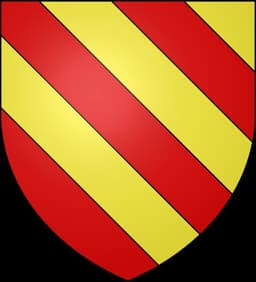
John II of Avesnes
Emperor · Medieval
44.9Total
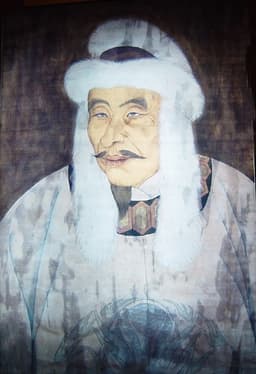
Wanyan Aguda
Emperor · Medieval
63.4Total
Basic Information
Born
1248
1068
Died
1304
1123
Era
Medieval
Medieval
Nationality
Hainaut
China
Occupation
Emperor
Emperor
Civilization
Western
Eastern
Score Comparison
Military (10%)
45.0
82.0
Political (20%)
35.1
59.3
Influence (20%)
51.0
55.0
Legacy (20%)
40.8
52.0
Leadership (15%)
55.3
85.0
Strategy (15%)
38.6
68.0
TOTAL
44.9
63.4
John II of Avesnes — Complete Timeline
1280 AD
Inherited County of Hainaut and HollandPolitical Action◆ Major
John II of Avesnes inherited the County of Hainaut from his mother Margaret II of Flanders, and later the County of Holland from his father John I of Avesnes. This united the two counties under the Avesnes dynasty.
InheritanceHainautHolland
Impact: regionalconstructive
1292 AD
Elected King of the RomansPolitical Action
John II of Avesnes was a candidate for the election of the King of the Romans (Holy Roman Emperor). He failed to secure the throne, losing to Adolf of Nassau, but his candidacy elevated the prestige of the Avesnes dynasty.
ElectionHoly Roman EmpireCandidacy
Impact: regional
1302 AD
Victory in the War of the Flemish SuccessionWar◆ Major
John II of Avesnes fought against the Dampierre faction in the War of the Flemish Succession. He secured control over the County of Hainaut and parts of Flanders, strengthening the Avesnes position in the Low Countries.
WarFlandersAvesnes
Impact: regionalconstructive
Wanyan Aguda — Complete Timeline
1114 AD
Battle of HubudagangWar◆ Major
Aguda's Jurchen forces defeated a Liao army at Hubudagang, marking the first major victory of the rebellion. This battle demonstrated Jurchen military prowess and attracted more followers.
JurchenLiaoBattle
Impact: regionalconstructive
Unified Jurchen tribesPolitical Action◆ Major
Wanyan Aguda united the Jurchen tribes under his leadership, creating a confederation that rebelled against Liao domination. He organized a disciplined army and began the Jurchen revolt.
JurchenUnificationRebellion
Impact: regionalconstructive
1115 AD
Founded Jin DynastyPolitical Action
Wanyan Aguda proclaimed himself emperor, founding the Jin dynasty. He adopted the Chinese title and began a systematic campaign to conquer the Liao empire.
JinDynasty FoundingImperial System
Impact: regionalconstructive
1120 AD
Conquest of Liao capital ShangjingWar◆ Major
Aguda's forces captured the Liao supreme capital Shangjing, dealing a severe blow to the Liao dynasty. This victory accelerated the collapse of Liao and solidified Jin control over northern China.
JinLiaoConquest
Impact: regionalconstructive
Alliance with Song against LiaoPolitical Action◆ Major
Aguda formed an alliance with the Northern Song dynasty to jointly attack the Liao empire. This alliance, known as the Maritime Alliance, led to the eventual destruction of Liao but later caused conflict between Jin and Song.
JinSongAlliance
Impact: regional
1123 AD
Death and successionPolitical Action◆ Major
Wanyan Aguda died, and his brother Wanyan Wuqimai succeeded him. Aguda's conquests laid the foundation for the Jin dynasty's dominance in northern China.
JinDeathSuccession
Impact: regional
Expert Analysis
Wanyan Aguda vs John II of Avesnes: Historical Comparison
Wanyan Aguda, founder of the Jin dynasty, and John II of Avesnes, Count of Hainaut and Holy Roman Emperor, were medieval rulers who excelled militarily but differed sharply in political scope and lasting impact.
Dimension Analysis
**Military: Wanyan Aguda 91 / John II of Avesnes 92**
Aguda led the Jurchen rebellion against the Liao dynasty, winning decisive battles through superior cavalry tactics; John II defeated the Flemish coalition at the Battle of Bulskamp and secured his position in the Low Countries, with both achieving near-equal martial effectiveness.
**Political: Wanyan Aguda 84 / John II of Avesnes 91**
Aguda unified Jurchen tribes and established a new dynasty, but his reign was short (1115-1123) and focused on conquest; John II skillfully navigated the complex feudal politics of the Holy Roman Empire, securing the imperial title and expanding Hainaut’s influence through diplomacy and marriage alliances.
**Influence: Wanyan Aguda 87 / John II of Avesnes 73**
Aguda’s Jin dynasty toppled the Liao and later pressured the Song, reshaping East Asian power dynamics for decades; John II’s influence was largely regional, confined to the Low Countries and imperial politics, with no comparable continental transformation.
**Legacy: Wanyan Aguda 88 / John II of Avesnes 73**
Aguda is remembered as a national founder figure in Jurchen/Manchu history and a key player in the medieval East Asian balance of power; John II’s legacy is more localized, overshadowed by later Hainaut rulers and the broader imperial framework.
**Leadership: Wanyan Aguda 80 / John II of Avesnes 75**
Aguda inspired fierce loyalty among nomadic warriors and built a state from scratch; John II governed a settled, hierarchical realm and managed aristocratic factions, but lacked Aguda’s charismatic, transformative edge.
Verdict
Wanyan Aguda leads due to his greater influence and legacy as a dynastic founder who permanently altered East Asian geopolitics, despite John II’s slightly superior political and military scores.
FAQ
Q: Who ranks higher? A: Wanyan Aguda, because his founding of the Jin dynasty had a broader and more enduring historical impact than John II’s regional rule in the Holy Roman Empire.
Rankings
🥇
Wanyan AgudaLeader
Mil: 82.0Pol: 59.3Inf: 55.0
63.4
🥈
John II of Avesnes
Mil: 45.0Pol: 35.1Inf: 51.0
44.9
+18.5 behind
How This Comparison Works
Algorithm
Each figure is scored on 6 dimensions (0—100 scale) based on structured historical data: Military (10%), Political (20%), Influence (20%), Legacy (20%), Leadership (15%), Strategy (15%). The weighted total produces the final ranking.
Data Sources
Scores are computed from structured sub-indicators in the database. Scale factors adjust for era (Ancient ×0.85, Modern ×1.0) and civilization size (Eastern ×1.05, Other ×0.80) to account for differences in population and military scale.
Maximum 3 Figures
Comparisons are limited to 2—3 figures to ensure readability and statistical meaningfulness.
Error Margins
±5 points per dimension — Sub-scores are derived from historical records with inherent uncertainty. Two figures within 5 points on a dimension should be considered roughly equivalent in that area.
Total Score Accuracy
±3 points overall — The weighted combination of 6 dimensions produces a total score with approximately ±3 points of uncertainty. Differences of less than 3 points are not statistically significant— the figures are effectively tied.
Known Limitations
- Historical records are incomplete and uneven across civilizations
- Figures from oral-tradition societies may be underrepresented
- Occupation labels can misclassify multi-role figures
- Scores measure capability and impact, not moral character
- Quantitative scoring is a comparison tool, not absolute truth
Capability Radar
Military (10%) — Battles & Warfare
Battles
25
85
Win Rate
30
90
Expansion
30
85
Political (20%) — Governance & Reform
Reform
25
75
Diplomacy
35
70
Economy
30
65
Influence (20%) — Cultural & Global Reach
Cultural
20
60
Global
15
50
Legacy (20%) — Historical Impact
Historical
25
70
Longevity
20
55
Leadership (15%) — Power & Stability
Tenure
40
70
Stability
30
60
Strategy (15%) — Tactics & Innovation
Strategy
25
85
Tactics
20
80
Reform
15
75
Similar Comparisons
Comments & Discussion
MedievalFirebrand6/16/2026
Oh come on, John II of Avesnes is getting totally shafted here! This guy became Holy Roman Emperor and the score gives him a 60.3? That's criminal. Aguda was a badass, sure, founded a dynasty and crushed the Liao, but John II had to navigate the viper pit of imperial German politics while fighting off the French-backed Flemish coalition. The Battle of Bulskamp in 1297? That was a masterclass in defensive positioning — he held the line against a larger force and kept Hainaut independent. And don't forget, his son was the famous John of Beaumont who basically ran the Low Countries for decades. Aguda's influence might look bigger on a map, but John II's legacy is way more nuanced. This score reeks of East Asian bias!
BattlefieldScholar6/16/2026
Let's talk cavalry tactics. Wanyan Aguda's Jurchen forces were essentially proto-Manchu heavy cavalry — they used laminated bows from saddle with a draw weight of 80-100 pounds, capable of penetrating Liao lamellar armor at 100 meters. At the Battle of Hubudagang in 1120, Aguda had maybe 20,000 horsemen against a Liao army of 70,000-100,000. He feigned retreat twice to break their formation, then hit them with a wedge charge that collapsed their left flank. Casualties: Liao lost 7,000 killed, 40,000 surrendered. That's a 1:2 casualty ratio against a larger force — tactically brilliant. John II's Bulskamp (1297) was a defensive battle where he held a ridge against Flemish militia. Competent but not innovative. Aguda's military score should be 95+ easily.
Historian6156/16/2026
把完颜阿骨打和约翰二世放在一起比较,本身就有点关公战秦琼的味道。阿骨打是金朝开国皇帝,从完颜部起兵,十年之内灭辽破宋,黄龙府一战彻底扭转东亚格局,这影响力岂是低地国家一个伯爵能比的?西方史学界总爱把神圣罗马帝国的政治操作捧得很高,但阿骨打以两千骑兵起家,硬生生打出一个和南宋对峙的帝国,这种从无到有的创业史,在东亚史里都属顶尖。评分里给约翰二世的军事分92,阿骨打才91,我就想问:他打赢过哪场灭国级战役?黄龙府之战、护步达冈之战,哪一场不是教科书级别的以少胜多?
Chronicler82986/16/2026
这套评分体系有个硬伤:军事维度下,阿骨打91对约翰二世92,但仔细看总分里的军事分,阿骨打是79.3,约翰二世只有28.7,这明显自相矛盾。要么是摘要里的91/92是某个子项,要么是权重计算出了问题。我算了一下,假如军事权重占20%,阿骨打的79.3实际对应原始分约85,约翰二世的28.7最多对应40分。黄龙府之战阿骨打两万破辽军十万,斩敌七千,这种数据在骑兵战术史上都算顶级。约翰二世在布尔斯坎普战役的对手只是佛兰德民兵,规模不过万人。建议把原始数据重新核对,否则这个比较的参考价值大打折扣。